
How Humanoid Robots Are Creating New Career Opportunities for the Next Generation in Augusta, GA
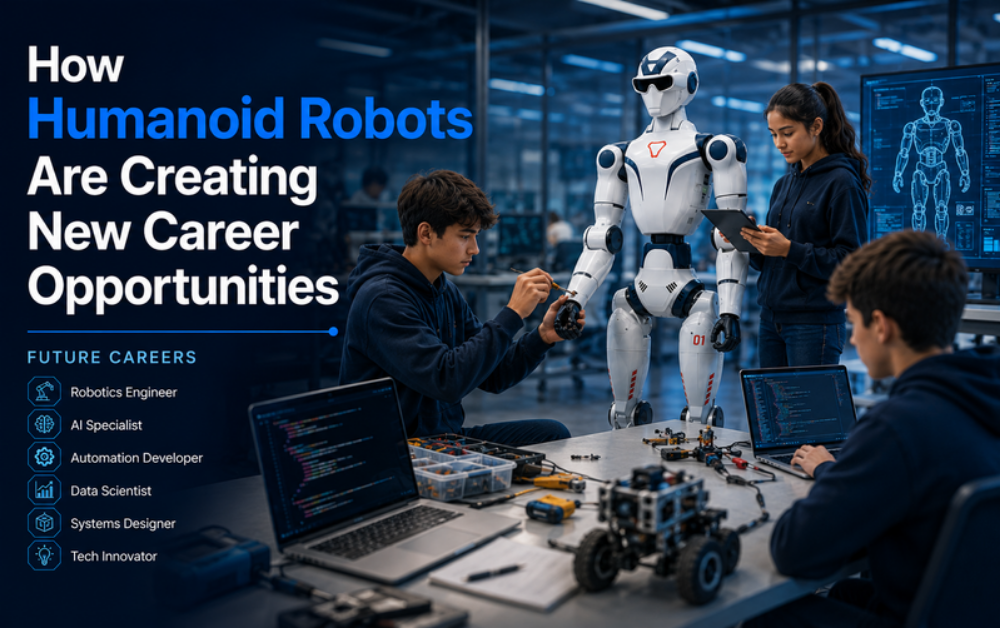
Walk through a modern warehouse or hospital today and there’s a decent chance a humanoid robot is somewhere nearby, lifting, sorting, or assisting. Behind every one of those machines sits a small team of people who built, trained, and maintain it. For families in Augusta, GA, that’s not a distant trend. It’s a preview of the career paths their kids could be walking into in the next ten to fifteen years.
New Career Paths Emerging Around Humanoid Robots
The global humanoid robot market is projected to grow from under $11 billion in 2026 to more than $54 billion by 2031, according to Global Market Insights. That kind of growth doesn’t happen without a matching surge in the people needed to build, run, and manage the machines. Four career paths in particular are opening up fast.
Robotics Technicians and Field Engineers
Every deployed robot needs someone who can install it, calibrate it, and fix it when a sensor drifts or a joint sticks. This is hands-on, practical work, closer to a skilled trade than a desk job, and demand for people who can do it is climbing alongside every new robot rollout.
AI Trainers and Robotics Programmers
A robot doesn’t learn a new task on its own. Someone has to write the code, test it, and correct the machine’s mistakes until it performs reliably. This role blends software skill with patience, since training a robot often means many small adjustments rather than one big fix.
Safety, Ethics, and Compliance Specialists
As robots take on more work alongside people, someone has to make sure that work happens safely and fairly. This growing category covers everyone from on-site safety inspectors to the policy specialists shaping how companies deploy the technology responsibly.
Robotics Educators and Program Designers
Somebody has to teach the next wave of technicians, trainers, and engineers. As the field grows, so does the need for people who can design curriculum and mentor students through hands-on projects, turning curiosity into a real skill set.
The Careers Growing in the Robot’s Shadow
None of these roles exist in isolation. A technician needs to understand basic programming. A programmer benefits from knowing how the hardware behaves. The careers forming around humanoid robots reward people who are comfortable moving between the physical and digital sides of the work, not specialists who stay in one lane.
The Skills Behind These New Careers
Coding and Computational Thinking
Every one of these emerging roles touches code in some form, whether it’s writing it, debugging it, or understanding what it’s telling a machine to do. Kids who build comfort with programming early aren’t just learning a subject, they’re learning the language these careers run on.
Hands-On Problem-Solving
Robots fail in ways textbooks don’t predict. A sensor misreads a surface, a motor stalls mid-task, a program runs but the movement looks wrong. Learning to troubleshoot a real, physical failure, not just debug a line of code, builds a kind of patience and persistence that transfers directly into these careers.
Working Well in a Team
Almost none of these emerging roles exist in isolation. A technician relies on a programmer’s notes to know what a robot is supposed to do. A safety specialist depends on both to understand how a system behaves under normal conditions before flagging what looks off. Kids who practice building something as part of a small team, splitting tasks, explaining their reasoning, adjusting when a teammate’s approach works better, are practicing the exact collaboration these careers require day to day.
How Students in Augusta Can Start Building These Skills Now
Hands-On Learning With a Real Humanoid Robot
At the iCode Augusta campus, the Youth Innovation Program gives students exactly this kind of hands-on start. Over an eight-week, mentor-led cohort, twelve students split into three teams to code and program the Unitree R1 EDU, a 25-kilogram humanoid robot built with up to 40 degrees of freedom, an NVIDIA Jetson Orin module running at 100 TOPS, and 3D LiDAR paired with depth cameras for sensing. Students work in Python and C++ through ROS 2, learning to direct the robot’s movement rather than simply operating a finished product.
Inside the Youth Innovation Program Cohort
Each cohort ends with a live pitch to iCode Corporate, where teams present what they built and explain the reasoning behind their design choices, a format closer to how real robotics and engineering teams work than a typical classroom assignment. Full details on structure and enrollment are on the College Accelerator Program page.
The mentor leads the teaching. The robot is the platform students build with, not a substitute for instruction, which keeps the experience approachable even for kids with no prior coding background.
For a student who has never written a line of code, the first week can feel like a foreign language. By the final pitch, most teams are debugging their own movement scripts and explaining design trade-offs to a room of adults, a jump that says more about the format than about any single student’s starting point.
What This Means for Families in Augusta, GA
Nobody can name the exact job title a child in Augusta, GA will hold in fifteen years. What’s clear is the direction the market is heading, and the skills that hold up across almost any version of that future: comfort with code, patience with hands-on troubleshooting, and confidence building something from scratch. Those habits don’t expire even if the specific job titles change again by the time today’s students enter the workforce.
Starting early doesn’t mean locking a child into an engineering career. It means giving them a real, low-pressure look at a field that’s growing fast, so whatever they choose later, they’re choosing it with some hands-on experience behind them.
That head start matters more in a field moving this quickly than it would in a slower-changing industry. A student who spends a few weeks building and coding a real robot in Augusta walks away with a clearer picture of whether this kind of work suits them than any amount of reading about the trend ever could.
Frequently Asked Questions
Are humanoid robot careers only in engineering and manufacturing?
No. Healthcare, retail, hospitality, and logistics are all adopting the technology, which spreads the related career openings across far more industries than people expect.
What’s the fastest-growing job category tied to this trend?
Technician and maintenance roles are growing fastest right now, since every robot deployed needs ongoing setup, calibration, and repair.
How fast is the humanoid robotics industry actually growing?
Analysts at Global Market Insights project the sector to grow from under $11 billion in 2026 to over $54 billion by 2031, a pace that points to sustained hiring, not a short-lived trend.
Is this a good direction for a kid who likes building things more than coding?
Yes. Robotics blends both, and many students find the hands-on building side is what pulls them into learning the code that powers it.
What’s the first step for a parent who wants to explore this for their child?
A short, mentor-led introductory program is the easiest low-pressure entry point, letting a child test their interest before committing to anything longer term.