
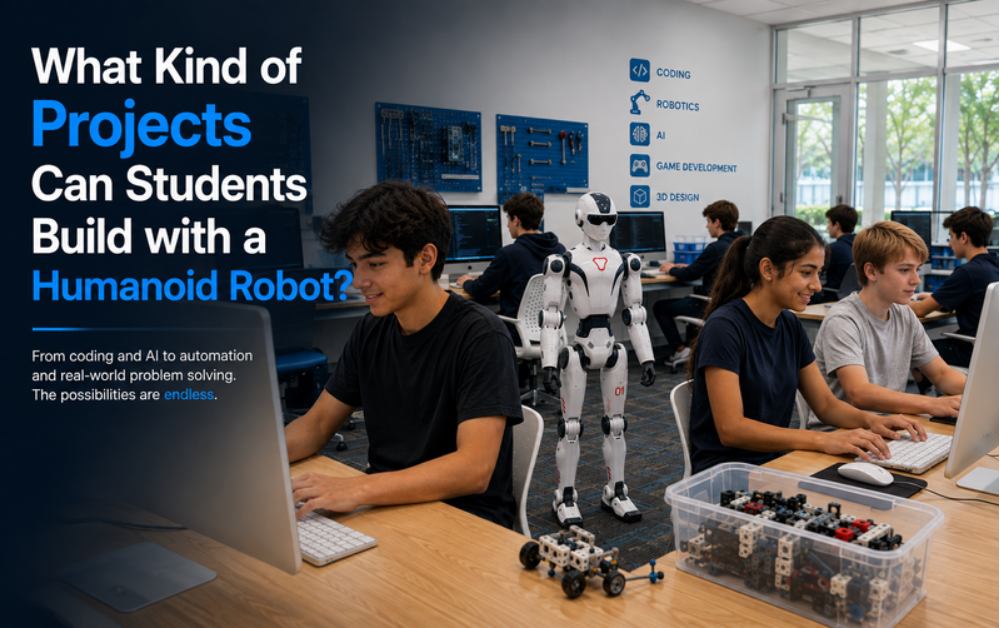
What Kind of Projects Can Students Build with a Humanoid Robot?
Augusta is home to a major cyber and defense technology hub, which makes it a fitting place for students to build hands-on robotics projects of their own.
Working with a humanoid robot means building with it, not just watching it. Here’s what that looks like in practice, from the first project to the most advanced.
Projects That Involve People, Not Just Objects
Building a Command-and-Response Project
Some of the most popular student projects involve interaction — programming the robot to respond to a specific voice command or hand gesture with a matching action, like turning, waving, or stopping.
Programming a Guided Walk-Through
Students who want more of a challenge often build a tour-style routine — the robot follows a person or moves through a sequence of stops, using both its sensors and its movement programming together.
Building Confidence Through Movement
Programming a Robot to Walk and Balance
The first project most students build is deceptively simple: get the robot to walk to a point and stop without toppling over. Underneath that simple goal is a real lesson in balance, timing, and how many tiny adjustments the robot’s joints make with every step.
Augusta, GA Students Get Hands-On With All of This
A Look at the Program Structure
Every project above is something students actually build at iCode Augusta, through the Youth Innovation Program — an eight-week, mentor-led course where students work directly with a real humanoid robot rather than a simulation.
Projects Built Around Sensing
Building an Object Recognition Task
Once students are comfortable with movement, the next step is giving the robot a way to understand what’s around it. Using its depth cameras, students can program the robot to identify specific objects and sort them — reaching for the right one and leaving the rest.
What This Actually Involves
Students work through it in stages — decide what to detect, write the detection logic, run repeated tests to fix errors, and then layer in the action the robot takes once it correctly identifies the object.
Creative, Capstone-Style Projects
Designing a Custom Movement Set
Some students use their final project to build a short, choreographed routine — stringing together steps, turns, and gestures into one continuous sequence they design themselves.
Programming a Path Around Obstacles
Others take on an obstacle course project, using the robot’s sensors to detect objects in its path and adjust its route in real time instead of following one fixed line.
Skills Students Build Along the Way
What students gain from these builds rarely stops at robotics.
- Turning a big goal into smaller, manageable pieces
- Working through errors without giving up
- Connecting what a sensor detects to what the robot does
- Walking someone else through a finished project
Frequently Asked Questions
What kind of projects will my child actually build?
Projects range from basic movement and balance tasks to sensor-based object recognition, voice-triggered actions, and capstone routines like choreography or obstacle courses.
Do students work alone or in groups?
Sessions are run in small groups, with a mentor guiding the work so students can collaborate while still building their own understanding.
Is coding experience required before joining?
No prior experience is needed. Mentors introduce programming concepts alongside the robotics work, building up from the basics.
How advanced can the projects get?
Advanced students can combine sensing, movement, and interaction into more complex builds, like follow-me routines or full choreographed sequences.
Want a closer look at the program building these projects in Augusta? Check out iCode Augusta.