

Why Learning Humanoid Robotics Can Prepare Kids for the Future in Bear/Newark
Parents today face a challenge unlike any previous generation: preparing their children for a future shaped by artificial intelligence, robotics, and automation.
Technology is evolving rapidly, and the careers today’s students will pursue may look very different from those available today. As a result, more families in Bear and Newark are looking for educational opportunities that help children understand technology, build confidence, and develop skills that will remain valuable throughout their lives.
At iCode Bear/Newark, students explore coding, robotics, STEM, and AI concepts through hands-on experiences designed to make learning engaging, practical, and future-focused.
Humanoid Robotics Is Coming to iCode Bear/Newark This Summer
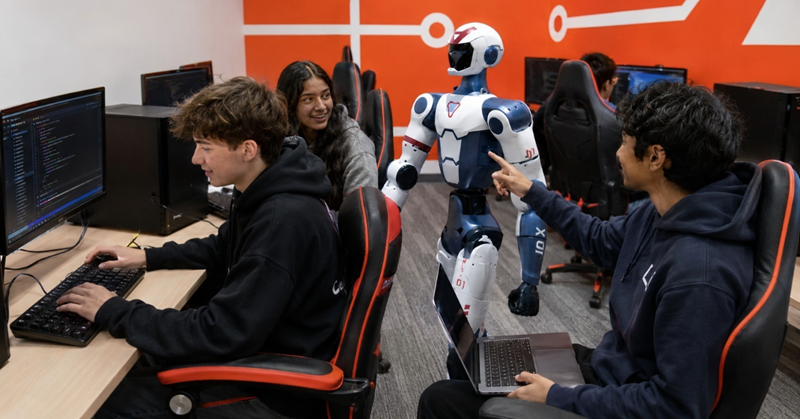
This summer, students at iCode Bear/Newark will have the opportunity to explore one of the most exciting developments in modern STEM education as Unitree R1 humanoid robots arrive on campus.
The Unitree R1 represents a new generation of educational robotics platforms designed to help students experience artificial intelligence, robotics, engineering, and real-world automation in a hands-on environment.
Unlike traditional classroom technology, humanoid robots create interactive learning experiences where students can see coding and engineering concepts come to life through movement, balance, sensors, and intelligent responses.
For students, this makes STEM learning far more engaging and memorable. For parents, it offers an opportunity to introduce children to technologies that are rapidly shaping industries across the world.
The Unitree R1 platform introduces students to:
- Artificial intelligence
- Robotics programming
- Human-machine interaction
- Sensors and automation
- Engineering design
- Creative problem-solving
As robotics and AI continue becoming part of everyday life, exposure to technologies like the Unitree R1 can help students build confidence and curiosity about the future.
Why Robotics Education Matters for Today’s Students
Technology literacy is no longer limited to learning how to use a computer.
Students growing up today will likely interact with AI-powered systems throughout their lives. Understanding how these technologies work can help them become active creators and innovators.
According to the World Economic Forum, analytical thinking, adaptability, and technology literacy continue to rise in importance across industries.
Robotics programs help students:
- Build confidence with technology
- Strengthen problem-solving abilities
- Develop computational thinking
- Improve collaboration skills
- Explore engineering concepts
- Foster creativity and innovation
For parents in Bear and Newark, robotics education offers a meaningful way to prepare students for an increasingly technology-driven future.
Internal Linking Opportunities:
- Coding Classes
- Robotics Camps
- STEM Programs
- Summer Camps
- Belt Program
How Humanoid Robots Make STEM Learning Real
One of the reasons students love robotics is because it transforms abstract ideas into real-world experiences.
Instead of simply reading about engineering or coding, students can see how their work affects the behavior of a robot in real time.
Students begin exploring:
- Sensors and automation
- Engineering concepts
- Artificial intelligence
- Coding and programming
- Human-machine interaction
- Troubleshooting techniques
This hands-on approach encourages curiosity, experimentation, and active learning.
Students Learn More Than Technical Skills
Robotics education teaches far more than coding.
Students develop:
- Communication skills
- Teamwork
- Adaptability
- Critical thinking
- Resilience
- Creative problem-solving
When projects do not work as expected, students learn how to identify challenges, test solutions, and improve outcomes.
These experiences help build confidence that extends beyond technology education.
Why AI Literacy Matters for Kids
Artificial intelligence is becoming part of daily life.
From smart assistants to recommendation engines and automation systems, AI influences many technologies students already use.
Robotics programs help students better understand:
- Machine learning concepts
- Automation systems
- AI-powered decision making
- Computer vision basics
- Real-world AI applications
This exposure helps students become more informed technology users while building a foundation for future learning.
Students interested in expanding their skills can continue through:
- Python Programming
- AI Learning Tracks
- Game Development Programs
- Advanced STEM Courses
Future Careers Connected to Robotics and AI
The demand for technology-related careers continues growing across industries.
Students who develop confidence with robotics and AI may eventually explore careers such as:
- Robotics Engineering
- Artificial Intelligence
- Software Development
- Computer Science
- Data Analytics
- Cybersecurity
The U.S. Bureau of Labor Statistics continues to project strong growth across many technology-focused career fields.
Why Parents in Bear/Newark Are Exploring Robotics Programs
Families throughout Bear and Newark are increasingly interested in educational opportunities that encourage creativity, innovation, and real-world learning.
Robotics programs can help students:
- Build future-ready skills
- Explore new interests
- Gain confidence with technology
- Learn through experimentation
- Strengthen teamwork abilities
- Stay engaged with STEM subjects
At iCode Bear/Newark, students can explore technology in a supportive learning environment designed to inspire curiosity and growth.
Preparing Students for the Future Starts Today
The goal of modern STEM education is not simply teaching students how to use technology. It is helping them understand it, explore it, and create with it.
Humanoid robotics gives students the opportunity to develop technical skills, creative confidence, and problem-solving abilities that can help them succeed in a rapidly changing world.
Introducing children to AI and robotics today can help prepare them for the careers and technologies of tomorrow.