
How Learning About Humanoid Robots Builds Future-Ready Skills in Boise, ID
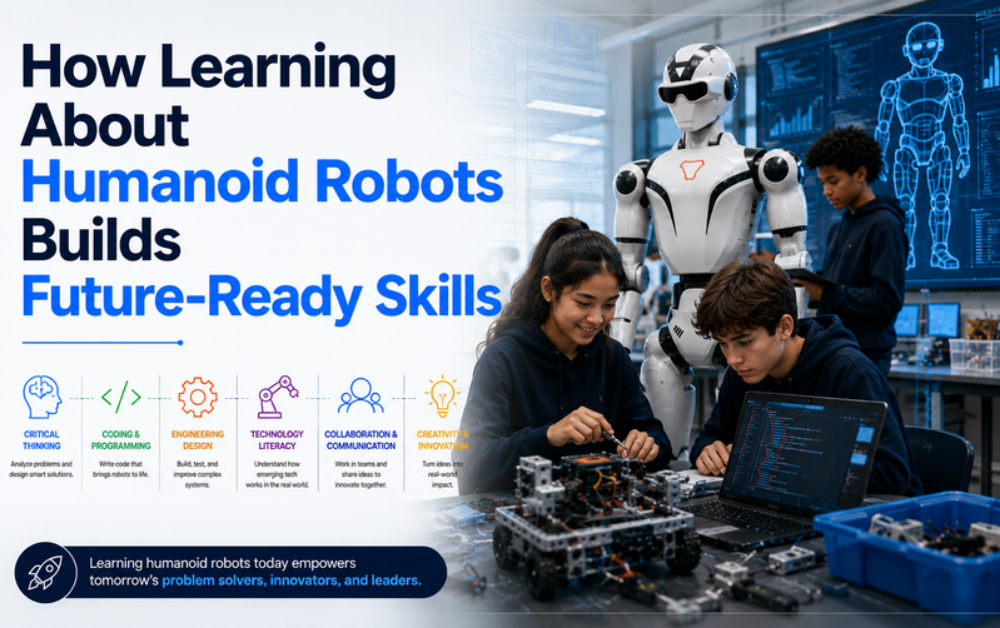
More and more of the jobs today’s students will grow into involve some mix of code, sensors, and machines that move on their own. iCode Boise’s College Accelerator Program puts that reality directly in front of students, using a real humanoid robot to teach the kind of engineering thinking that families across Boise and the Treasure Valley, one of the fastest-growing tech hubs in the country are increasingly looking for.
What Makes Humanoid Robotics Different From Other STEM Programs
A lot of robotics programs stop at snapping pieces together and running a pre-built app. The College Accelerator Program goes further than that. Students aren’t just assembling a robot, they’re writing the code that tells an existing, fully built humanoid robot what to do, then watching it respond in real time.
That single shift, from assembling to programming, is what separates this program from a typical beginner robotics camp. It’s built for students who are ready to move past block-based coding and start working with the same kind of tools and language used in professional robotics.
Why Boise Families Are Exploring Humanoid Robotics Now
Families in Boise and the Treasure Valley, one of the fastest-growing tech hubs in the country are increasingly looking for ways to give students real exposure to engineering and programming before college, not just an introduction to the idea of it. The College Accelerator Program was built for that gap: it’s advanced enough to be genuinely challenging, but structured and mentor-led enough that students without a robotics background can still get real traction.
Meet the Robot Students Learn On
Built for Real Engineering, Not Just Play
The robot at the center of the program is the Unitree R1 EDU, a 25kg humanoid robot with up to 40 degrees of freedom, built on an NVIDIA Jetson Orin processor running at 100 TOPS. It’s equipped with 3D LiDAR and depth cameras, giving it a genuine sense of the space around it, and students write the code that controls it in Python and C++ through ROS 2, the same robotics framework used in professional and research robotics labs.
Mentors Guide the Learning, Not the Robot
It’s easy to assume a robot this advanced teaches itself. It doesn’t. Every session is led by a mentor who walks students through the reasoning behind each line of code, why a sensor reads the way it does, and what to try when something doesn’t work the first time. The robot is the tool; the mentor is the teacher.
The Future-Ready Skills Kids Actually Build
Real Coding in Python and C++
Rather than dragging blocks into place, students write actual Python and C++ code through ROS 2. That’s the same language foundation used across software engineering, robotics, and data science, giving students an early, practical head start instead of a simplified version of the real thing.
Problem-Solving With Real Sensor Data
LiDAR and depth camera data don’t come with a clean answer key. When a movement doesn’t go as planned, students have to work out why: was it the code, the sensor reading, or the robot’s balance? That process of testing, checking, and adjusting is the same loop engineers use every day.
Communication, Collaboration, and Presenting Ideas
Cohorts work in small, mentor-led groups, which means students are constantly explaining their thinking out loud, troubleshooting alongside teammates, and presenting what they’ve built. Those habits carry directly into college coursework and technical careers.
Why These Soft Skills Matter as Much as the Code
Technical skill gets a student in the door; being able to explain a solution clearly is often what sets them apart afterward. The program treats communication as part of the engineering process, not an afterthought to it.
What an 8-Week Cohort Looks Like
The program runs as an 8-week, mentor-led cohort. Students meet regularly in small groups, working through coding and engineering concepts in order, from the basics of controlling the robot’s movement to more advanced work with its sensors and behavior. Each session builds on the last, and the cohort works toward students being able to demonstrate what they’ve programmed by the end of the eight weeks.
Explore the College Accelerator Program at iCode Boise
Humanoid robotics isn’t a passing trend in the classroom, it’s a hands-on way for students to build the coding, problem-solving, and communication skills that future-ready careers actually require. To see current cohort details for the College Accelerator Program, visit the iCode Boise campus page, or explore the
College Accelerator Program overview to see how the Unitree R1 EDU fits into the broader program. Families ready to take the next step can also
book a free trial class at iCode Boise.
Frequently Asked Questions
Is this the same as a typical robotics camp or class?
Not quite. Most robotics camps use small kits and block-based coding aimed at beginners. This program uses text-based coding in Python and C++ through ROS 2 on a full humanoid robot, which puts it closer to a college-level introduction to robotics than a beginner camp.
Will my child actually be writing the code themselves?
Yes. Mentors guide the instruction, but students are the ones writing and testing the code that controls the robot’s movement and responses. That hands-on ownership is a core part of the program.
Is the Humanoid Robotics program available at every iCode campus?
No. The College Accelerator Program is currently offered at a select group of iCode campuses, including iCode Boise. It’s worth checking with your local campus to confirm availability and current cohort dates.
How do I learn more or get my child enrolled?
The easiest next step is reaching out to the iCode Boise campus directly to ask about upcoming cohort dates and enrollment details for the College Accelerator Program.
What age group is the Humanoid Robotics program designed for?
The College Accelerator Program is built for older, college-bound students who are ready to move beyond beginner robotics kits and into real programming and engineering work. Exact age and grade guidance can vary, so it’s worth confirming directly with the iCode Boise team.