
How Robotics Education Helps Students Develop an Engineering Mindset
Engineering is about solving problems, designing solutions, and improving the world through innovation.
Robotics education provides students with opportunities to develop these skills through engaging STEM experiences.
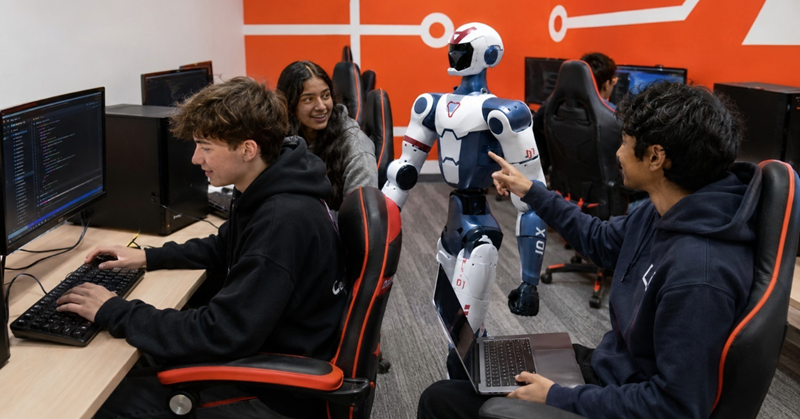
This summer, students at iCode Canton will have the opportunity to explore advanced robotics learning with Unitree R1 humanoid robots arriving on campus.
The Unitree R1 helps students connect engineering concepts with real-world applications while making STEM learning interactive and exciting.
What Is an Engineering Mindset?
An engineering mindset encourages students to:
- Identify challenges
- Explore solutions
- Test ideas
- Learn from failure
- Improve designs
These habits can benefit students in school, future careers, and everyday life.
Learning Engineering Through Robotics
Robotics projects introduce students to:
- Mechanical systems
- Sensors and automation
- Programming logic
- Artificial intelligence
- Problem-solving workflows
Students learn by building, testing, and improving their ideas.
Why Canton Families Are Choosing Robotics Programs
Parents throughout Canton are increasingly looking for educational opportunities that combine STEM learning with creativity and innovation.
At iCode Canton, students can explore robotics while building confidence, technical knowledge, and future-ready skills.