
Can Learning with Humanoid Robots Help Students in Chatham, NJ Prepare for College?
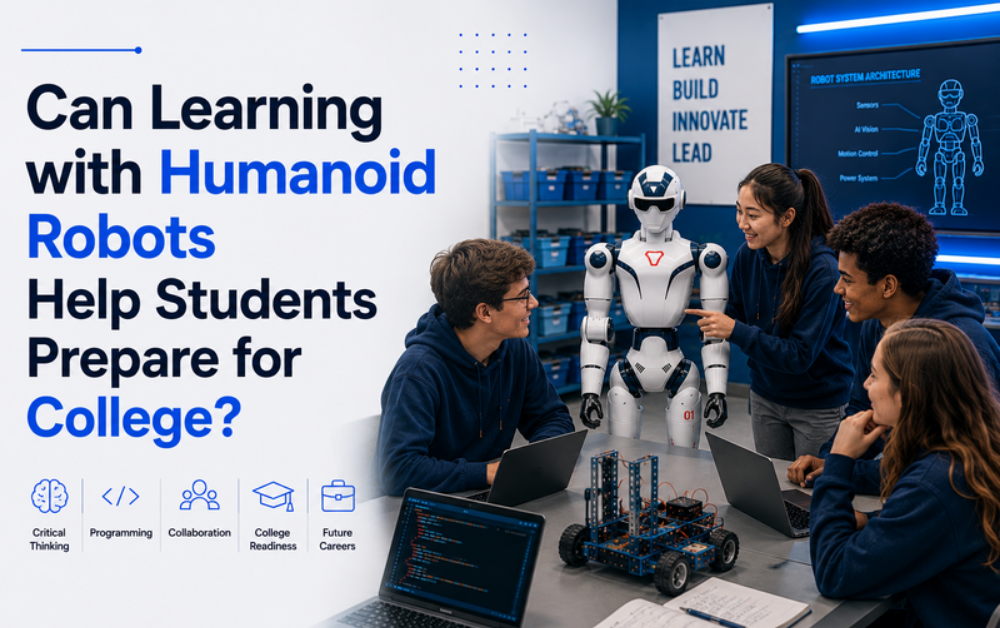
Plenty of activities look good on a college application without teaching much of anything. The College Accelerator Program at iCode Chatham takes the opposite approach: it’s built around real robotics engineering first, and the college-readiness benefits follow naturally from the depth of the work itself. For students in Chatham and Morris County, within easy reach of the tech and finance industries centered around New York City, that’s a meaningful distinction.
What “Ready for College” Actually Means in a STEM Context
Being ready for a college engineering or computer science program isn’t just about knowing facts, it’s about being comfortable with ambiguity: a program that doesn’t run, a robot that doesn’t move the way it should, a result that doesn’t match the plan. College courses assume students have already had some practice sitting with that discomfort and working through it methodically. That’s a habit, not a fact you memorize, and it’s exactly what the College Accelerator Program is built to develop.
The Technical Skills That Translate Directly to College Coursework
Python and C++ Through ROS 2
Students in the program write real code in Python and C++ using ROS 2, the same robotics framework used in university robotics labs and research settings. Instead of encountering these tools for the first time in a college classroom, students arrive already knowing how the pieces fit together.
Working With Real Sensor Data
The robot at the center of the program, the Unitree R1 EDU, is a 25kg humanoid robot with up to 40 degrees of freedom, an onboard NVIDIA Jetson Orin processor running at 100 TOPS, and 3D LiDAR plus depth cameras. Reading and interpreting that sensor data is close to what students will encounter in college robotics and engineering labs, just at a smaller scale.
Building a Body of Work Before Applications Start
No single program can promise a college acceptance letter. What it can offer is something more durable: an extended, specific project a student actually worked on, understands deeply, and can talk about with real detail in an essay or an interview. “I helped run a lemonade stand” and “I debugged the balance control on a humanoid robot for eight weeks” land very differently, not because of a keyword, but because one shows sustained, hands-on engagement and the other doesn’t.
Habits That Matter Beyond the Robot
College coursework rewards students who can manage a multi-week project, ask for help at the right moment, and keep working through a problem that doesn’t resolve on the first attempt. The 8-week, mentor-led structure of the program is designed to build exactly those habits, with mentors coaching students through the process rather than solving problems for them.
Why Chatham Students Are Getting This Head Start Early
Families across Chatham and Morris County, within easy reach of the tech and finance industries centered around New York City are increasingly looking past one-off camps toward experiences that build real, demonstrable skill over time. The College Accelerator Program fits that shift: it’s demanding enough to be a genuine head start, while still being structured for students who haven’t taken a college-level course yet.
What an 8-Week Cohort Looks Like
Students meet regularly in small, mentor-led groups, moving in order from the basics of controlling the robot’s movement to more advanced work with its sensors and behavior. Each session builds on the last, and the cohort works toward students being able to demonstrate what they’ve programmed by the end of the eight weeks, the kind of milestone-driven structure that mirrors a college project timeline.
See the College Accelerator Program at iCode Chatham
Real college readiness comes from real engineering practice, not a single line on a resume. To see current cohort details for the College Accelerator Program, visit the iCode Chatham campus page, or explore the
College Accelerator Program overview to see how the Unitree R1 EDU fits into the broader program. Families ready to take the next step can also
book a free trial class at iCode Chatham.
Frequently Asked Questions
Is the Humanoid Robotics program available at every iCode campus?
No. The College Accelerator Program is currently offered at a select group of iCode campuses, including iCode Chatham. It’s worth checking with your local campus to confirm availability and current cohort dates.
How do I learn more or get my child enrolled?
The easiest next step is reaching out to the iCode Chatham campus directly to ask about upcoming cohort dates and enrollment details for the College Accelerator Program.
Does this program guarantee admission to a top engineering school?
No program can guarantee admission. What it does give students is genuine, hands-on robotics and coding experience they can point to in applications, essays, and interviews, backed by something they actually built rather than something they briefly tried.
What college majors or fields does this connect to?
The skills involved, Python and C++ programming, sensor data, and applied engineering problem-solving, line up closely with computer science, robotics engineering, and electrical or mechanical engineering programs.
Is this the kind of experience colleges actually look for?
Admissions decisions consider many factors, but sustained, hands-on engagement with a real technical project is generally viewed as more meaningful than a short list of loosely related activities, and that’s the model this program is built around.