
Inside the College Accelerator Experience at iCode Little Rock
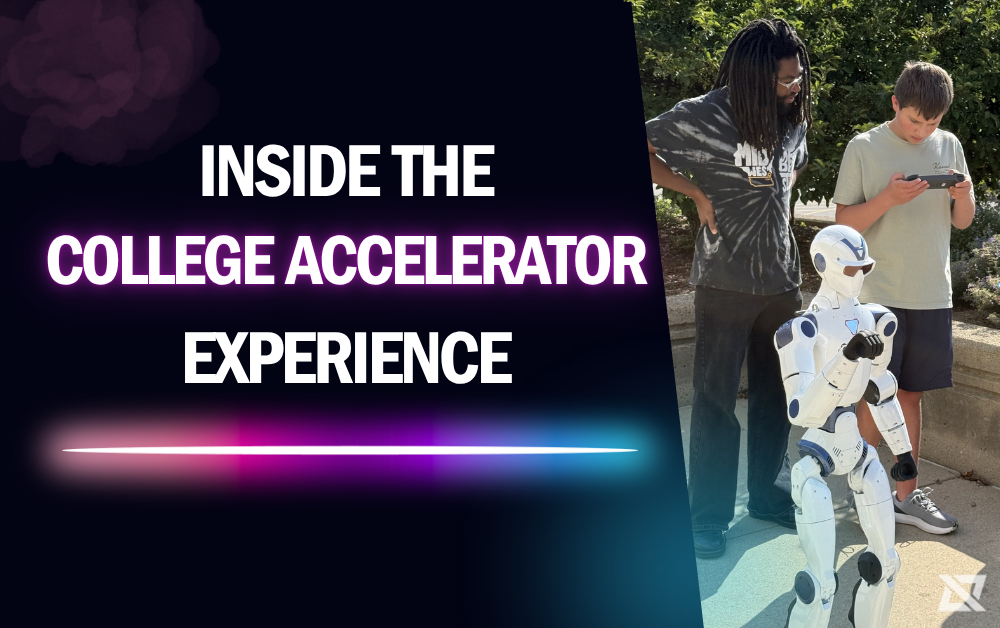
Not every STEM program asks much of a student. Some are a one-day workshop. Others are a box of pre-built kits. The College Accelerator at iCode Little Rock aims higher. This STEM summer program for teens puts students in front of a working humanoid robot. They write code, fix problems, and build real skills with an instructor beside them. It is offered alongside the Humanoid Robotics program. Little Rock teens can try real robotics work and see where it takes them.
Why the College Accelerator Exists
One number explains why this program exists. The World Economic Forum’s Future of Jobs Report 2025 estimates 39% of core skills will be disrupted by 2030. Students need adaptability and technical confidence more than memorized facts. The College Accelerator builds both through hands-on practice.
A Program Built on Real Hardware, Not Simulations
Students in the Humanoid Robotics program at iCode Little Rock work directly with the Unitree R1 EDU robot. It is real robotics hardware, not a toy or a simplified model. It weighs 25kg and moves with up to 40 degrees of freedom. It runs on an NVIDIA Jetson Orin processor with 100 TOPS of onboard compute. 3D LiDAR and depth cameras give it spatial awareness. Students program it in Python and C++ using ROS 2. Professionals and researchers use the same robotics framework.
Why Real Hardware Changes the Experience
Genuine hardware brings genuine challenges. A sensor may need calibration, or a command may not do what the student expected. Those challenges build real troubleshooting skill. A fixed simulation cannot offer the same experience.
Why Mentors Remain Central to the Experience
A humanoid robot is impressive, but it is a tool. The teaching comes from the instructor. An instructor leads every session at iCode Little Rock. They explain the concept, answer questions, and guide students through setbacks. The robot makes the lesson hands-on. The instructor makes it stick.
A Closer Look at the Skills Progression
Weeks One and Two: Getting Comfortable
In the opening weeks, students focus on the basics of sensing and movement. They read sensor data, give the robot simple commands, and see how Python and C++ instructions become real motion.
Middle Sessions: Solving Real Problems
Once the basics feel familiar, students take on small open-ended tasks. Several solutions may work. The student’s job is to pick an approach and see it through.
Why Open-Ended Problems Matter So Much
A student weighing two approaches, trying one, and adjusting after seeing the result is doing real problem-solving. Colleges and employers both describe this as a valuable skill. Open-ended tasks give students that practice.
Later Sessions: Independent Projects
Later sessions put everything together. Students design a more complete project with multiple actions and sensor input, and they solve most issues themselves. The instructor remains available when they need help.
What Students Take Away
Technical Skills With a College-Ready Story
By the end of the program, students have hands-on experience with genuine robotics programming. They can speak about it specifically in essays, interviews, and activity descriptions. That goes well beyond a general interest in STEM.
Confidence With New Tools
Perhaps more important, students leave more comfortable with unfamiliar technology in general. That adaptability is exactly what future classrooms and workplaces will keep asking for.
What a Typical Session Looks Like
Guided, Not Self-Taught
Teaching comes first. In every session, an instructor explains the concept before students touch the code. Once they start building, the instructor stays available to answer questions and help them recover from mistakes. The robot supports the lesson, and the teacher leads it.
From Concepts to Code
Students start with a short lesson on the concept of the day. They then spend most of the session coding. Each command they write can be tested on the robot straight away, so adjusting and trying again is quick.
Building Toward Bigger Projects
Students begin small, with basic movement, sensor readings, and simple commands. Over time, the work grows into complex projects that use several skills together.
Why This Progression Matters
The goal is not to copy a ready-made project. The goal is to build the skills to create one, and the progression makes that possible step by step.
Who This STEM Summer Program for Teens Fits
Students Curious About Robotics and Engineering
For students who already enjoy robotics, coding, or engineering, this is a natural next step. It adds structure and real hardware to an interest they already have.
Students Still Figuring Out Their Interests
Students who are still exploring can benefit just as much. Hands-on work with real hardware is often the clearest way to learn whether a technical field is for them. It is a better test than reading about it.
Students Preparing College Applications
College is closer than it seems, and the skills employers want are changing fast. Students preparing applications can use the program to build adaptable, technical experience well before it becomes a requirement.
Visit the iCode Little Rock homepage to check availability for the College Accelerator and Humanoid Robotics program. For a full breakdown of what students build and learn, explore the College Accelerator Program page.
Frequently Asked Questions
Do students need coding experience before joining the College Accelerator?
No prior experience is required. Sessions start with the fundamentals and build up from there, and instructors guide students the whole way.
What robot do students actually work with?
Students work with the Unitree R1 EDU. It is a 25kg humanoid robot with up to 40 degrees of freedom. It has an NVIDIA Jetson Orin processor (100 TOPS) and 3D LiDAR and depth cameras for sensing.
What programming languages are used in the program?
Students code in Python and C++ using ROS 2. This robotics framework is common in professional and research environments.
Is the instructor still involved, or do students mostly work with the robot alone?
Instructors lead every session. They teach the concepts and guide students through the hands-on work. The robot is the tool students learn with, and the instructor does the teaching.
Is the College Accelerator available at iCode Little Rock?
Yes, iCode Little Rock offers the College Accelerator alongside the Humanoid Robotics program. Because it runs at select iCode campuses, check the campus homepage to confirm availability.