
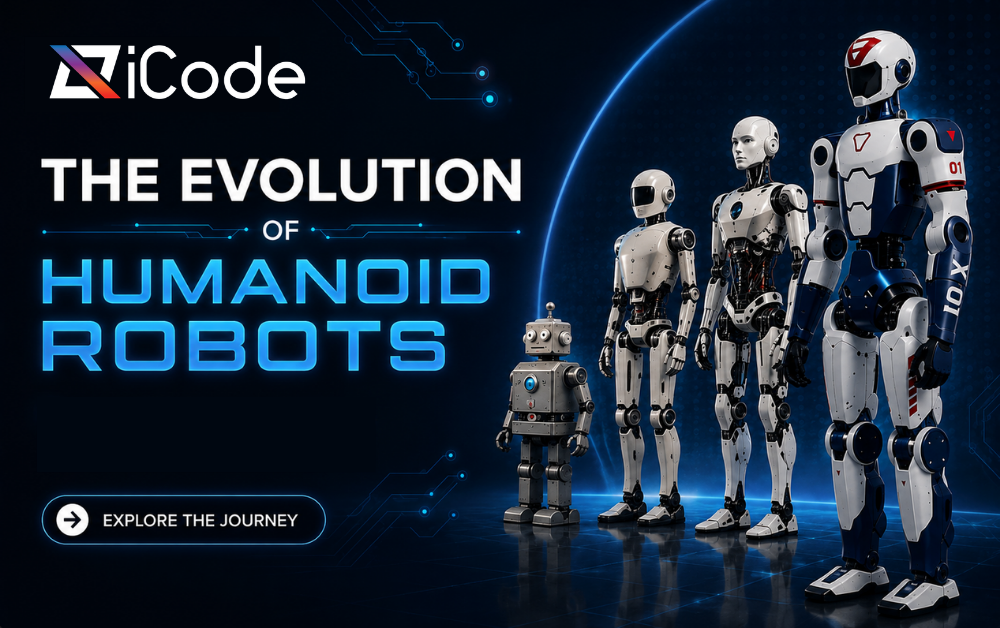
The Evolution of Humanoid Robots: From Science Fiction to STEM Education
Something New for the Capital
Little Rock doesn’t get talked about as a tech hub the way some coastal cities do, and that’s exactly why a program like this matters here. Access to advanced robotics hardware used to depend heavily on geography. A student in Little Rock can now get the same hands-on time with a humanoid robot as a student anywhere else in the country.
The Robot Itself
At iCode Little Rock, students work with the Unitree R1 EDU, a 25-kilogram humanoid robot with up to 40 degrees of freedom, an onboard NVIDIA Jetson Orin AI computer capable of 100 trillion operations per second, and 3D LiDAR with depth cameras for real-time sensing. Every motion it makes in class is controlled by code the student wrote, in Python and C++ through ROS 2.
Programming a Simple Gesture, the Hard Way
One early project has students programming the robot to wave and give a small nod, a gesture that sounds easy until the timing between the two movements is off and it looks stiff or delayed. Getting it to look natural takes several rounds of adjustment — a reminder that even a simple-looking motion involves real, precise coding underneath.
Students are often surprised by how many small decisions go into something that looks effortless when a person does it. How fast should the hand move? How long should it pause at the top of the wave? Should the nod happen before, during, or after the wave? Working through each of those questions in code is a good early lesson that simple and easy are not the same thing.
A Mentor Runs Every Session
None of this happens without an instructor. Mentors teach the code, the mechanical gears and linkages that turn code into movement, and the electronics that tie sensors into the onboard computer. The robot is the equipment. The person guiding the class is the teacher.
What This Program Actually Is
iCode calls it the Youth Innovation Program, also listed as the College Accelerator Program for what it delivers. It’s an 8-week, mentor-led cohort of 12 students working in three teams of four to five. Robotics is one project track — students can also choose web and mobile app development, data analysis, AI and automation, or digital media — but it’s the one that puts advanced hardware directly in a student’s hands.
A Real Pitch to Real Leadership
Every cohort finishes with a live presentation to iCode Corporate leadership, where students explain not just their finished robot, but what didn’t work the first time and how they solved it.
Closing a Gap That Used to Be About Geography
For a long time, access to this kind of technology depended heavily on where a student happened to grow up. That’s changing, and Little Rock is a good example of why it matters. A student here now works with the exact same hardware, the same curriculum, and the same mentor-led structure as a student in a bigger, more famous tech city. The project they present to iCode Corporate leadership at the end of eight weeks looks just as strong on a college application, regardless of the zip code it came from.
There’s no prerequisite of prior coding classes or robotics camps to apply. The program is designed to work for a student starting from the basics, with the first sessions focused on getting everyone comfortable with the fundamentals before the harder project work begins.
From there, the eight weeks build in stages: fundamentals first, then several weeks of hands-on building and testing where most of the real learning happens, and finally a stretch dedicated to refining the project and preparing for the live presentation to iCode Corporate leadership.
Twelve Spots This Cohort
Enrollment is capped at 12 so mentors can work closely with each student. If your student is ready for something most kids their age never get access to, apply to the Youth Innovation Program (College Accelerator Program) at iCode Little Rock.