

Beyond Coding: The Confidence and Problem-Solving Skills Kids Build in Class
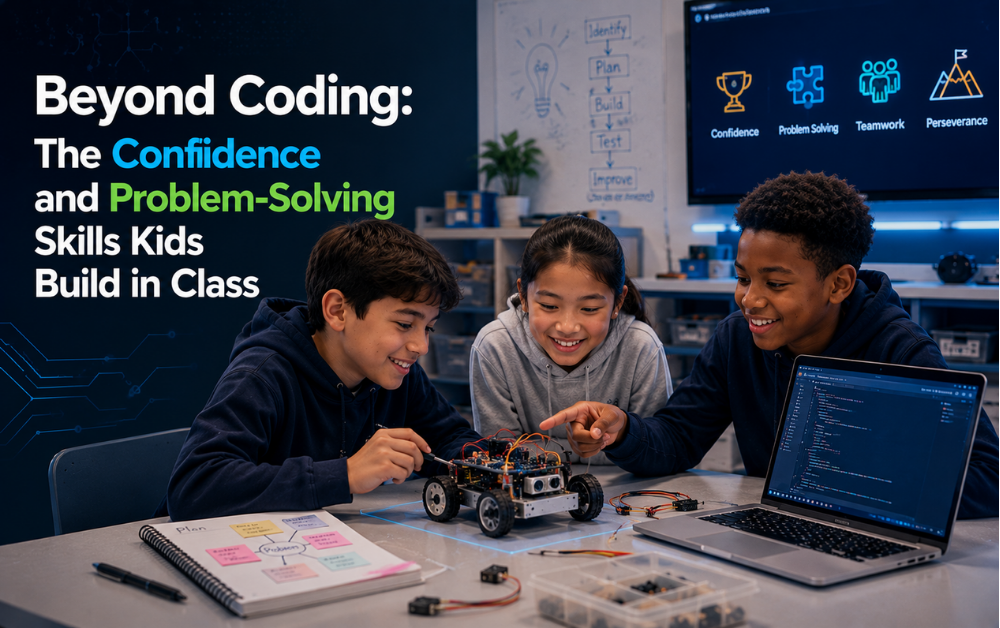
Old Bridge is a big, diverse township full of commuter families who understand the value of practical, real-world skills over flashy ones. At iCode Old Bridge, coding is the subject, but the actual class is built around four things that matter more than the code itself: confidence, problem-solving, teamwork, and perseverance.
Every Project Follows the Same Process
Rather than jumping straight to typing code, students work through the same five-step cycle professional engineers actually use: Identify, Plan, Build, Test, Improve. That structure is what turns a coding class into something closer to real engineering practice, and it’s where each of the four core skills actually gets built.
Identify — Naming the Real Problem
Before writing a single line, a student has to answer a simple question: what exactly is this project supposed to do? Naming the goal clearly, rather than diving in and hoping it works out, is the first real problem-solving skill the class builds.
Plan — Mapping It Out First
With the goal named, students sketch out the steps before touching a keyboard. This is where a big, intimidating project gets broken into smaller, testable pieces, exactly the skill that Old Bridge parents tell us shows up later in schoolwork and everyday problem-solving.
Build — Bringing the Plan to Life With a Partner
Many projects are built with a partner or small team, and this is where teamwork becomes a real, practiced skill rather than an abstract idea. Students have to divide tasks, combine two different approaches into one working result, and communicate clearly enough that both halves of the project actually fit together.
Test — Why Bugs Are Good News
When something doesn’t work, instructors don’t jump to the fix. They guide students to test one possibility at a time until they find the cause themselves. It’s slower than being told the answer, but it’s what actually builds independent problem-solvers instead of kids who wait to be rescued.
Improve — Presenting and Owning the Fix
At the end of most projects, students explain what they built, what broke, and how they fixed it, out loud, to the group. Having to walk someone else through your own reasoning clearly is a different, deeper kind of confidence than just finishing quietly.
Perseverance That Shows Up Long After Class Ends
Parents often don’t notice the shift until well after a semester starts: a student who used to give up quickly on hard homework starts sticking with it instead. That’s the same persistence built one Test cycle at a time, and for a township full of commuter families juggling packed schedules, that kind of lasting, practical skill matters more than any single flashy project.
How This Builds Over a Semester
None of this happens in one sitting. Projects grow more demanding across a full semester, so the Belt Program, our structured curriculum, moves students through the Identify-Plan-Build-Test-Improve cycle repeatedly, with less guidance and more independence each time.
Frequently Asked Questions
Is this only about coding, or does it cover broader skills?
Coding is the vehicle, not the destination. Every project is built to develop confidence, problem-solving, teamwork, and perseverance alongside the technical skill, and those are usually the parts that last the longest.
My child gets frustrated easily. Will this help or make it worse?
This is often exactly the kind of student who benefits most. The Test step is built specifically to guide a student through frustration in small, manageable pieces, with a mentor nearby instead of a student working it out completely alone.
Do students work alone or with others?
Both. Most projects have an individual planning phase, but the Build step is done with a partner or small team, which is where a lot of the teamwork and communication skills actually get built.
How long before I see a real change in my child’s confidence?
Most families notice a shift in how their child handles a setback within the first few weeks, often before any major project is even finished.
Visit iCode Old Bridge
Confidence built through real problem-solving tends to stick longer than confidence handed to a child. Book a free trial class at iCode Old Bridge and see the process in action.
