
Inside the College Accelerator Experience at iCode Ann Arbor
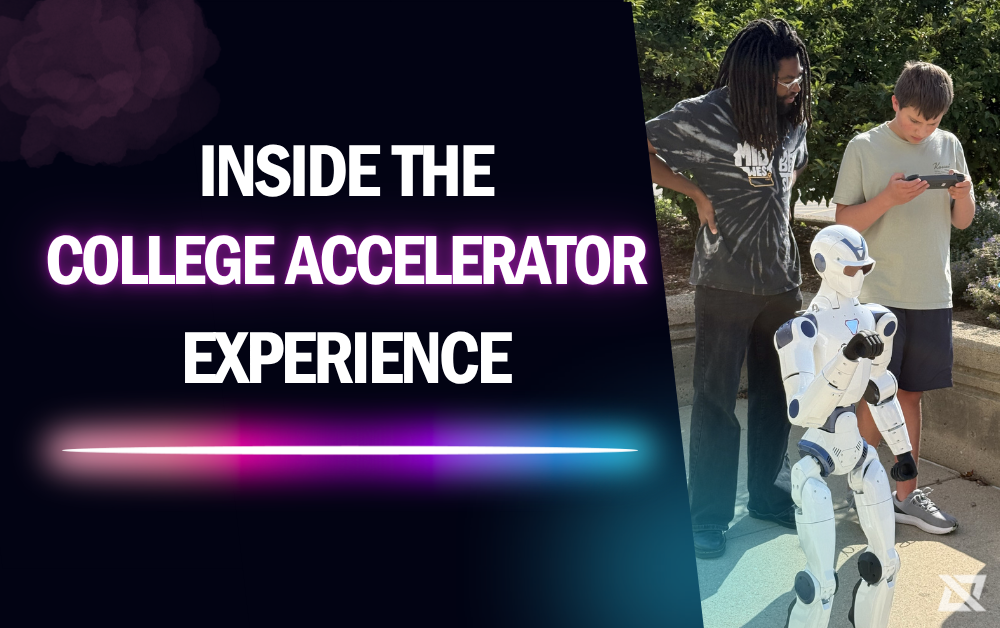
Ask ten families what a STEM program is, and you will hear ten different answers. The College Accelerator at iCode Ann Arbor has a clear one. It is a STEM summer program for teens built around hands-on technical work with a working humanoid robot. Students program it, troubleshoot it, and build with it. Instructors lead each session, and the program is offered with Humanoid Robotics. Ann Arbor is known as a college town, so early hands-on experience feels especially relevant here.
Why the College Accelerator Exists
The World Economic Forum’s Future of Jobs Report 2025 expects 39% of core skills to be disrupted by 2030. For teens in Ann Arbor, that is a good reason to learn how to learn. The College Accelerator focuses on durable skills, built through real technical work instead of lectures.
A Program Built on Real Hardware, Not Simulations
The robot at the center of the program is the Unitree R1 EDU, a genuine piece of robotics hardware. It weighs 25kg and offers up to 40 degrees of freedom. An NVIDIA Jetson Orin processor delivers 100 TOPS of onboard compute. 3D LiDAR and depth cameras let it sense the space around it. Students at iCode Ann Arbor code for it in Python and C++ using ROS 2. Professionals and researchers use that framework too.
Why Real Hardware Changes the Experience
Genuine hardware brings genuine challenges. A sensor may need calibration, or a command may not do what the student expected. Those challenges build real troubleshooting skill. A fixed simulation cannot offer the same experience.
What a Typical Session Looks Like
Guided, Not Self-Taught
An instructor leads every session. They teach the concept first, then support students as they apply it to the robot. The robot is the tool students learn with. The teacher does the teaching by walking through concepts, answering questions, and helping students work through mistakes.
From Concepts to Code
Students start with a short lesson on the concept of the day. They then spend most of the session coding. Each command they write can be tested on the robot straight away, so adjusting and trying again is quick.
Building Toward Bigger Projects
Fundamentals come first. Students learn basic movement, sensor readings, and simple commands. Later sessions ask them to combine these skills in more complex, multi-step projects.
Why This Progression Matters
The goal is not to copy a ready-made project. The goal is to build the skills to create one, and the progression makes that possible step by step.
What Students Take Away
Technical Skills With a College-Ready Story
Specific experience is easier to write about. By the end of the program, students have genuine robotics programming to describe in essays, interviews, and activity descriptions. That says more than a general interest in STEM.
Confidence With New Tools
Students also gain confidence. After working through a complex robot, new tools feel less intimidating. Future classrooms and workplaces will keep demanding that kind of adaptability.
A Closer Look at the Skills Progression
Weeks One and Two: Getting Comfortable
Early sessions cover how the robot senses and moves. Students read sensor data, issue basic movement commands, and learn how Python and C++ instructions turn into physical action.
Middle Sessions: Solving Real Problems
Midway through, the work changes. Students get small problems with no single right answer. They choose their own approach, test it, and refine it.
Why Open-Ended Problems Matter So Much
Open-ended work matters because it mirrors real problem-solving. Students pick a path, test it, and adapt. Colleges and employers describe that cycle as a core skill.
Later Sessions: Independent Projects
Later sessions put everything together. Students design a more complete project with multiple actions and sensor input, and they solve most issues themselves. The instructor remains available when they need help.
Why Mentors Remain Central to the Experience
The robot does not replace the teacher. At iCode Ann Arbor, an instructor leads every session. They introduce each concept, answer questions, and help students when things go wrong. The technology makes learning tangible, and the instructor is what makes it last.
Who the College Accelerator Is Built For
Students Curious About Robotics and Engineering
Teens with an existing interest in robotics, coding, or engineering tend to feel at home here. The program turns a casual interest into a structured, hands-on experience.
Students Still Figuring Out Their Interests
Not sure yet? That is fine. The program works just as well for students still deciding if a technical field suits them. Hands-on time with real hardware shows them what the work feels like, which is quicker than guessing.
Students Preparing College Applications
Core workplace skills are expected to shift quickly in the coming years. Students headed to college soon have good reason to build technical experience now. It is an advantage today and may become a requirement later.
Families in Ann Arbor can check current availability on the iCode Ann Arbor homepage. To see everything students build and learn, read the full College Accelerator Program page.
Frequently Asked Questions
Do students need coding experience before joining the College Accelerator?
No prior experience is required. Sessions start with the fundamentals and build up from there, and instructors guide students the whole way.
What robot do students actually work with?
Students use the Unitree R1 EDU. This humanoid robot weighs 25kg and moves with up to 40 degrees of freedom. It has an NVIDIA Jetson Orin processor (100 TOPS) and 3D LiDAR and depth cameras.
What programming languages are used in the program?
Students code in Python and C++ using ROS 2. This robotics framework is common in professional and research environments.
Is the instructor still involved, or do students mostly work with the robot alone?
Instructors lead every session. They teach the concepts and guide students through the hands-on work. The robot is the tool students learn with, and the instructor does the teaching.
Is the College Accelerator available at iCode Ann Arbor?
The College Accelerator is offered at iCode Ann Arbor with the Humanoid Robotics program. It is offered at select iCode campuses, so check the Ann Arbor homepage to confirm current availability.