

What’s Happening
What’s Happening
Why Colleges Prefer Students Who Can Show Their Work Instead of Just Talking About It
Plenty of applicants write that they are passionate about technology or interested in engineering. Admissions readers see that phrasing hundreds of times a season, and on its own it says very little. For students in Ann Arbor, the better move is to bring evidence: a project, a prototype, a piece of code that runs. That is the core of the hands-on learning benefits that show up in strong applications. Proof beats description. Why Telling Falls Flat in Admissions Claims are cheap. Almost every applicant to a competitive program claims interest and dedication. Admissions readers have learned to discount those claims until they see something backing them up. The Credibility Gap Between Claims and Evidence A sentence like “I love building things” is forgettable. A sentence describing the third version of a robot a student built after the first two failed is not. The second is specific, verifiable, and memorable in a way the first can never be. Why Specificity Builds Trust Specific details are hard to fake convincingly. When a student can describe exactly what went wrong and how they fixed it, that detail signals real experience. A polished summary written for effect does not. The Real Hands-On Learning…
The Extracurricular Activities Colleges Actually Value
Every college applicant hears the same advice: join clubs, volunteer, get involved. Few people explain which activities really shape an admissions decision. Many others add nothing at all. Families in Ann Arbor, MI ask this question early. Ann Arbor is a college town, so students here see the admissions process up close. Finding the best extracurricular activities for college in Ann Arbor starts with one question. What do admissions readers look for in that section? Why Extracurriculars Matter to Admissions Officers Grades show what a student can learn in a structured setting. Extracurriculars show what a student chooses to do when nobody requires it. That makes them one of the few parts of an application that reveal real interest instead of academic duty. What Admissions Readers Look For Most readers look for three things: sustained commitment, real responsibility, and a sense of impact. A club membership with none of the three tends to fade into the background. Depth Beats Breadth A long list of loosely attended clubs rarely stands out. One or two activities where a student grew, took on responsibility, and made something happen almost always read stronger. Types of Extracurriculars That Stand Out Leadership Roles With Real…
The Future Is Changing Faster Than Education: Is Today’s Learning Preparing Students for Tomorrow?
Ask any parent whether the world their teenager will work in looks anything like the one they grew up in, and the answer is almost always no. Technology, tools, and entire job categories are shifting faster than curricula can be rewritten. For families in Ann Arbor, that gap raises a fair question. Is today’s classroom actually preparing students for future jobs, or is it still built for a world that is already moving on? The Widening Gap Between Classrooms and the Real World Traditional education was built around a stable idea. Learn a body of knowledge, pass a test, and move on. That model worked when skills stayed useful for decades. It fits less well when new tools can reshape an industry within a few years. Why Standard Curricula Struggle to Keep Pace Curriculum changes move slowly by design. Textbooks, standards, and teacher training all take time to update. That is a reasonable safeguard against chasing every trend. It also means the tools students learn on in class are often a step behind the tools they will use after graduation. The Skills That Don’t Go Out of Date Not everything needs to change, though. Problem-solving, adaptability, and the ability…
What Colleges Actually Look For Beyond GPA & Test Scores
For most families, the college conversation starts and ends with numbers: GPA, SAT, ACT. It's an understandable place to start — those numbers are the first thing an application shows. But if you ask admissions officers what actually tips a decision, the answer rarely stops at the transcript. Understanding what do colleges look for in applicants beyond the numbers can change how a student spends the next two or three years of high school, and it often matters more than another point of GPA. Why GPA and Test Scores Are Only Part of the Picture GPA and test scores exist to answer one narrow question: can this student handle college-level coursework? That's an important question, but it's not the only one an admissions committee is trying to answer. They're also trying to picture how a student will show up on campus — in a lab, in a dorm, in a club meeting at 9pm. Numbers alone don't answer that. The Rise of Holistic Admissions Most selective schools now use what's called holistic review, meaning every part of the application is read together rather than scored in isolation. A strong essay can reframe an average test score. A pattern of…

Will Humanoid Robots Replace Jobs or Create New Opportunities?
It's a fair question, and one more parents and students in Ann Arbor, MI are asking as humanoid robots move from research labs into warehouses, classrooms, and even homes. Will robots replace jobs, or are they opening doors to careers that don't exist yet? The honest answer is both — and understanding how helps local families make better decisions about the skills worth building now. Why This Question Keeps Coming Up Humanoid robots look different from the automation people are used to. A robotic arm on an assembly line is easy to mentally file away as 'just a machine.' A humanoid robot that walks, senses its surroundings, and responds to commands feels closer to a coworker, which naturally raises the stakes of the question. Humanoid Robots Are Becoming More Visible A few years ago, most people only saw humanoid robots in videos or at trade shows. Now they're showing up in logistics centers, hospitals, and classrooms, which makes the conversation feel a lot less hypothetical than it used to. Automation Anxiety Isn't New Every major wave of technology — factory machinery, computers, the internet — brought the same fear: that it would eliminate jobs faster than it created them. In…
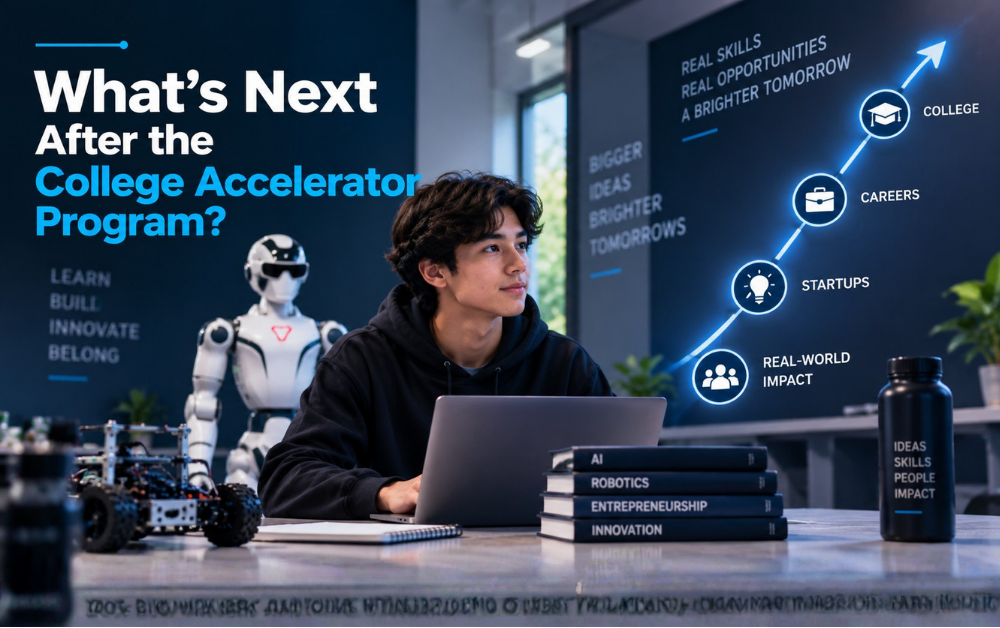
What’s Next After the College Accelerator Program?
A student who's spent months building, coding, and presenting real robotics projects doesn't just stop learning the day the program wraps up. The skills stick around — and so does the momentum, if there's somewhere for it to go. At iCode Ann Arbor, MI, "what's next" is a real, planned answer, not an afterthought. Here's how students keep building on what the College Accelerator Program started. What "Finishing" the Program Actually Means Completing the College Accelerator Program means a student has worked through real, hands-on robotics and coding projects, built confidence presenting their own work, and picked up habits — planning, testing, problem-solving — that carry over well beyond any single project. It's worth being clear about what "finishing" doesn't mean. It isn't the end of learning robotics, and it isn't a certificate that just goes in a drawer. It's a marker that a student has the foundation to take on harder, more open-ended work — which is exactly why the question of what comes next matters so much. What a Student Walks Away With A working knowledge of programming a real humanoid robot platform, not just simulations A track record of finished projects they can explain and defend Practice…
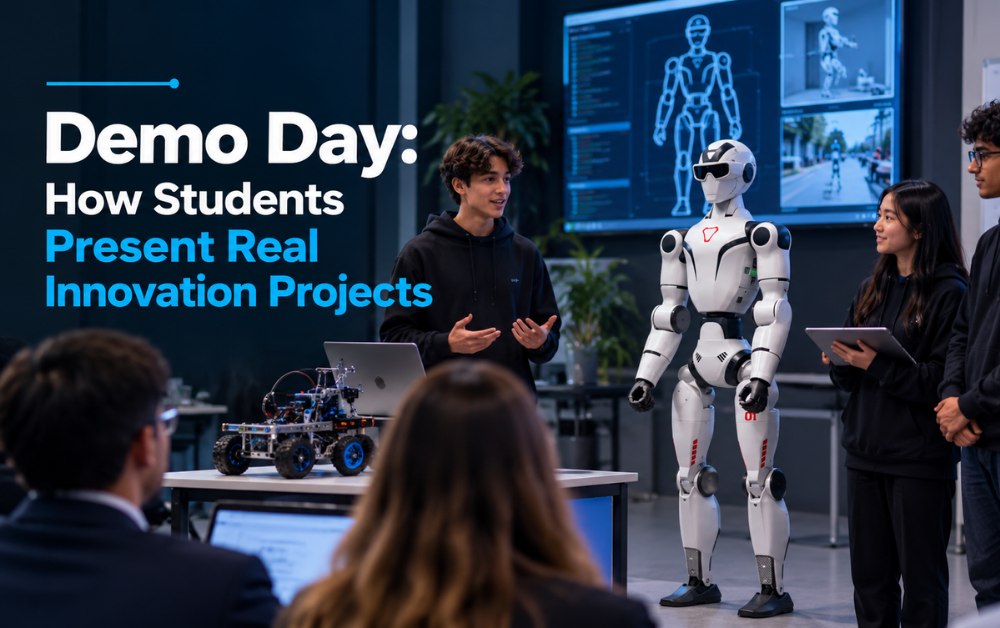
Demo Day: How Students Present Real Innovation Projects
A working robot doesn't explain itself. Someone has to walk an audience through what it does, why it was built that way, and what didn't work along the way — and that's a different skill than the one used to build it. At iCode Ann Arbor, MI, Demo Day is where students practice exactly that skill: turning weeks of hands-on work into a presentation someone else can actually follow. What Actually Happens on Demo Day Demo Day isn't a single formal event with a stage and a podium — it's a working session where each student or team sets up their robot, walks through what it does, and takes real questions from the people watching. It's closer to a science fair than a graduation ceremony. Visitors move station to station, students repeat and adjust their explanation for each new audience, and by the third or fourth walkthrough most students have already found a clearer way to say something than they had the first time. A Typical Demo Day Setup Each student or team sets up their robot at their own station Parents, peers, and mentors circulate and watch short walkthroughs Every presentation ends with unscripted questions from the audience What…
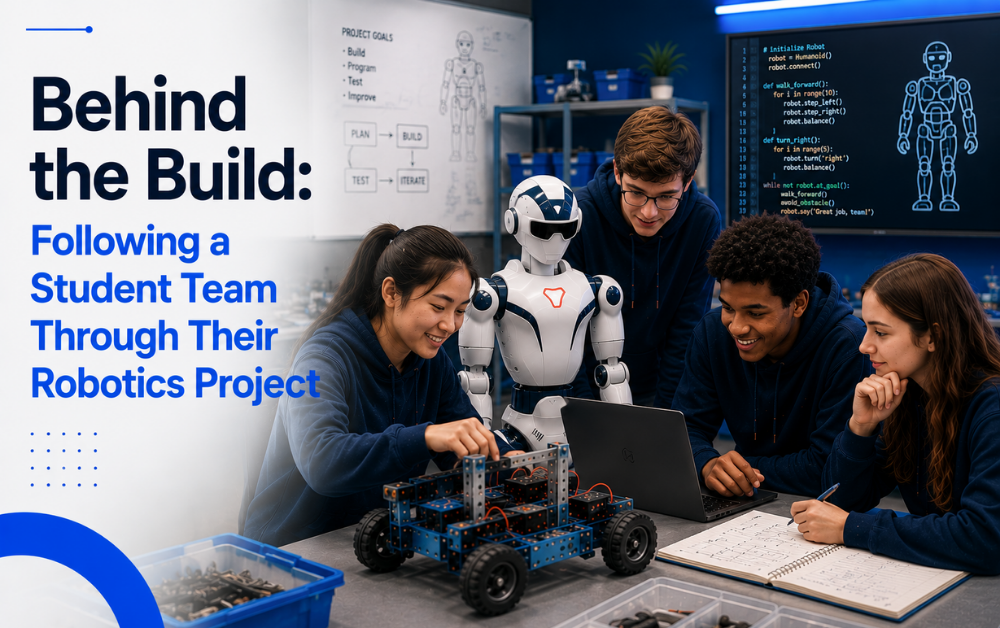
Behind the Build: Following a Student Team Through Their Robotics Project
Nobody's first attempt at a robotics project looks like the finished version. There's a messy middle full of wrong turns, half-working code, and at least one moment where the whole team wants to start over. At iCode Ann Arbor, MI, that messy middle is treated as the actual lesson. Here's what a student team's humanoid robot build really looks like, start to finish. Day One: Staring at a Blank Robot and a Big Idea Every build starts the same way: a robot with no instructions loaded, a rough goal from a mentor, and a team of students who haven't yet decided who's doing what. It's a slower start than it sounds — most of day one is just figuring out what's actually possible. There's usually a moment early on where the goal sounds simpler than it turns out to be. A team might assume getting the robot to react to a sound is a quick task, only to realize there are several smaller problems hiding inside that one idea. Sorting that out before writing any code saves the team from redoing work later. The First Team Meeting Talking through what the robot needs to do, in plain language, before anyone…
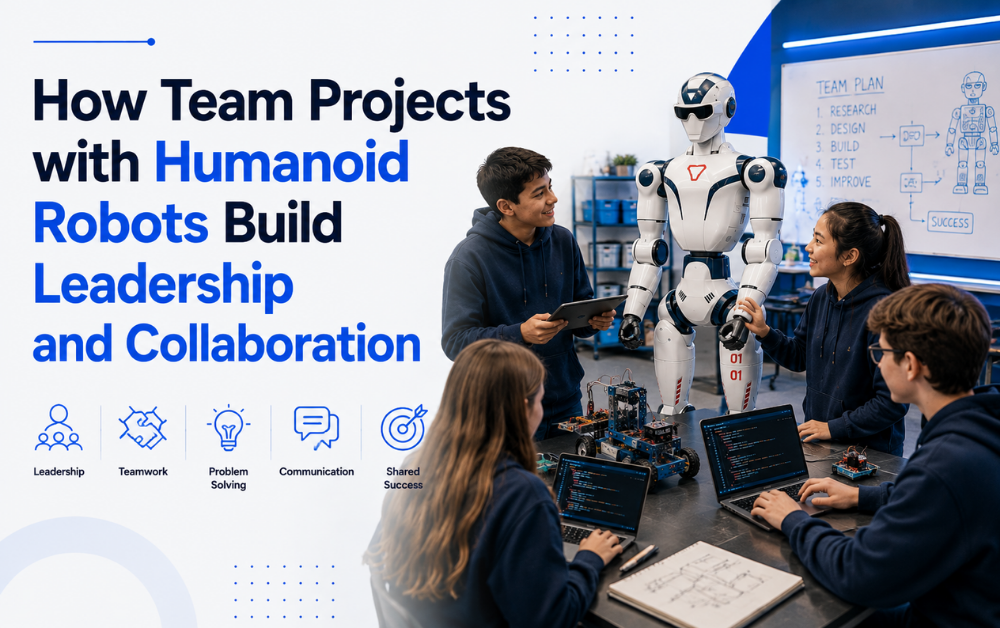
How Team Projects with Humanoid Robots Build Leadership and Collaboration
Most kids don't think of themselves as "leaders" until they're put in a spot where a decision needs to be made and someone has to make the call. A team humanoid robot project creates exactly that spot, over and over, in a low-stakes way. At iCode Ann Arbor, MI, students don't get a lecture on leadership. They get a robot, a deadline, and three teammates — and leadership shows up as a byproduct of getting the work done. What Team-Based Humanoid Robot Projects Look Like A team project usually starts with a goal the robot has to accomplish — walk to a marked point, respond to a spoken cue, react to an object in its path — and a group of students who have to figure out, together, how to make that happen. Real Project Examples Programming a coordinated routine where one student handles movement logic and another handles sensor response Building a simple task-completion challenge and dividing testing duties across the team Debugging a failed run together, with each student explaining their part of the code before the group changes it The Collaboration Skills That Come With It Leadership without collaboration just means one student giving orders. Team robot…
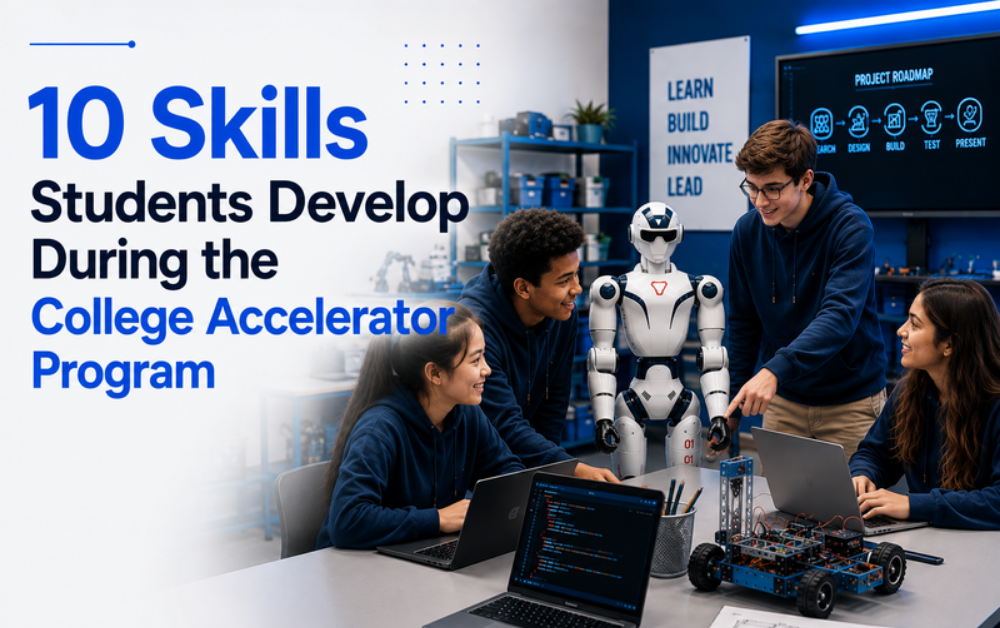
10 Skills Students Develop During the College Accelerator Program in Ann Arbor, MI
Robotics isn't just a buzzword at iCode Ann Arbor, MI — it's a hands-on curriculum built around a real humanoid robot. In the College Accelerator Program, students move past block-based coding and into the kind of applied engineering work that colleges and employers actually look for. According to the World Economic Forum's Future of Jobs Report, employers expect roughly 39% of core workplace skills to shift by 2030, with analytical thinking, technological literacy, and AI fluency leading the list. The College Accelerator Program is built to get students working on exactly those skills years ahead of schedule. What Is the College Accelerator Program? The College Accelerator Program is iCode's advanced track for students ready to move beyond the Belt Program into college-level robotics and software engineering work. At its center is the Unitree R1 EDU humanoid robot — a 25kg platform with up to 40 degrees of freedom, an NVIDIA Jetson Orin processor delivering 100 TOPS, and 3D LiDAR paired with depth cameras for real-time perception. Students program it in Python and C++ through ROS 2, giving them direct experience with the same tools used in professional robotics development. 10 Skills Students Build Along the Way 1. Advanced…
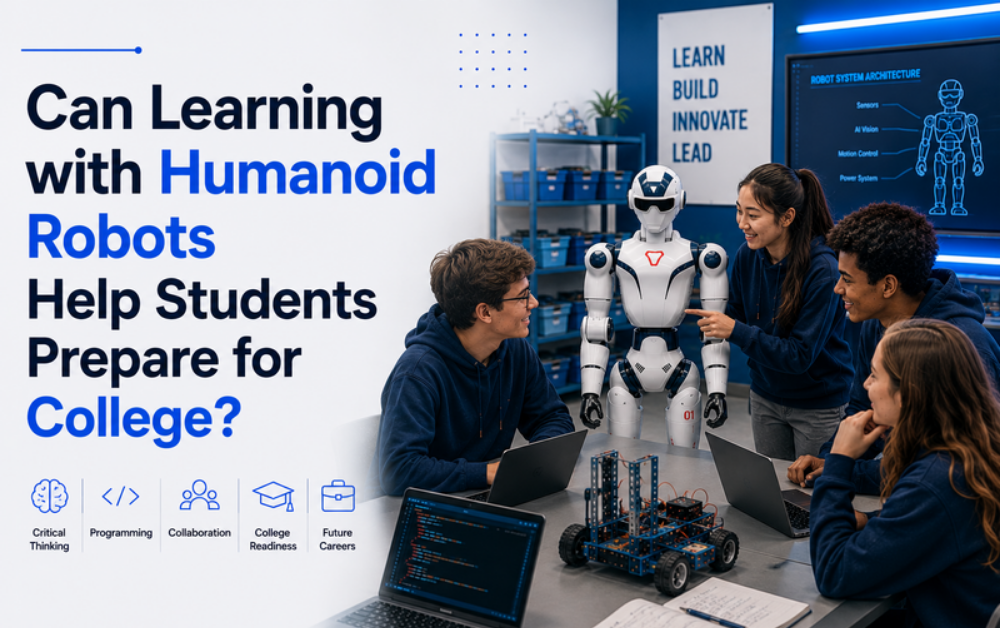
Can Learning with Humanoid Robots Help Students in Ann Arbor, MI Prepare for College?
"Will this actually help with college?" is the question most families ask before they ask anything else. It's a fair one. At iCode Ann Arbor, the College Accelerator Program was built with that question in mind, giving students in the Ann Arbor area, home to the University of Michigan and one of the Midwest's most active research and innovation communities hands-on time with a real humanoid robot instead of a simulation of one, and real engineering habits instead of a surface-level introduction. What "Ready for College" Actually Means in a STEM Context Being ready for a college engineering or computer science program isn't just about knowing facts, it's about being comfortable with ambiguity: a program that doesn't run, a robot that doesn't move the way it should, a result that doesn't match the plan. College courses assume students have already had some practice sitting with that discomfort and working through it methodically. That's a habit, not a fact you memorize, and it's exactly what the College Accelerator Program is built to develop. The Technical Skills That Translate Directly to College Coursework Python and C++ Through ROS 2 Students in the program write real code in Python and C++ using ROS…
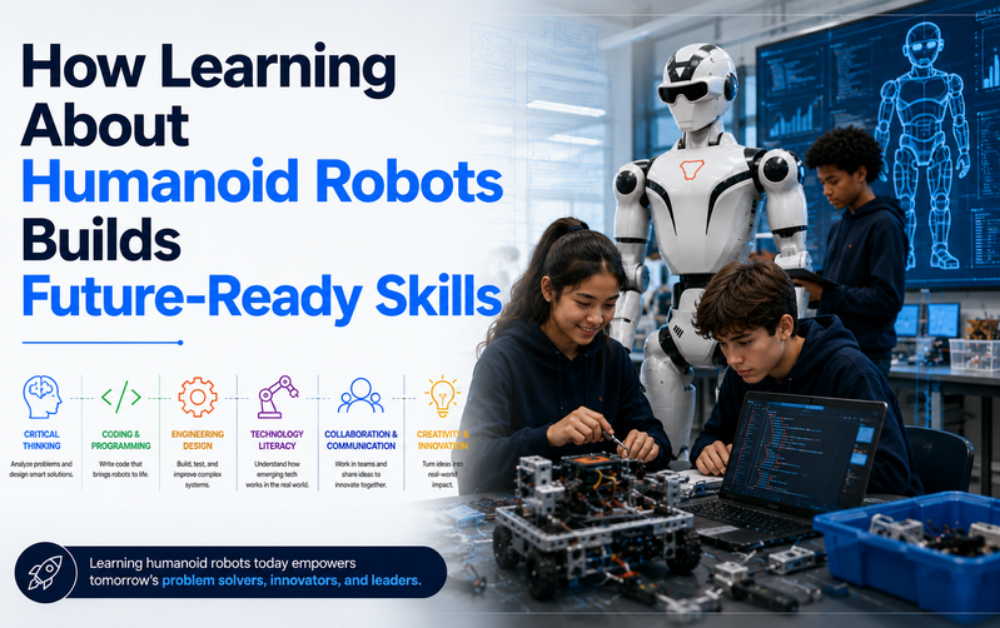
How Learning About Humanoid Robots Builds Future-Ready Skills in Ann Arbor, MI
Ask a kid what a robot is, and you'll probably get an answer straight out of a movie. Ask them to actually build one, program its movements, and read what its sensors are telling it, and something shifts. That's exactly what happens inside the College Accelerator Program at iCode Ann Arbor, where students in the Ann Arbor area, home to the University of Michigan and one of the Midwest's most active research and innovation communities get hands-on time with a real humanoid robot instead of just watching videos about one. What Makes Humanoid Robotics Different From Other STEM Programs A lot of robotics programs stop at snapping pieces together and running a pre-built app. The College Accelerator Program goes further than that. Students aren't just assembling a robot, they're writing the code that tells an existing, fully built humanoid robot what to do, then watching it respond in real time. That single shift, from assembling to programming, is what separates this program from a typical beginner robotics camp. It's built for students who are ready to move past block-based coding and start working with the same kind of tools and language used in professional robotics. Meet the Robot Students Learn…