
Technology Is Changing the Future. We’re Helping Ann Arbor Students Prepare for It
Parents in Ann Arbor often ask us what work will look like when their kids grow up. The honest answer is that no one knows. We do know the direction, which is more technology and more automation every year. With the University of Michigan and nearby research employers close by, Ann Arbor students are already near that change. So our approach to STEM careers for teens in Ann Arbor is to build skills that carry over, whatever the job title turns out to be.
The Problem With Predicting Specific Careers
Job titles change faster than schools can update their career guidance. Steering a student toward one specific future job is a risky bet. A more reliable approach is to build skills that stay useful no matter which job comes along.
Skills That Transfer Across Careers
Almost every technology-related career, from robotics to software to biomedical engineering, rewards the same few abilities: solving problems, working fluently with technology, and staying calm with unfamiliar tools. Developing them early keeps doors open. For students in Ann Arbor, that range of choices is a real advantage, given the University of Michigan and nearby research employers nearby.
Why ‘Open Options’ Beats ‘Early Specialization’
When the basics are solid, a student can pivot from one field to another without starting over. Early, narrow specialization makes that much harder if the industry moves on.
How We Prepare Students for What’s Ahead
Direct Experience With Real Technology
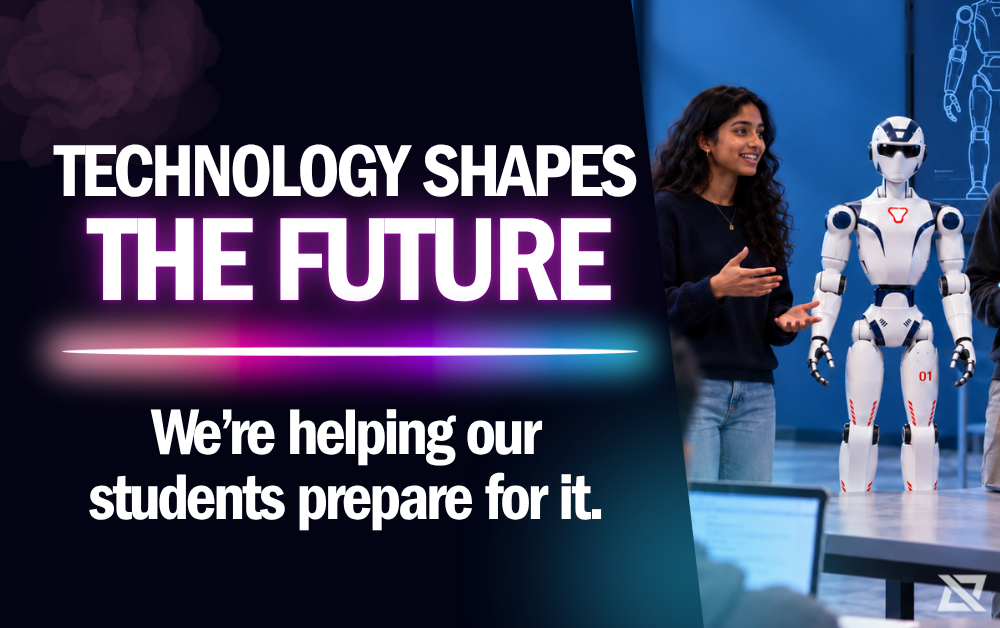
Rather than teaching about technology in the abstract, our Humanoid Robotics program at iCode Ann Arbor puts students in front of real robotics hardware. They program it and troubleshoot it themselves, with an instructor guiding them.
Building Confidence With the Unknown
Every hands-on project has moments when something does not work as expected. Learning to stay calm, methodical, and curious in those moments may be worth more than any single technical skill.
The Instructor’s Role in This Process
Instructors at iCode Ann Arbor are not there to keep students from getting stuck. They are there to help students get unstuck, by asking good questions instead of supplying answers. The technology is the tool. The teacher does the teaching.
Why This Builds Real Confidence
Students who have worked through a truly difficult technical problem, with support but without being rescued, tend to approach the next unfamiliar tool with far less hesitation.
A Progression, Not a One-Time Workshop
Each session adds to the last, moving from basic commands to larger, multi-step projects. Real technical skill grows the same way, gradually and not in one afternoon.
What This Means Looking Ahead
A Foundation, Not a Finish Line
A student does not need to leave the program as a finished expert. What matters is a solid foundation: ease with technical tools, persistence, and working experience that helps when STEM careers for teens in Ann Arbor start to feel like real options.
Ready for Whatever Comes Next
Whether a student eventually pursues robotics, software, biomedical engineering, or something that does not have a name yet, the habits built now carry forward: curiosity, troubleshooting, and comfort with change. For many Ann Arbor students, the University of Michigan and nearby research employers may be where those habits lead.
How Parents Can Support This Kind of Growth at Home
Normalize Not Knowing the Answer Right Away
Let your teen see you work something out without already knowing how. Teens watch closely to see whether curiosity and trial and error are normal or something to avoid.
Ask About the Problem, Not Just the Result
Instead of asking only whether a project worked, ask what got in the way and how it was solved. That shows the process matters as much as the result, which is exactly the mindset technology careers reward.
Small Conversations That Build Big Habits
These conversations do not need to be elaborate. A short question after a session, such as what was the hardest part today, is often enough to build the habit of reflecting on a problem instead of just moving past it.
Give Curiosity Room to Wander
Not every question a teen asks has to lead somewhere productive right away. Room to explore a tangent, like a different way to program the robot or a feature they want to test, often leads to the deepest learning of all.
Why We Keep Coming Back to Hands-On Learning
A program built around lectures and worksheets would be simpler to run. It would also teach less that lasts. The tools students use will keep changing, so we focus on the habits that help them keep up in any direction.
Getting Started at iCode Ann Arbor
No coding or engineering background is required. What counts is a willingness to try, get it wrong, and try again. Technical skill grows from that, one guided session at a time.
Every teen entering the workforce over the next decade will work alongside more technology, not less. Real, hands-on practice now, guided by instructors who know how to turn a mistake into a lesson, is one of the most direct ways to be ready.
Want to see it for yourself? Start with the iCode Ann Arbor homepage to learn about the Humanoid Robotics program, then read the College Accelerator Program page to see how this work builds toward career readiness.
Frequently Asked Questions
Do students need to already know what STEM career they want to pursue?
No. The program is built around transferable skills, so students benefit even if they have not chosen a career path yet.
What kinds of careers might this kind of experience lead to?
Robotics and software engineering are natural fits. The same skills also help in many other STEM careers, including fields tied to the University of Michigan and nearby research employers.
How is this different from a general coding class?
Students work directly with genuine robotics hardware over multiple sessions, guided by an instructor, rather than doing isolated coding exercises alone.
Is this program only for students already strong in math and science?
No prior strength in those subjects is required. The program starts with fundamentals and builds up, with instructor support throughout.
How does hands-on robotics work help if the student’s career interests change later?
The core skills of problem-solving, technical fluency, and comfort with new tools transfer to almost any future direction, even if the specific interest shifts.