

Beyond Coding: The Confidence and Problem-Solving Skills Kids Build in Class
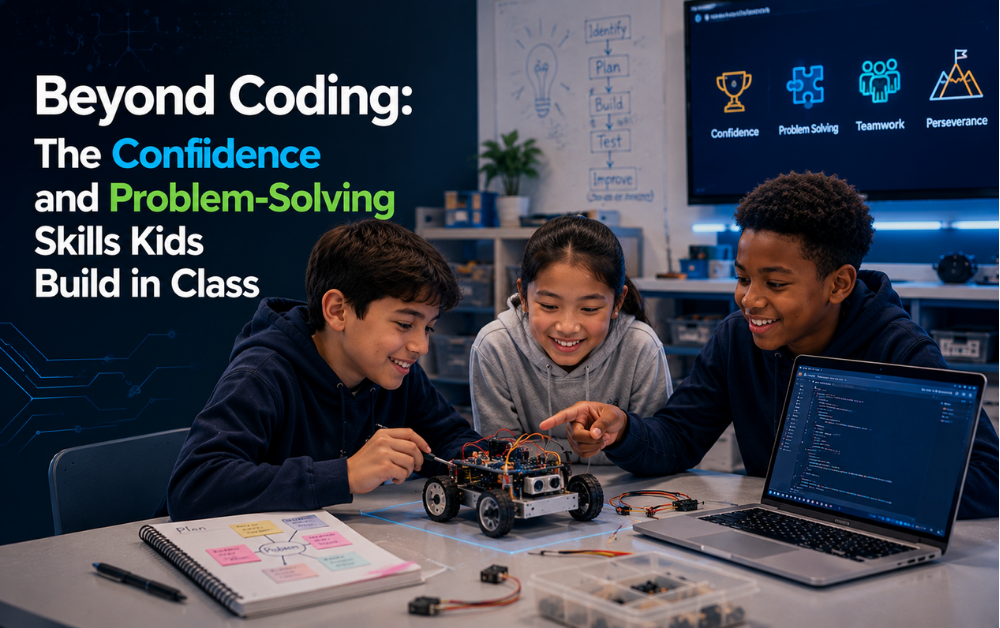
Bridgewater is a practical town, with a local appreciation for things that actually work, not just things that sound impressive. At iCode Bridgewater, that same practicality shows up in how class builds four real skills through coding: confidence, problem-solving, teamwork, and perseverance.
Every Project Follows the Same Process
Rather than jumping into code right away, students follow the same five-step cycle real engineers use: Identify, Plan, Build, Test, Improve. It’s a structured, no-frills process, which fits a community that values things that actually work over things that just sound good.
Identify — Naming the Real Problem
Before any code gets written, a student defines exactly what the project needs to do. That upfront clarity, instead of guessing and hoping, is the first real problem-solving skill the class builds.
Plan — Mapping It Out First
With the goal set, students sketch the steps before touching a keyboard, breaking the big goal into smaller, testable pieces. Bridgewater parents regularly mention their kids applying that same methodical approach to homework, chores, even disagreements with friends.
Build — Bringing the Plan to Life With a Partner
Many projects are built with a partner, and this is where teamwork becomes a real, practiced skill rather than an abstract idea. Students split tasks, merge two approaches into one working result, and communicate clearly enough that both halves actually fit.
Test — Why Bugs Are the Best Teacher in the Room
Nobody writes perfect code on the first try, not students, not professionals. When something doesn’t work, instructors guide students to check their assumptions instead of starting over from scratch. Kids stop associating mistakes with failure and start treating them as useful information.
Improve — Presenting and Owning the Fix
At the end of each unit, students show their project to the group and explain how it works. For a lot of kids, this is the first time they’ve had to defend their own thinking in front of peers, and getting comfortable doing that is worth just as much as anything they coded.
A Typical Debugging Moment
A student’s animation won’t move. Instead of rewriting the whole project, they check each line, find the one command that’s out of order, fix it, and watch it run. That five-minute process teaches more patience than most worksheets ever could, and multiplied across a semester, students who used to ask for the answer immediately start trying two or three things on their own first.
A Structure That Builds Gradually, Not All at Once
Projects get progressively more complex over a full semester through the Belt Program, our structured curriculum, so students are always working just past their comfort zone, with enough support to succeed and enough challenge to actually grow.
Frequently Asked Questions
Does this class only teach coding, or is there more to it?
Coding is really just the vehicle. The class is deliberately structured around the Identify, Plan, Build, Test, and Improve cycle to build confidence, problem-solving, teamwork, and perseverance right alongside it.
My child shuts down when frustrated. Is this a good fit?
It can be one of the better environments for a child like that. The Test step is built to guide a student through frustration step by step, with a mentor there to help instead of leaving a student stuck alone.
Is this a solo activity, or do kids work together?
Both happen. Planning tends to start individually, but the Build step is done with a partner or small team, and that’s where most of the teamwork and communication practice comes from.
How soon does a parent typically notice a difference?
Usually within the first few weeks, often in how a child reacts to a hard problem at home, well before a project is fully finished.
Come See a Class in Session
The best way to understand what this looks like day to day is to see it. Book a free trial class at iCode Bridgewater for your child.