


What’s Happening
What’s Happening
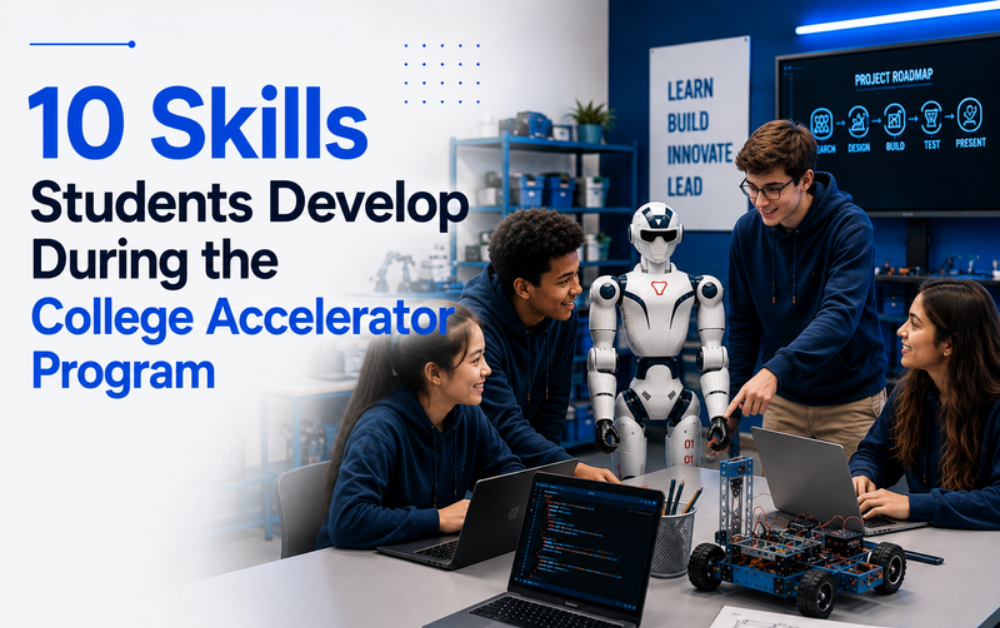
10 Skills Students Develop During the College Accelerator Program in Canton, MI
Robotics isn't just a buzzword at iCode Canton, MI — it's a hands-on curriculum built around a real humanoid robot. In the College Accelerator Program, students move past block-based coding and into the kind of applied engineering work that colleges and employers actually look for. According to the World Economic Forum's Future of Jobs Report, employers expect roughly 39% of core workplace skills to shift by 2030, with analytical thinking, technological literacy, and AI fluency leading the list. The College Accelerator Program is built to get students working on exactly those skills years ahead of schedule. What Is the College Accelerator Program? The College Accelerator Program is iCode's advanced track for students ready to move beyond the Belt Program into college-level robotics and software engineering work. At its center is the Unitree R1 EDU humanoid robot — a 25kg platform with up to 40 degrees of freedom, an NVIDIA Jetson Orin processor delivering 100 TOPS, and 3D LiDAR paired with depth cameras for real-time perception. Students program it in Python and C++ through ROS 2, giving them direct experience with the same tools used in professional robotics development. 10 Skills Students Build Along the Way 1. Public Speaking…
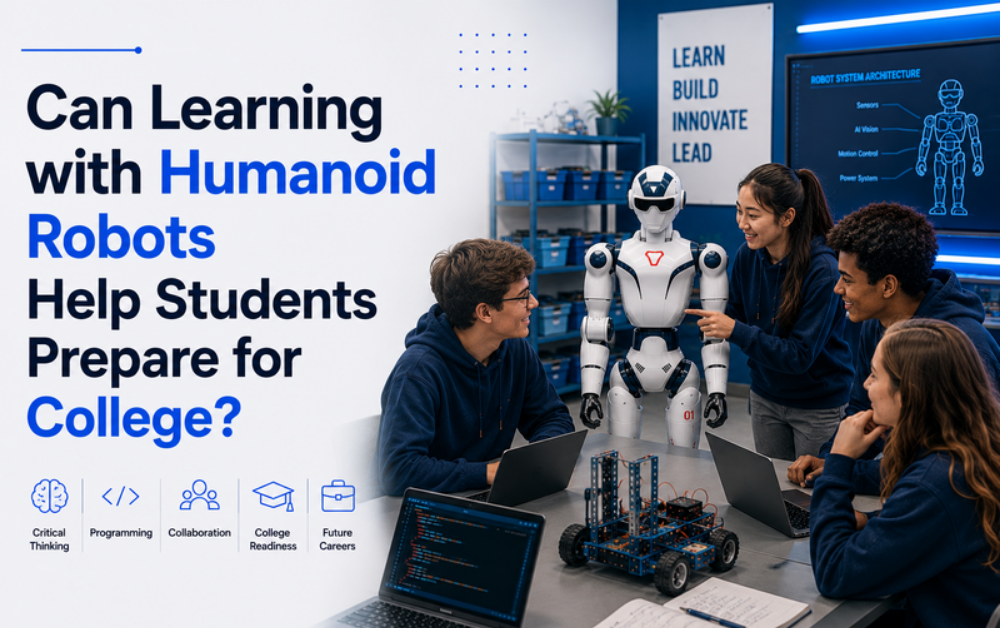
Can Learning with Humanoid Robots Help Students in Canton, MI Prepare for College?
"Will this actually help with college?" is the question most families ask before they ask anything else. It's a fair one. At iCode Canton, the College Accelerator Program was built with that question in mind, giving students in Canton and the greater Ann Arbor-Detroit corridor, a region deeply tied to advanced manufacturing and mobility engineering hands-on time with a real humanoid robot instead of a simulation of one, and real engineering habits instead of a surface-level introduction. What "Ready for College" Actually Means in a STEM Context Being ready for a college engineering or computer science program isn't just about knowing facts, it's about being comfortable with ambiguity: a program that doesn't run, a robot that doesn't move the way it should, a result that doesn't match the plan. College courses assume students have already had some practice sitting with that discomfort and working through it methodically. That's a habit, not a fact you memorize, and it's exactly what the College Accelerator Program is built to develop. Why Canton Students Are Getting This Head Start Early Families across Canton and the greater Ann Arbor-Detroit corridor, a region deeply tied to advanced manufacturing and mobility engineering are increasingly looking past one-off…
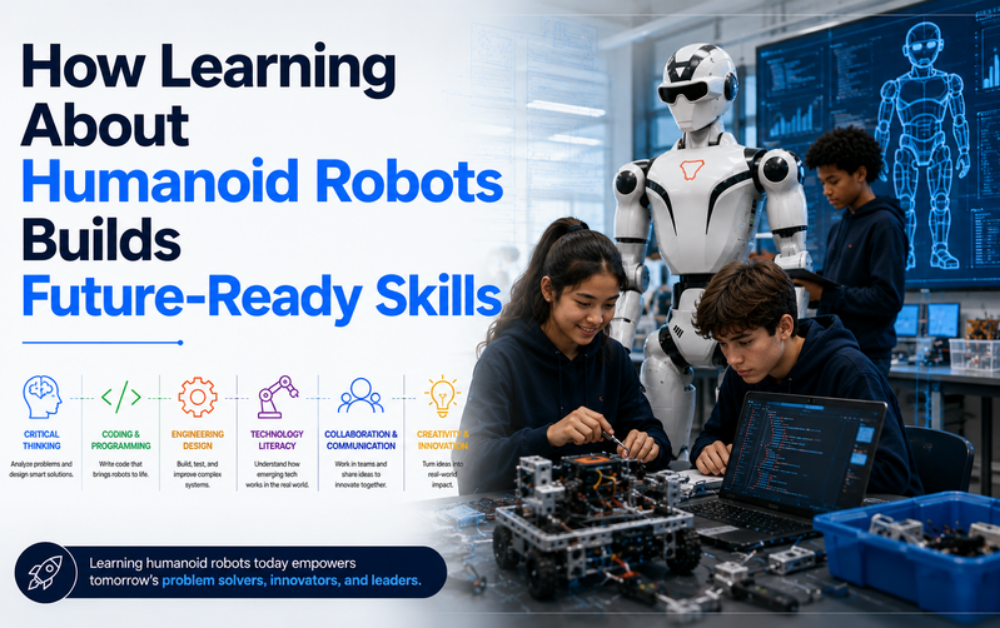
How Learning About Humanoid Robots Builds Future-Ready Skills in Canton, MI
Ask a kid what a robot is, and you'll probably get an answer straight out of a movie. Ask them to actually build one, program its movements, and read what its sensors are telling it, and something shifts. That's exactly what happens inside the College Accelerator Program at iCode Canton, where students in Canton and the greater Ann Arbor-Detroit corridor, a region deeply tied to advanced manufacturing and mobility engineering get hands-on time with a real humanoid robot instead of just watching videos about one. What Makes Humanoid Robotics Different From Other STEM Programs A lot of robotics programs stop at snapping pieces together and running a pre-built app. The College Accelerator Program goes further than that. Students aren't just assembling a robot, they're writing the code that tells an existing, fully built humanoid robot what to do, then watching it respond in real time. That single shift, from assembling to programming, is what separates this program from a typical beginner robotics camp. It's built for students who are ready to move past block-based coding and start working with the same kind of tools and language used in professional robotics. Meet the Robot Students Learn On Built for Real Engineering,…
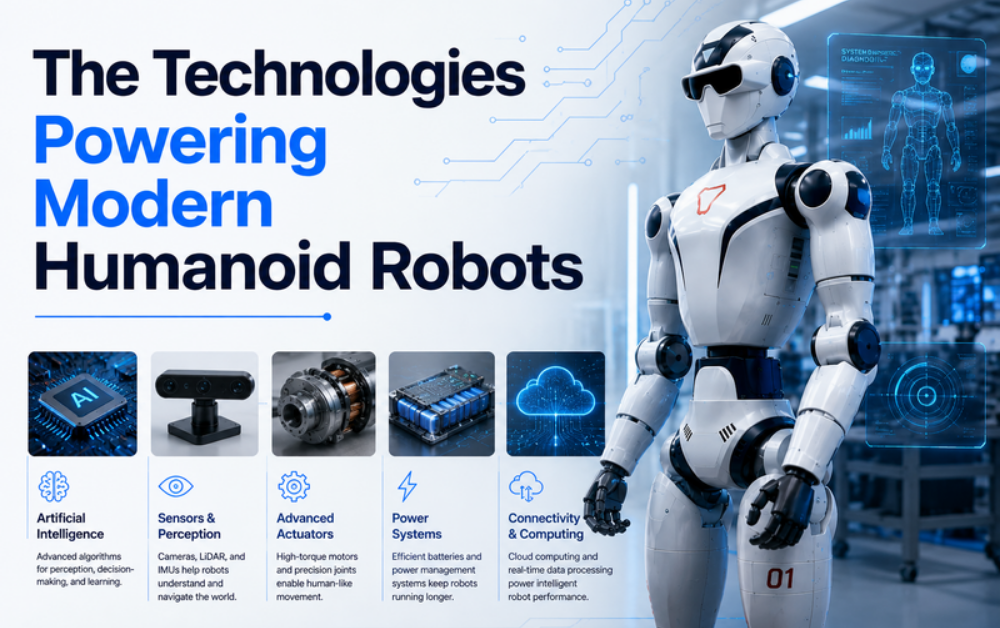
The Technologies Powering Modern Humanoid Robots
Take apart a humanoid robot and the mystery mostly disappears. What's left is a set of concrete systems — sensing, movement, computing, and code — and for students in Canton, MI, learning how those systems connect is where robotics stops being a spectator activity. What's Really Going On Inside a Humanoid Robot? A humanoid robot may look like one seamless machine, but it's really several distinct technologies operating as a team. Beneath the outer shell are sensors, motors, processors, and software constantly exchanging information, each one responsible for a specific piece of the job so the robot as a whole can sense, decide, and move. The Core Technologies at Work Software and Programming Frameworks — Where the Logic Lives None of the hardware in a humanoid robot does anything useful without software to direct it. Frameworks like ROS 2 (Robot Operating System) give developers a standardized way to connect sensors, actuators, and computing hardware into a single coordinated system. Students generally write this logic in Python or C++, two languages used well beyond robotics, so the programming skills learned here transfer directly into other technical work. One thing students notice quickly is how immediate the feedback is. Adjust a few…
How Humanoid Robots Are Creating New Career Opportunities for the Next Generation in Canton, MI
Walk through a modern warehouse or hospital today and there's a decent chance a humanoid robot is somewhere nearby, lifting, sorting, or assisting. Behind every one of those machines sits a small team of people who built, trained, and maintain it. For families in Canton, MI, that's not a distant trend. It's a preview of the career paths their kids could be walking into in the next ten to fifteen years. The Skills Behind These New Careers Coding and Computational Thinking Every one of these emerging roles touches code in some form, whether it's writing it, debugging it, or understanding what it's telling a machine to do. Kids who build comfort with programming early aren't just learning a subject, they're learning the language these careers run on. Hands-On Problem-Solving Robots fail in ways textbooks don't predict. A sensor misreads a surface, a motor stalls mid-task, a program runs but the movement looks wrong. Learning to troubleshoot a real, physical failure, not just debug a line of code, builds a kind of patience and persistence that transfers directly into these careers. Working Well in a Team Almost none of these emerging roles exist in isolation. A technician relies on a programmer's…
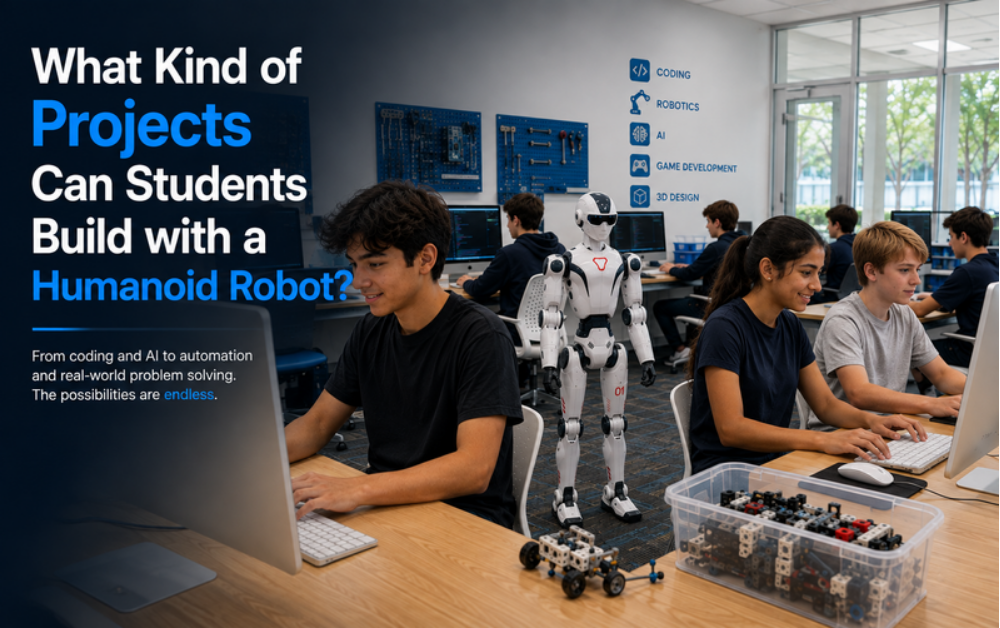
What Kind of Projects Can Students Build with a Humanoid Robot?
In a city built around engineering and manufacturing, Canton students don't just watch machines work — through this program, they get to program one. A humanoid robot isn't just something to watch move — it's a platform students actually build on. From a first walking test to a full choreographed routine, here's what that progression actually looks like. Real Projects Start With Movement Getting the Robot to Hold Its Balance Early projects usually start with movement — programming the robot to walk forward, turn, and stop at a marked point without losing its balance. That simple task hides a lot of coordination: dozens of joints working together, adjusting in real time as the robot shifts its weight. Giving the Robot a Way to See Sorting Objects Using the Robot's Cameras The next kind of project shifts from movement to perception. Using the robot's built-in cameras, students teach it to recognize a specific object among several others and respond accordingly. How Students Build This, Step by Step The process usually breaks into four parts: setting the target to identify, writing the logic that scans for it, testing until the detection is reliable, and adding the movement that follows once the robot…
Why Humanoid Robots Are at the Center of the Next Technology Revolution
In a metro area long defined by the auto industry, Canton families are watching robotics move from the assembly line into everyday conversation. For decades, technology lived mostly behind glass — on a phone, a laptop, a tablet. That is changing. Humanoid robots, machines built to move, sense, and respond the way people do, are stepping out from research labs and into classrooms, warehouses, and homes. That transition marks more than a new gadget category. It signals a fundamental change in how people and machines share physical space — and it is exactly why humanoid robots have become the center of the next technology revolution. From Screens to Physical Intelligence Seeing Concepts in Action A line of code is abstract until it moves something real. When a humanoid robot follows a set of instructions and takes a step, reaches for an object, or corrects its own balance, the logic behind it becomes visible and understandable in a way a screen alone cannot offer. Why Humanoid Design Matters Shaped to Work Alongside People Most robots are built to repeat a single task in a fixed spot. A humanoid robot instead has to move through spaces designed for people — which means…
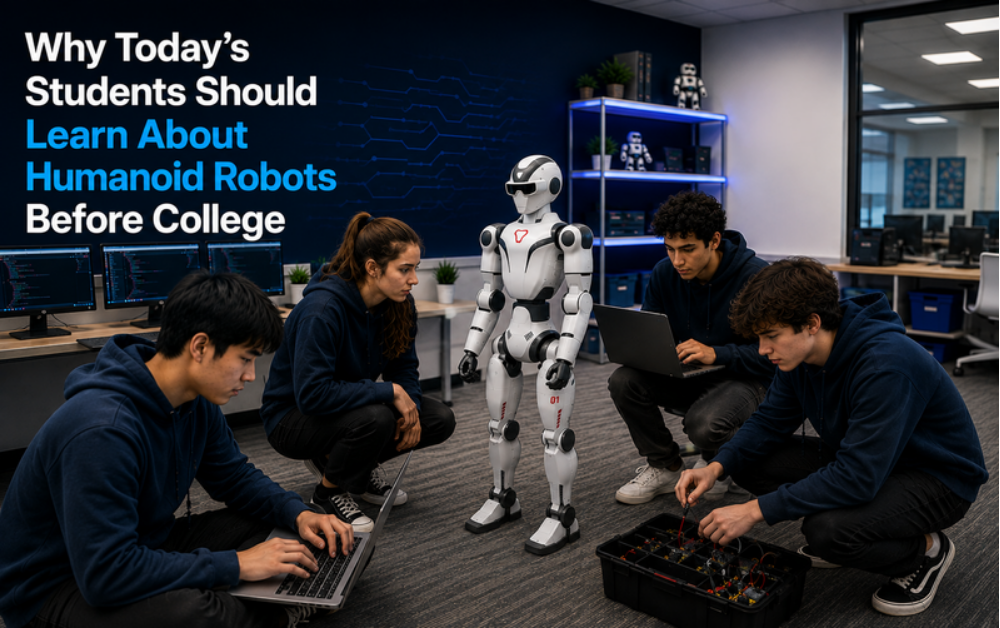
Why Today’s Students in Canton, MI Should Learn About Humanoid Robots Before College
Ten years ago, a walking, talking humanoid robot was something you saw in a movie, not something a middle schooler could program. That's no longer true. In Canton, MI — a community sitting right next to one of the country's deepest concentrations of automotive engineering and industrial robotics talent — students now have a chance to work directly with humanoid robotics before they ever fill out a college application. The Skills That Actually Transfer Beyond Just Learning to Code Hands-on programming: Students aren't just learning to code in theory — they're writing Python and C++ that has to actually work on a physical robot in front of them. Debugging mindset: Robotics rewards persistence. A student who spends a session tracking down why a sensor reading is off learns a kind of patience that most classroom assignments don't teach. Team-based building: Students work in small teams toward a shared goal, dividing up problems the way an actual engineering team would — a very different experience from solo homework. Why This Looks Different From a Typical Coding Class The difference is the platform. Writing code that moves a real, physical robot forces a level of precision that a purely on-screen project doesn't…
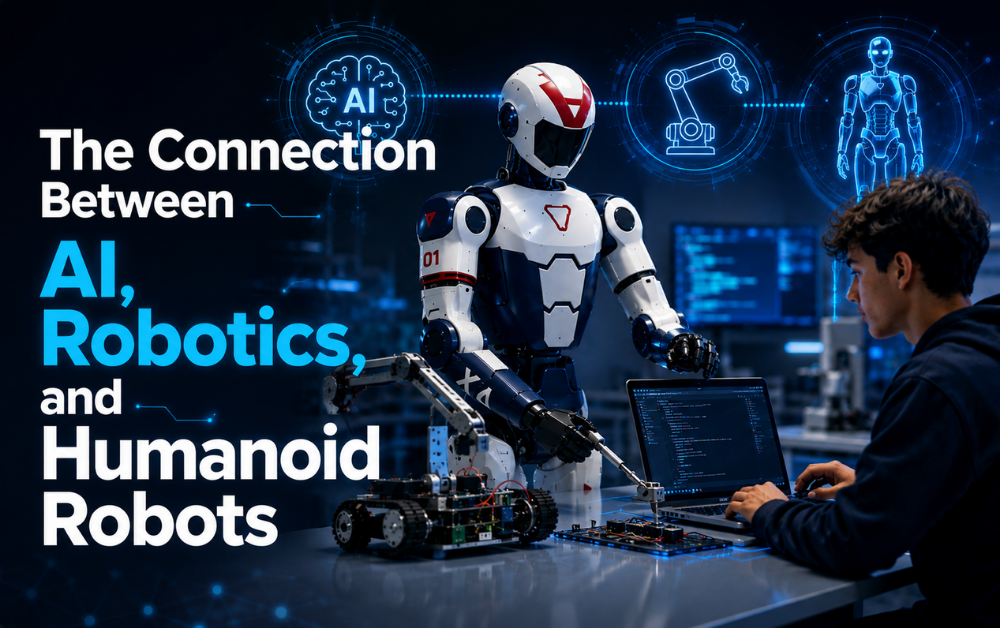
The Connection Between AI, Robotics, and Humanoid Robots — Explained for Canton Students
Metro Detroit has spent a century building the machines that move the world, and over the last twenty years that expertise has shifted heavily toward automation and robotics. Canton students grow up close to that shift. At iCode Canton, they get to see where that same automation logic is heading next — toward robots that think about what they're doing, not just repeat one motion. What Is AI, Really? It's Pattern Recognition, Not Magic AI sounds complicated, but the core idea is simple: it's software that gets better at a task the more examples it sees. A chess AI improves by studying thousands of games. A voice assistant improves by hearing thousands of sentences. There's no magic involved — just pattern recognition happening at a scale no human could match by hand. What Is Robotics? The Physical Side of Smart Machines If AI is about thinking, robotics is about doing. It's the design and engineering of machines that can sense the world around them and act on it — arms that grip, wheels that roll, legs that walk. On its own, a robot's hardware can move, but it has no way to decide what to do next without something smarter…
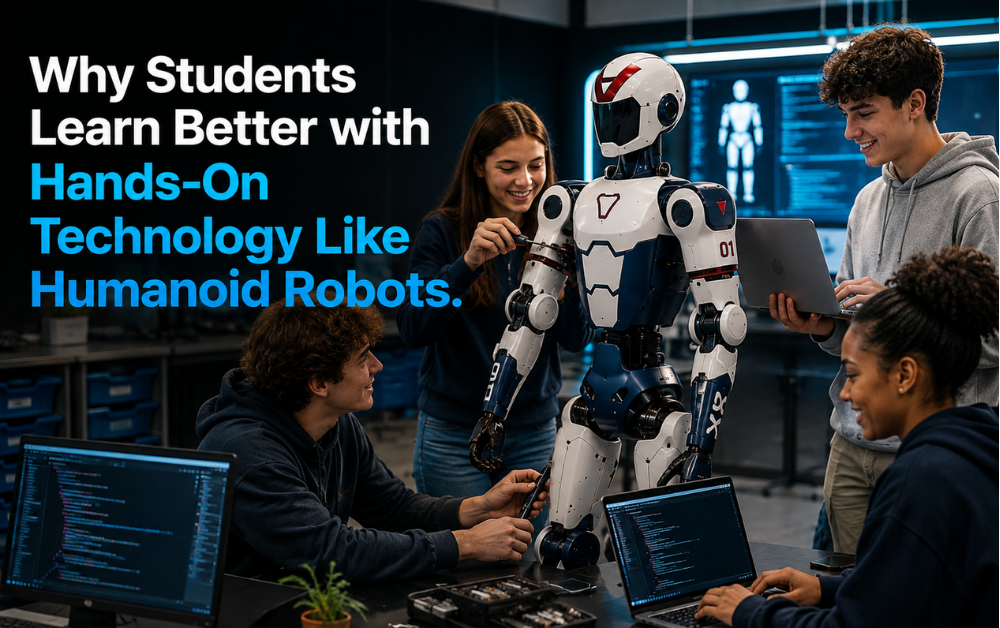
Why Students Learn Better with Hands-On Technology Like Humanoid Robots
Think back to a class where you just sat and listened. Chances are, most of it is gone now. Then think of something you actually built or adjusted with your own hands, that one probably still sticks. In a town built on precision manufacturing, that distinction isn't abstract. It's the same reason a technician remembers a repair long after forgetting a manual. At iCode Canton, that's the whole reason students spend their time building with technology instead of just reading about it. When that technology is a real humanoid robot, the lesson tends to stick even harder. Why Doing Beats Watching This isn't just a classroom preference. Learning by doing consistently outperforms learning by watching, because applying an idea forces the brain to encode it differently than simply hearing about it does. You can see how this plays out firsthand in the Youth Innovation Program, where every concept gets tested by hand, not just explained. A student who only hears about how a robot's joints move might remember the term "degrees of freedom" for a quiz. A student who writes the code, watches the joint move the wrong way, and figures out why remembers that lesson for years. A…
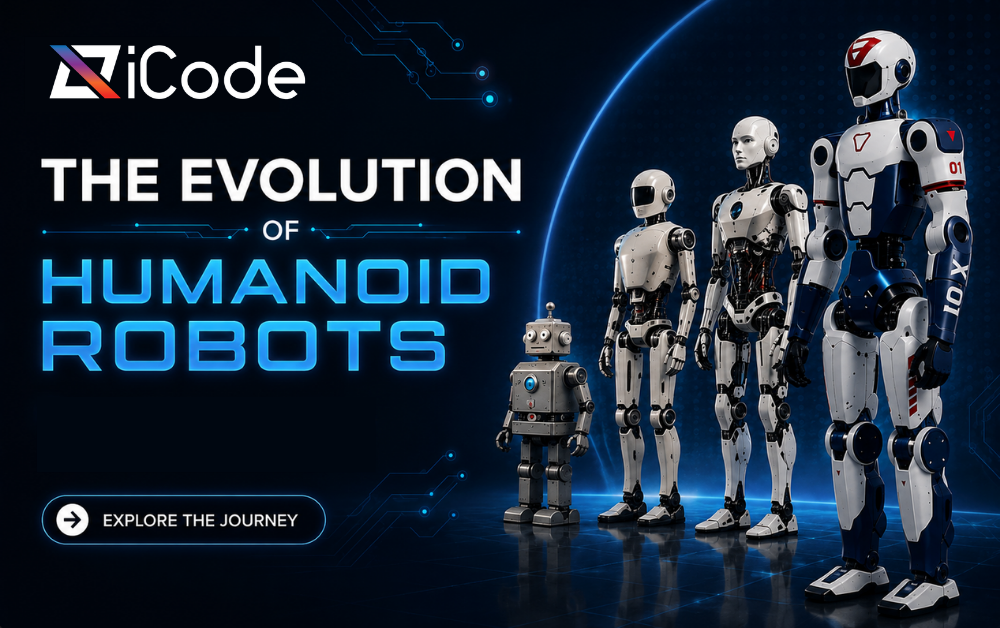
The Evolution of Humanoid Robots: From Science Fiction to STEM Education
A Town Built on Building Things Canton sits in the middle of Michigan's auto corridor, a region that has spent a century turning raw materials into working machines on an assembly line. That history is part of why a humanoid robotics program fits naturally here — the instinct to take something apart, understand how it moves, and put it back together better isn't new to this area. It's just aimed at a different kind of machine now. At iCode Canton, that machine is the Unitree R1 EDU, a 25-kilogram humanoid robot with up to 40 degrees of freedom, an onboard NVIDIA Jetson Orin AI computer running at 100 trillion operations per second, and 3D LiDAR paired with depth cameras for real-time sensing. Students write the code that controls it directly, in Python and C++ through ROS 2 — the same framework used in professional robotics labs, not a simplified toy version of one. Who's Actually Teaching The robot doesn't run the class. A mentor does. Every session, an instructor walks students through what the code is supposed to do, how the physical gears and linkages carry out that instruction, and how the electronics tie the whole system together. Think of…
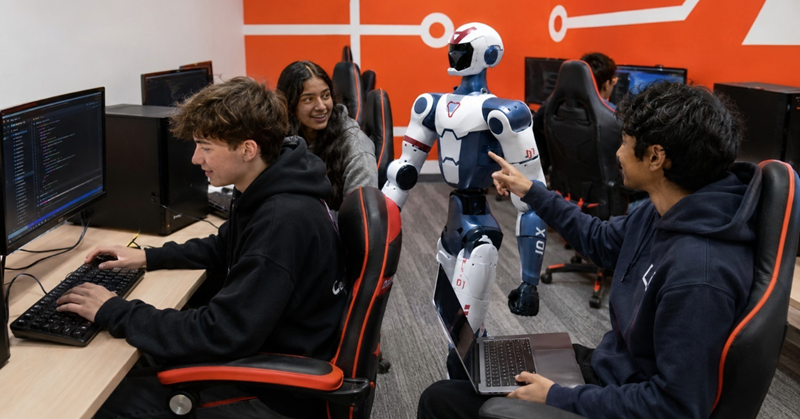
How Robotics Education Helps Students Develop an Engineering Mindset
Engineering is about solving problems, designing solutions, and improving the world through innovation. Robotics education provides students with opportunities to develop these skills through engaging STEM experiences. This summer, students at iCode Canton will have the opportunity to explore advanced robotics learning with Unitree R1 humanoid robots arriving on campus. The Unitree R1 helps students connect engineering concepts with real-world applications while making STEM learning interactive and exciting. What Is an Engineering Mindset? An engineering mindset encourages students to: Identify challenges Explore solutions Test ideas Learn from failure Improve designs These habits can benefit students in school, future careers, and everyday life. Learning Engineering Through Robotics Robotics projects introduce students to: Mechanical systems Sensors and automation Programming logic Artificial intelligence Problem-solving workflows Students learn by building, testing, and improving their ideas. Why Canton Families Are Choosing Robotics Programs Parents throughout Canton are increasingly looking for educational opportunities that combine STEM learning with creativity and innovation. At iCode Canton, students can explore robotics while building confidence, technical knowledge, and future-ready skills.