
Technology Is Changing the Future. We’re Helping Cupertino Students Prepare for It
Parents in Cupertino often ask us what work will look like when their kids grow up. The honest answer is that no one knows. We do know the direction, which is more technology and more automation every year. With Silicon Valley close by, Cupertino students are already near that change. So our approach to STEM careers for teens in Cupertino is to build skills that carry over, whatever the job title turns out to be.
The Problem With Predicting Specific Careers
Job titles change faster than schools can update their career guidance. Steering a student toward one specific future job is a risky bet. A more reliable approach is to build skills that stay useful no matter which job comes along.
Skills That Transfer Across Careers
Problem-solving, technical fluency, and comfort with unfamiliar tools show up in almost every technology-related career, from robotics to software to biomedical engineering. Building these skills early keeps a student’s options open instead of narrowing them too soon. That flexibility matters in Cupertino, with Silicon Valley close by.
Why ‘Open Options’ Beats ‘Early Specialization’
A student with strong technical fundamentals can move between fields far more easily than one who specialized narrowly and then watched the field change underneath them.
How We Prepare Students for What’s Ahead
Direct Experience With Real Technology
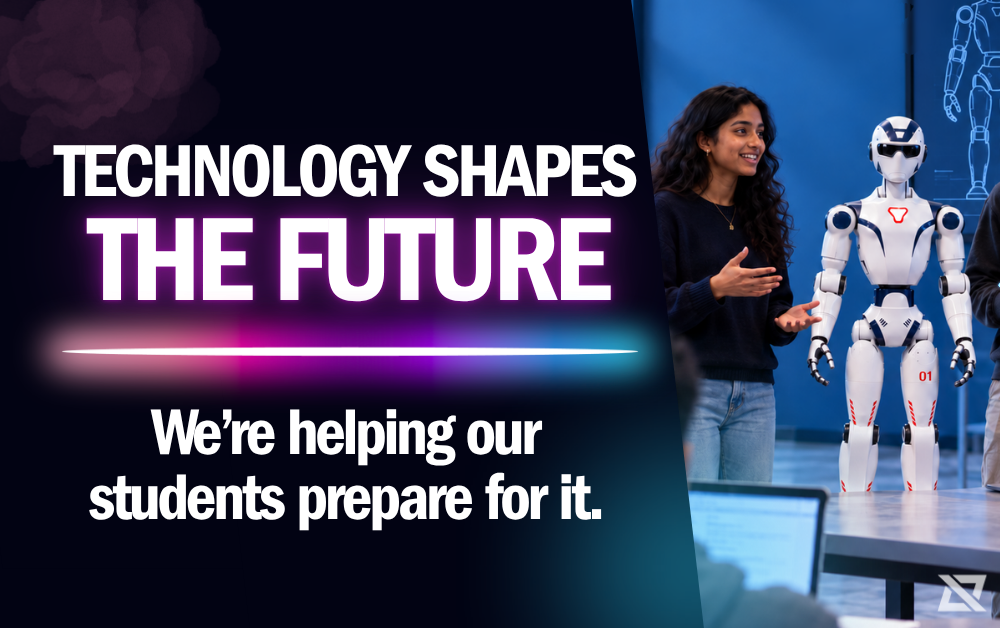
At iCode Cupertino, our Humanoid Robotics program skips the abstract lessons. Students work directly with real robotics hardware, writing the programs and fixing the problems themselves while an instructor guides them.
Building Confidence With the Unknown
Things go wrong in hands-on projects, and that is part of the point. Learning to respond with calm, a method, and curiosity may matter more than any single technical skill.
The Instructor’s Role in This Process
An instructor’s job is not to stop students from hitting problems. It is to help them work through those problems, asking the right questions instead of handing over the answer. The technology is the tool. The teacher does the teaching.
Why This Builds Real Confidence
A student who has solved a hard technical problem with support, but without being rescued, usually meets the next unfamiliar tool with much less hesitation.
A Progression, Not a One-Time Workshop
Each session adds to the last, moving from basic commands to larger, multi-step projects. Real technical skill grows the same way, gradually and not in one afternoon.
What This Means Looking Ahead
A Foundation, Not a Finish Line
The goal is not for a student to leave as a finished expert. It is to leave with a real foundation: comfort with technical tools, a habit of persistence, and hands-on experience to point to when they start exploring STEM careers for teens in Cupertino more seriously in the years ahead.
Ready for Whatever Comes Next
Whether a student eventually pursues robotics, software, biomedical engineering, or something that does not have a name yet, the habits built now carry forward: curiosity, troubleshooting, and comfort with change. For many Cupertino students, Silicon Valley may be where those habits lead.
How Parents Can Support This Kind of Growth at Home
Normalize Not Knowing the Answer Right Away
Parents help most by showing that it is fine not to know the answer immediately. Teens pick up quickly on whether trial and error is welcome at home or something to be embarrassed about.
Ask About the Problem, Not Just the Result
Try asking what went wrong and how it got fixed, not just whether the project worked. It reinforces that the process counts as much as the outcome, a mindset technology careers reward.
Small Conversations That Build Big Habits
There is no need for a long talk. A quick question on the way home from iCode Cupertino, such as what was the hardest part today, is often enough to build a reflection habit.
Give Curiosity Room to Wander
Not every question a teen asks has to lead somewhere productive right away. Room to explore a tangent, like a different way to program the robot or a feature they want to test, often leads to the deepest learning of all.
Why We Keep Coming Back to Hands-On Learning
It would be easier, in some ways, to run a program built on lectures and worksheets. It would also be less useful. The specific technology students use will keep changing. What matters is that they leave with the habits that let them keep up, whatever direction the change takes.
Getting Started at iCode Cupertino
Students do not need a background in coding or engineering to begin. A willingness to try something, get it wrong, and try again matters more. The technical skill builds from there, one guided session at a time.
The teens entering the workforce in the next ten years will find more technology waiting for them. Real hands-on practice today, guided by instructors who turn a mistake into a lesson, is a direct way to get ready.
Ready for the next step? Head to the Cupertino campus homepage to learn about the Humanoid Robotics program, and read the College Accelerator Program page to see how hands-on technology work builds career readiness over time.
Frequently Asked Questions
Do students need to already know what STEM career they want to pursue?
No. The program is built around transferable skills, so students benefit even if they have not chosen a career path yet.
What kinds of careers might this kind of experience lead to?
Robotics and software engineering are natural fits. The same skills also help in many other STEM careers, including fields tied to Silicon Valley.
How is this different from a general coding class?
Students spend multiple sessions working with real robotics hardware and an instructor, not completing coding exercises on their own.
Is this program only for students already strong in math and science?
No prior strength in those subjects is required. The program starts with fundamentals and builds up, with instructor support throughout.
How does hands-on robotics work help if the student’s career interests change later?
Those core skills carry over. Problem-solving, technical fluency, and comfort with new tools still apply if a student’s interests move to a different field.
