

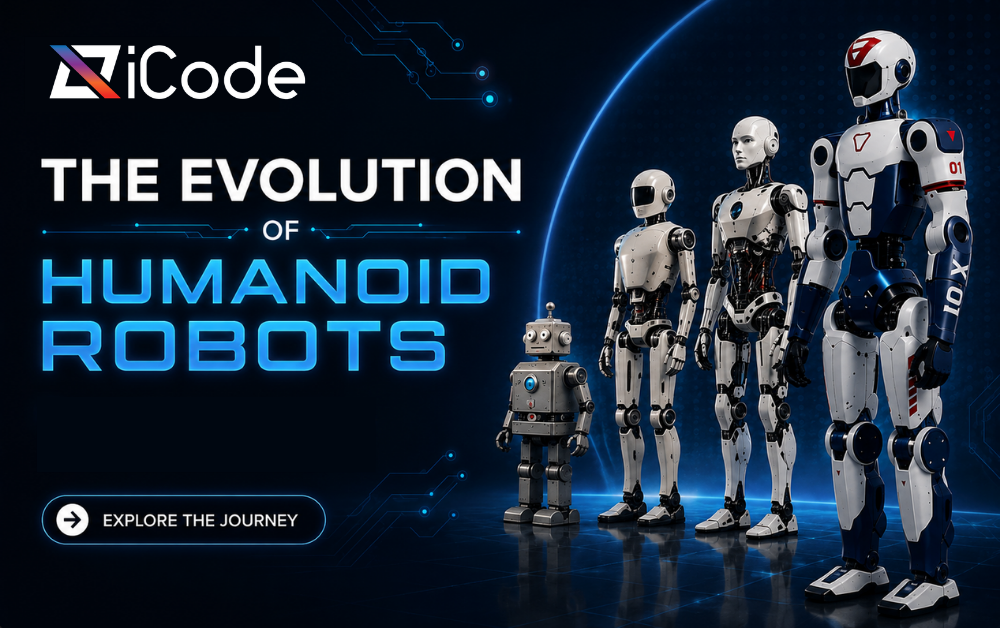
The Evolution of Humanoid Robots: From Science Fiction to STEM Education
Living Near the Nation’s Cyber Corridor
Gambrills sits close enough to Fort Meade and the broader Baltimore-Washington tech and cybersecurity corridor that a fair number of families here already work in fields built around code, systems, and security. That context makes a hands-on robotics program feel less like an extracurricular novelty and more like a natural extension of what a lot of local parents already do for a living.
Programming an Actual Humanoid Robot
At iCode Gambrills, students work directly with the Unitree R1 EDU, a 25-kilogram humanoid robot with up to 40 degrees of freedom, an onboard NVIDIA Jetson Orin AI computer running at 100 trillion operations per second, and 3D LiDAR paired with depth cameras for real-time sensing. Students write the controlling code themselves in Python and C++ through ROS 2 — a professional robotics framework, not a simplified classroom substitute.
Not Taught by the Robot
It’s worth saying clearly: the robot does not teach itself to students. An instructor does — walking through the code line by line, explaining how the mechanical gears and linkages convert that code into movement, and showing how the electronics connect the sensors to the onboard computer. The robot is the material being studied. The mentor is doing the actual teaching.
Programming Around an Obstacle
A common project asks a student to program the robot to detect an obstacle in its path using its onboard sensors and navigate around it without stopping. The first version of the code usually reacts too late, or turns too sharply. Instead of the fix being handed over, the student and mentor work through the sensor data together, figure out where the timing is off, and adjust it. That kind of real-time debugging is close to what security and systems work actually looks like day to day.
What makes this project harder than it first sounds is that the sensor data isn’t always clean. Lighting, distance, and the object’s shape all affect what the robot actually detects, which means the code has to account for some uncertainty rather than expecting a perfect signal every time. Learning to write code that handles that kind of imperfect, real-world data is a specific skill that a lot of coding classes never touch.
The Program Structure
This runs under what iCode calls the Youth Innovation Program, also listed as the College Accelerator Program because of the outcome it produces. It’s an 8-week, mentor-led cohort capped at 12 students, working in three teams of four to five. Robotics is one available project path, alongside web and mobile app development, data analysis, AI and automation, and digital media, but it’s the one that hands students equipment they wouldn’t otherwise touch until much later in a career.
A Real Presentation, Not Just a Demo
Every cohort ends with a live pitch to iCode Corporate leadership, where teams present their finished project and explain the reasoning behind their decisions, not just the final result.
Practice for the Real Thing
Families in this corridor tend to understand, better than most, what it actually takes to work in systems and security — the patience to trace a problem through layers of code and hardware until you find the actual cause. That’s not a skill a lecture can teach. It has to be practiced, on something real, with the stakes low enough to fail safely and try again. An eight-week robotics cohort is exactly that kind of practice, and it’s a head start that shows up years before a first internship application.
The eight weeks follow a clear rhythm: the first two focus on fundamentals, getting every student comfortable with the code and hardware regardless of starting point. The middle stretch is for building and repeatedly testing the actual project, which is where most of the real debugging happens. The final weeks are for refining the work and preparing the presentation for iCode Corporate leadership.
Twelve Seats Available
Each cohort is capped at 12 students so mentors can give real, individual attention. If your student is drawn to systems, security, or just figuring out how things actually work, apply to the Youth Innovation Program (College Accelerator Program) at iCode Gambrills.