

What’s Happening
What’s Happening
The Extracurricular Activities Colleges Actually Value
Students in Gambrills get plenty of advice about extracurriculars, but little of it is specific. Which activities does a college actually notice? Which ones fade into the background? Gambrills and Anne Arundel County families have many options for after-school activities. This guide covers the best extracurricular activities for college in Gambrills and shows how admissions readers judge them. Why Extracurriculars Matter to Admissions Officers Grades show what a student can learn in a structured setting. Extracurriculars show what a student chooses to do when nobody requires it. That makes them one of the few parts of an application that reveal real interest instead of academic duty. What Admissions Readers Look For Most readers look for three things: sustained commitment, real responsibility, and a sense of impact. A club membership with none of the three tends to fade into the background. Depth Beats Breadth A long list of loosely attended clubs rarely stands out. One or two activities where a student grew, took on responsibility, and made something happen almost always read stronger. Types of Extracurriculars That Stand Out STEM and Robotics Involvement Project-based STEM work, such as robotics teams, coding clubs, and science research, tends to carry weight. One…
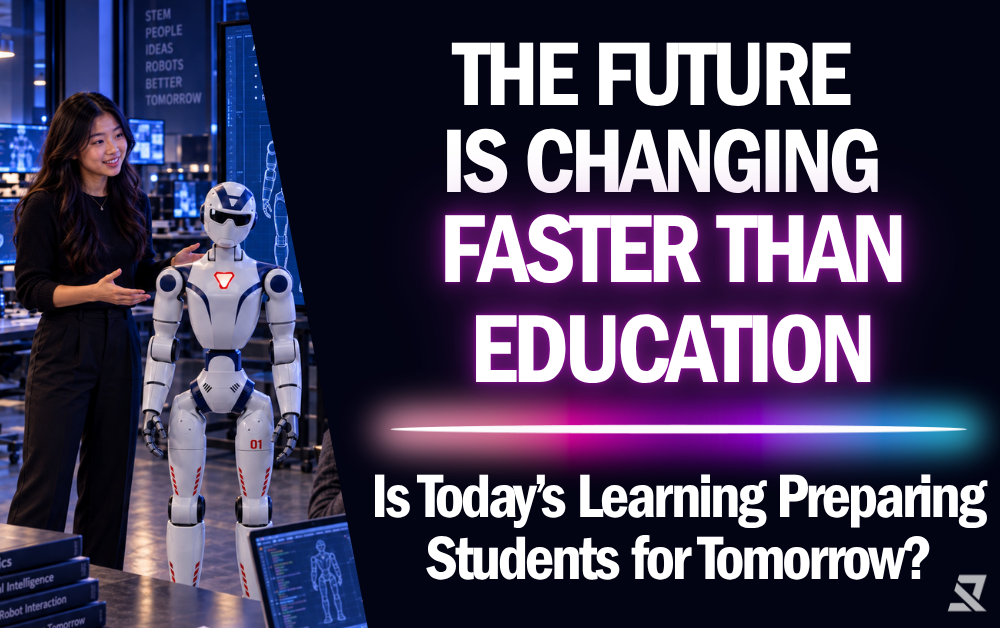
The Future Is Changing Faster Than Education: Is Today’s Learning Preparing Students for Tomorrow?
Parents in Gambrills often notice the same thing. The tools their kids use outside school change faster than anything taught inside it. Job categories are shifting just as quickly. So it is worth asking whether classrooms are really preparing students for future jobs, or whether they are still built for a world that has already moved on. The Widening Gap Between Classrooms and the Real World Traditional education was built around a stable idea. Learn a body of knowledge, pass a test, and move on. That model worked when skills stayed useful for decades. It fits less well when new tools can reshape an industry within a few years. Why Standard Curricula Struggle to Keep Pace Curriculum changes move slowly by design. Textbooks, standards, and teacher training all take time to update. That is a reasonable safeguard against chasing every trend. It also means the tools students learn on in class are often a step behind the tools they will use after graduation. The Skills That Don’t Go Out of Date Not everything needs to change, though. Problem-solving, adaptability, and the ability to learn a new tool quickly stay useful however the technology shifts. These are the skills worth…
What Colleges Actually Look For Beyond GPA & Test Scores
For most families, the college conversation starts and ends with numbers: GPA, SAT, ACT. It's an understandable place to start — those numbers are the first thing an application shows. But if you ask admissions officers what actually tips a decision, the answer rarely stops at the transcript. Understanding what do colleges look for in applicants beyond the numbers can change how a student spends the next two or three years of high school, and it often matters more than another point of GPA. Why GPA and Test Scores Are Only Part of the Picture GPA and test scores exist to answer one narrow question: can this student handle college-level coursework? That's an important question, but it's not the only one an admissions committee is trying to answer. They're also trying to picture how a student will show up on campus — in a lab, in a dorm, in a club meeting at 9pm. Numbers alone don't answer that. The Rise of Holistic Admissions Most selective schools now use what's called holistic review, meaning every part of the application is read together rather than scored in isolation. A strong essay can reframe an average test score. A pattern of…

Will Humanoid Robots Replace Jobs or Create New Opportunities?
In Gambrills, MD, like everywhere else, the conversation around robots and work has shifted from science fiction to something much more immediate. Humanoid robots are showing up in real workplaces, and that's prompting a genuine question from parents and students alike: will robots replace jobs, or will they create new ones? The answer, it turns out, is a bit of both. How Parents Can Reframe the Conversation at Home From 'Will a Robot Take My Job' to 'How Will I Work Alongside One' Framing the conversation around collaboration rather than replacement tends to be both more accurate and more useful for a teenager thinking about their own future. Most emerging evidence points toward robots and people sharing tasks, not robots simply taking over entire professions. Encourage Questions Over Assumptions When a student asks whether a certain career is 'safe' from automation, it's worth treating that as a starting point for research rather than a question with one fixed answer — the landscape is still actively shifting, field by field. Modeling Comfort With Uncertainty Parents don't need definitive answers about the future job market to be helpful here. Modeling calm curiosity — being willing to say 'we don't know exactly, but…
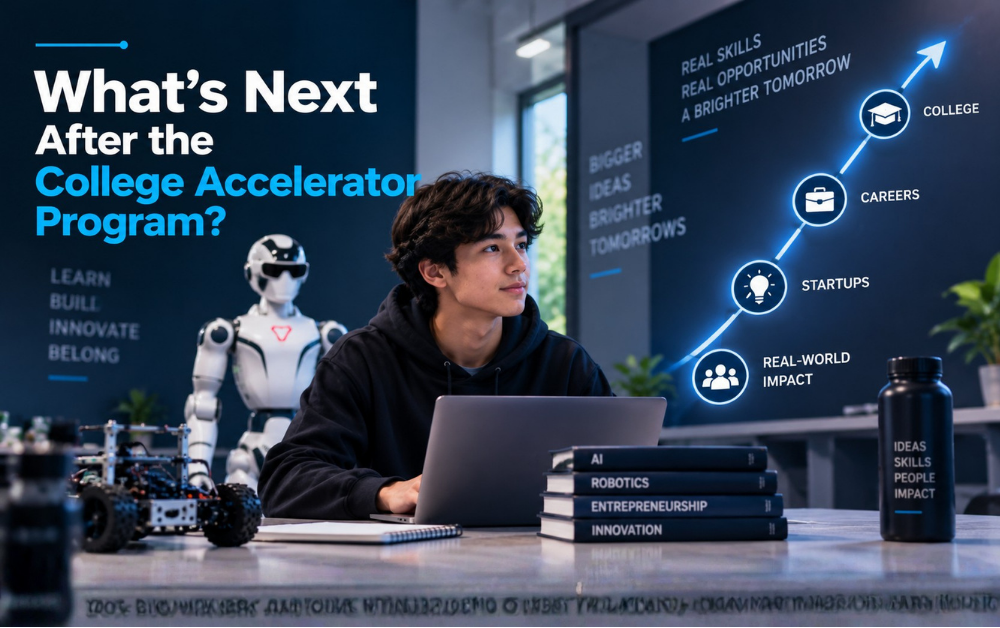
What’s Next After the College Accelerator Program?
Parents often ask the same question near the end of the program: did this actually lead anywhere, or was it a great few months that ends without a next step? At iCode Gambrills, MD, there's a clear answer. The College Accelerator Program is designed as one stage in a longer path, and here's what that path looks like once a student finishes it. What "Finishing" the Program Actually Means Completing the College Accelerator Program means a student has worked through real, hands-on robotics and coding projects, built confidence presenting their own work, and picked up habits — planning, testing, problem-solving — that carry over well beyond any single project. It's worth being clear about what "finishing" doesn't mean. It isn't the end of learning robotics, and it isn't a certificate that just goes in a drawer. It's a marker that a student has the foundation to take on harder, more open-ended work — which is exactly why the question of what comes next matters so much. What a Student Walks Away With A working knowledge of programming a real humanoid robot platform, not just simulations A track record of finished projects they can explain and defend Practice handling setbacks, feedback,…
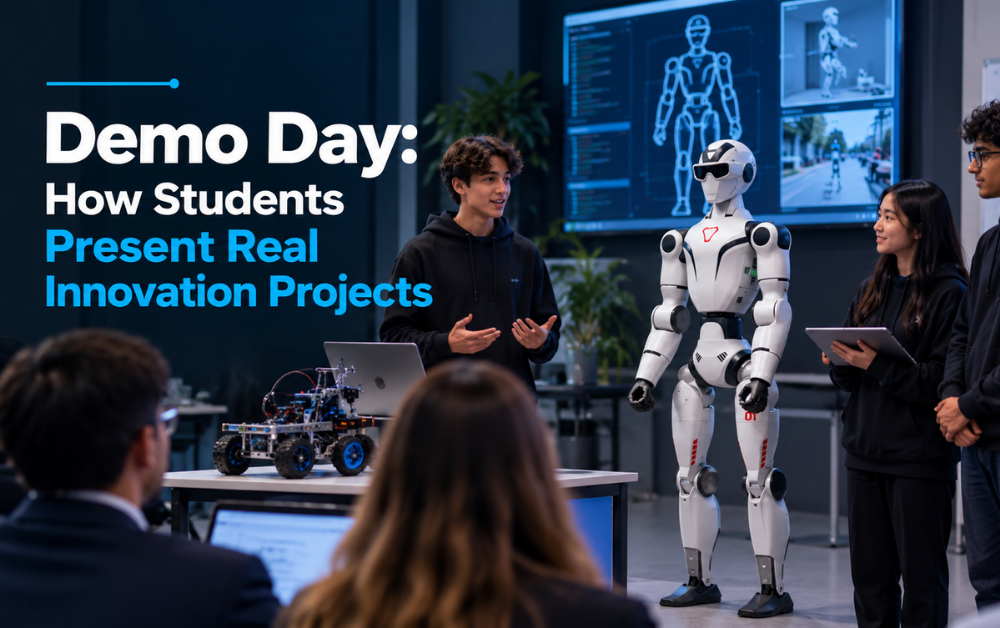
Demo Day: How Students Present Real Innovation Projects
Plenty of students can get a robot to work. Fewer can explain, clearly and confidently, how they got there and what they learned when it didn't work the first time. Demo Day is built around that second, harder skill. At iCode Gambrills, MD, students spend as much time preparing to present their project as they spent building it — because a great project that no one can explain doesn't land the same way. What Actually Happens on Demo Day Demo Day isn't a single formal event with a stage and a podium — it's a working session where each student or team sets up their robot, walks through what it does, and takes real questions from the people watching. It's closer to a science fair than a graduation ceremony. Visitors move station to station, students repeat and adjust their explanation for each new audience, and by the third or fourth walkthrough most students have already found a clearer way to say something than they had the first time. A Typical Demo Day Setup Each student or team sets up their robot at their own station Parents, peers, and mentors circulate and watch short walkthroughs Every presentation ends with unscripted questions…
Behind the Build: Following a Student Team Through Their Robotics Project
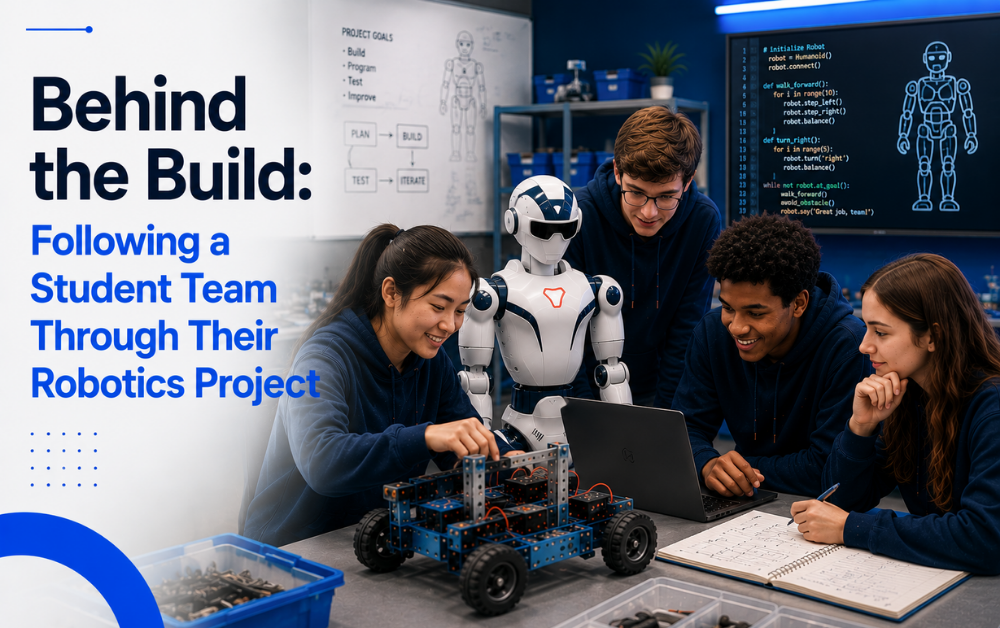
A humanoid robot project rarely goes the way a team plans it on day one. Something breaks. An idea that sounded simple turns out to be the hardest part. Someone has to figure out what to do next. At iCode Gambrills, MD, students go through exactly that process — and it's worth following one build from start to finish to see what students are actually learning along the way. Day One: Staring at a Blank Robot and a Big Idea Every build starts the same way: a robot with no instructions loaded, a rough goal from a mentor, and a team of students who haven't yet decided who's doing what. It's a slower start than it sounds — most of day one is just figuring out what's actually possible. There's usually a moment early on where the goal sounds simpler than it turns out to be. A team might assume getting the robot to react to a sound is a quick task, only to realize there are several smaller problems hiding inside that one idea. Sorting that out before writing any code saves the team from redoing work later. The First Team Meeting Talking through what the robot needs to…
How Team Projects with Humanoid Robots Build Leadership and Collaboration
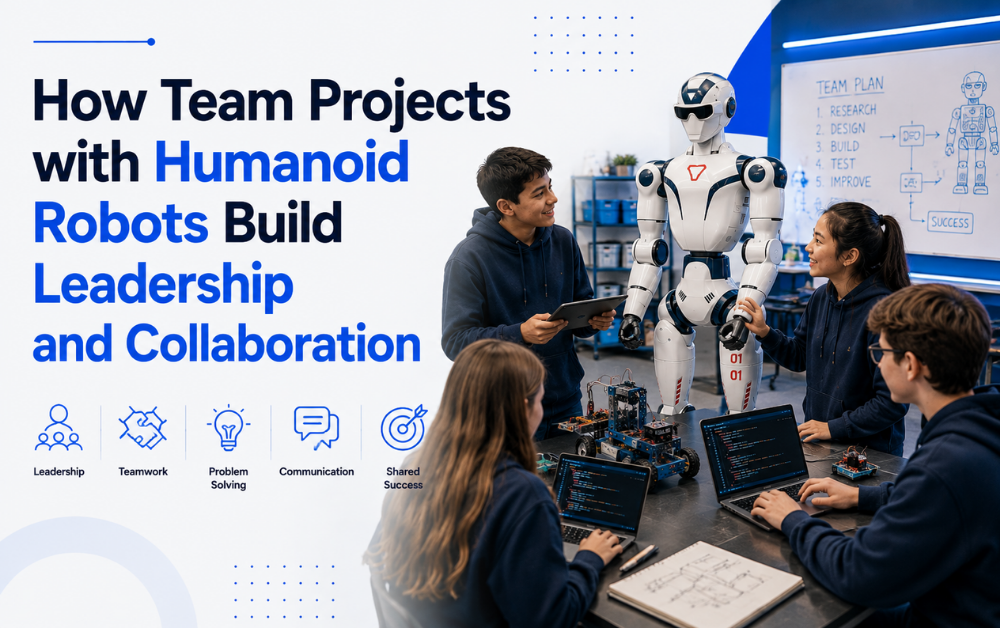
Ask any parent what they want their child to walk away with from an after-school program, and "leadership" and "teamwork" come up almost every time. The harder question is how a program actually builds those skills instead of just claiming to. At iCode Gambrills, MD, the answer is team-based humanoid robot projects — small groups working toward one working robot, where leadership and collaboration aren't taught in the abstract, they're practiced under real deadlines. What Team-Based Humanoid Robot Projects Look Like A team project usually starts with a goal the robot has to accomplish — walk to a marked point, respond to a spoken cue, react to an object in its path — and a group of students who have to figure out, together, how to make that happen. Real Project Examples Programming a coordinated routine where one student handles movement logic and another handles sensor response Building a simple task-completion challenge and dividing testing duties across the team Debugging a failed run together, with each student explaining their part of the code before the group changes it The Leadership Skills Kids Build Through Robot Team Projects When a humanoid robot project is broken into parts — sensing, movement, logic,…

10 Skills Students Develop During the College Accelerator Program in Gambrills, MD
Robotics isn't just a buzzword at iCode Gambrills, MD — it's a hands-on curriculum built around a real humanoid robot. In the College Accelerator Program, students move past block-based coding and into the kind of applied engineering work that colleges and employers actually look for. According to the World Economic Forum's Future of Jobs Report, employers expect roughly 39% of core workplace skills to shift by 2030, with analytical thinking, technological literacy, and AI fluency leading the list. The College Accelerator Program is built to get students working on exactly those skills years ahead of schedule. What Is the College Accelerator Program? The College Accelerator Program is iCode's advanced track for students ready to move beyond the Belt Program into college-level robotics and software engineering work. At its center is the Unitree R1 EDU humanoid robot — a 25kg platform with up to 40 degrees of freedom, an NVIDIA Jetson Orin processor delivering 100 TOPS, and 3D LiDAR paired with depth cameras for real-time perception. Students program it in Python and C++ through ROS 2, giving them direct experience with the same tools used in professional robotics development. 10 Skills Students Build Along the Way 1. Adaptability and…

Can Learning with Humanoid Robots Help Students in Gambrills, MD Prepare for College?
Ask a college admissions officer what stands out, and "sustained, hands-on engagement with a real technical project" comes up more often than a long list of activities. That's the model behind iCode Gambrills's College Accelerator Program, which gives students across the Crofton and Gambrills area of Anne Arundel County, close to Fort Meade and the region's dense cybersecurity workforce an extended, mentor-led project working with an actual humanoid robot. What "Ready for College" Actually Means in a STEM Context Being ready for a college engineering or computer science program isn't just about knowing facts, it's about being comfortable with ambiguity: a program that doesn't run, a robot that doesn't move the way it should, a result that doesn't match the plan. College courses assume students have already had some practice sitting with that discomfort and working through it methodically. That's a habit, not a fact you memorize, and it's exactly what the College Accelerator Program is built to develop. The Technical Skills That Translate Directly to College Coursework Python and C++ Through ROS 2 Students in the program write real code in Python and C++ using ROS 2, the same robotics framework used in university robotics labs and research settings.…
How Learning About Humanoid Robots Builds Future-Ready Skills in Gambrills, MD
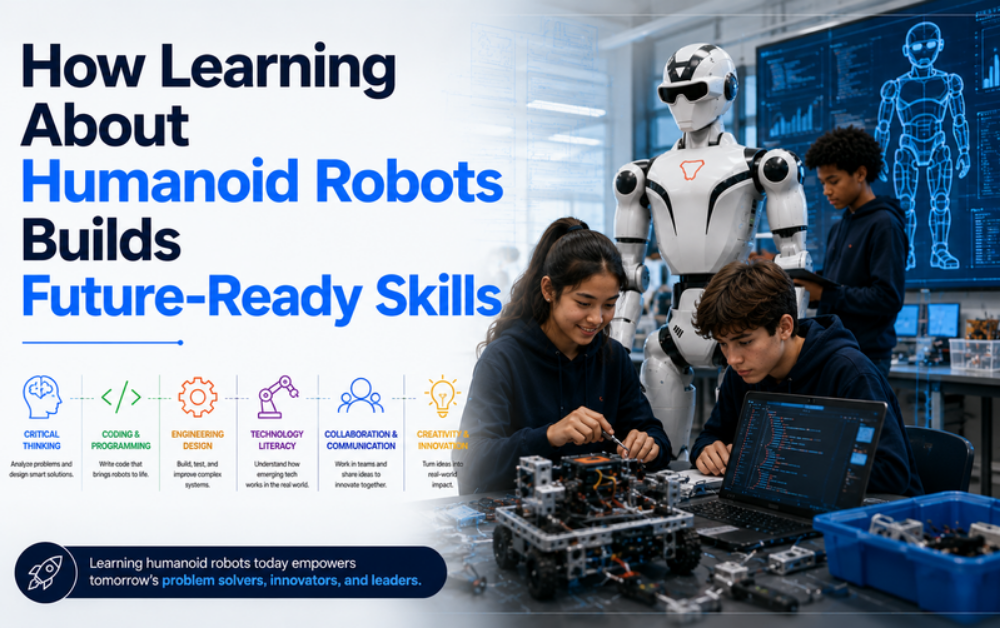
More and more of the jobs today's students will grow into involve some mix of code, sensors, and machines that move on their own. iCode Gambrills's College Accelerator Program puts that reality directly in front of students, using a real humanoid robot to teach the kind of engineering thinking that families across the Crofton and Gambrills area of Anne Arundel County, close to Fort Meade and the region's dense cybersecurity workforce are increasingly looking for. What Makes Humanoid Robotics Different From Other STEM Programs A lot of robotics programs stop at snapping pieces together and running a pre-built app. The College Accelerator Program goes further than that. Students aren't just assembling a robot, they're writing the code that tells an existing, fully built humanoid robot what to do, then watching it respond in real time. That single shift, from assembling to programming, is what separates this program from a typical beginner robotics camp. It's built for students who are ready to move past block-based coding and start working with the same kind of tools and language used in professional robotics. Meet the Robot Students Learn On Built for Real Engineering, Not Just Play The robot at the center of the…
Meet iZak: Bringing Humanoid Robotics to Local Students
The newest member of the iCode Greater Crofton / Gambrills team may be our most technologically advanced (and least coordinated). Meet iZak, our fully programmable Unitree R1 EDU Smart humanoid robot. Since arriving at iCode, he has already waved to visitors, danced, practiced martial arts, attempted to sit in a chair, and learned firsthand that gravity remains undefeated. Behind the entertaining videos and occasional robot mishaps, however, is a serious educational investment in our community’s future. Humanoid robotics represents an exciting intersection of programming, artificial intelligence, engineering and human-centered design. Unlike a traditional classroom robot, iZak can walk, balance, respond to commands and perform complex movements. More importantly, students can work with the technology behind those capabilities. That opportunity is at the heart of iCode’s new Youth Innovation Program. Designed for motivated high school students with a foundation in Python, the program provides hands-on experience with advanced technology and real-world project development. Students work in small teams to identify a challenge, develop a solution, program and test their ideas, refine their work and present the finished project. Participants build practical experience in: Python programming and robotics Artificial intelligence and emerging technologies Engineering design and problem-solving Product and project development Teamwork…