
The Future Is Changing Faster Than Education: Is Today’s Learning Preparing Students for Tomorrow?
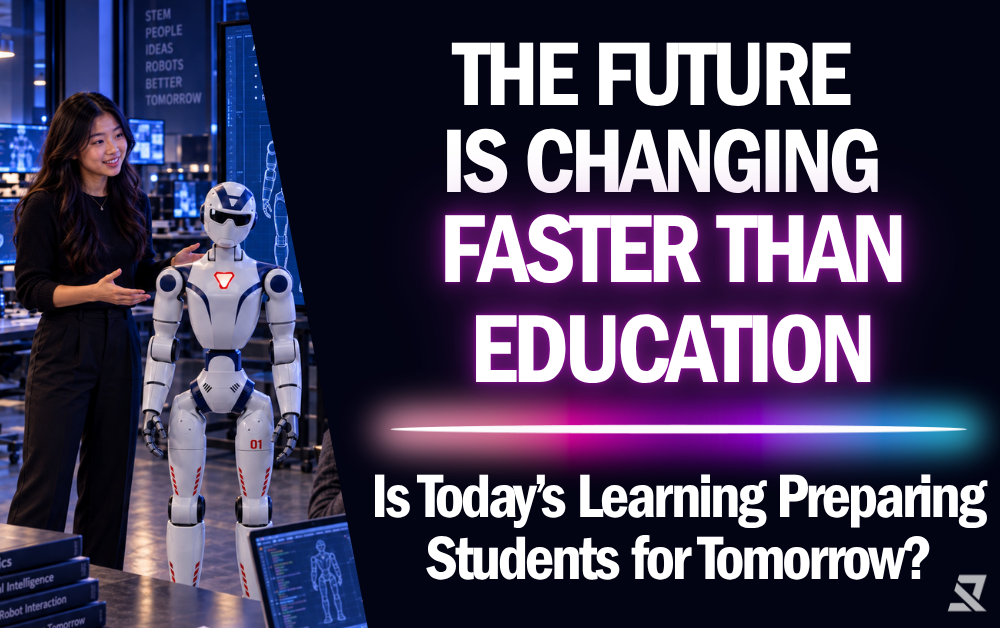
Parents in Gambrills often notice the same thing. The tools their kids use outside school change faster than anything taught inside it. Job categories are shifting just as quickly. So it is worth asking whether classrooms are really preparing students for future jobs, or whether they are still built for a world that has already moved on.
The Widening Gap Between Classrooms and the Real World
Traditional education was built around a stable idea. Learn a body of knowledge, pass a test, and move on. That model worked when skills stayed useful for decades. It fits less well when new tools can reshape an industry within a few years.
Why Standard Curricula Struggle to Keep Pace
Curriculum changes move slowly by design. Textbooks, standards, and teacher training all take time to update. That is a reasonable safeguard against chasing every trend. It also means the tools students learn on in class are often a step behind the tools they will use after graduation.
The Skills That Don’t Go Out of Date
Not everything needs to change, though. Problem-solving, adaptability, and the ability to learn a new tool quickly stay useful however the technology shifts. These are the skills worth building on purpose, rather than hoping they show up on their own.
Where Hands-On Learning Fits In
Hands-on, project-based learning tends to close this gap better than lecture-based instruction. It puts students in front of real problems and real tools instead of descriptions of them. A student who has programmed, built, or debugged something has practiced the exact skill that future jobs keep asking for. That is a big part of preparing students for future jobs.
Signs a Classroom or Program Is Genuinely Future-Focused
Projects Have Real Stakes
A project with a real, working outcome either functions or it does not. That teaches differently than a worksheet with a predetermined answer. Real stakes are part of what makes the learning stick. They also show a program is serious about preparing students for future jobs.
Students Build Toward Something Bigger
The strongest programs do not treat each session as a standalone event. Skills build on each other. A student ends up somewhere more advanced than where they started, rather than repeating similar exercises.
What Preparing Students for Future Jobs Actually Requires
Comfort With Ambiguity
Future jobs will rarely come with a clear instruction manual. Students who have practiced open-ended problems, where there is no single right answer, tend to adapt faster in the workplace.
Technical Fluency, Not Just Technical Knowledge
There is a difference between knowing facts about technology and being comfortable using it. Fluency comes from repeated, hands-on practice. That means writing code, troubleshooting a piece of hardware, or iterating on a design until it works.
Why Repetition Matters More Than Memorization
Memorized facts fade quickly if they are never used. Skills that are practiced repeatedly, in changing contexts, tend to stick. They also transfer more easily to whatever new tool comes next.
Collaboration on Real Problems
Almost no job happens in isolation. Group projects where students build or solve something together mirror how real teams work. Splitting up a worksheet does not.
How Schools and Enrichment Programs Are Responding
Bringing Real Tools Into the Classroom
Some schools and after-school programs now bring in current technology, such as robotics platforms, coding environments, and design software. They no longer rely only on textbook descriptions of how those tools work. Students at iCode’s Gambrills campus will recognize this approach.
Teachers as Guides, Not Just Lecturers
In these settings, the instructor’s role shifts from delivering information to guiding students through problems they have not seen before. That mentorship turns a new tool into a lasting skill, rather than a one-time demo.
A Practical Example
A student learning to program a robot does not just memorize a command. They watch it fail, adjust their approach, and try again with a mentor nearby to answer questions. That loop is closer to real technical work than most classroom exercises get.
Why This Matters for Parents Right Now
Parents do not need to predict which jobs will exist in ten years. Nobody can do that reliably. What parents can do is help their teen build habits of curiosity, persistence, and comfort with new tools. Those habits transfer no matter how job titles change, and they sit at the core of preparing students for future jobs.
What Parents Can Do Outside the Classroom
Encourage Tinkering, Not Just Studying
Time spent taking something apart, building a small project, or troubleshooting software at home builds the same skills as a formal program. It just happens in a less structured setting. That kind of self-directed curiosity is worth encouraging outside school hours too.
Look for Programs That Prioritize Doing Over Watching
When you evaluate an after-school or summer program, ask directly how much time students spend building or coding. Compare that with time spent watching a demonstration. The answer is a good predictor of how much a student will retain, and of whether the program is serious about preparing students for future jobs.
Questions Worth Asking a Program Before Enrolling
What will my teen actually build or create by the end? Who guides the sessions, and what is their background? How does the program handle the moments when something does not work as expected? The answers reveal whether a program is built around genuine learning or just a schedule of activities.
The Bottom Line
Nobody knows exactly what work will look like when today’s teens finish school. Still, the habits worth building are clear. Curiosity, persistence, and hands-on problem-solving will stay useful long after today’s tools are replaced.
iCode’s Humanoid Robotics track is built for students who learn by doing, with teachers guiding each project. If you are a parent in Gambrills, begin with the iCode Gambrills campus homepage. The College Accelerator Program page explains how this approach connects to future readiness.
Frequently Asked Questions
Do students need to know exactly what career they want before this kind of learning is useful?
No. The underlying skills transfer across career paths: problem-solving, adaptability, and technical fluency. Students benefit even if their eventual career looks nothing like what they practiced in high school.
Is traditional classroom learning becoming less important?
Not at all. Core academic skills remain the foundation. Hands-on, project-based learning works best as a complement to strong academics, not a replacement for them.
What age is a good time to start building these skills?
Earlier exposure builds comfort and confidence. Still, middle and high school students can make significant progress, especially with consistent, hands-on practice.
Why does mentorship matter so much in this kind of learning?
A mentor helps a student push through the frustrating parts of learning something new, like a project that is not working. Those moments are where the most durable learning happens.