

Why Humanoid Robots Are at the Center of the Next Technology Revolution
Close to some of the country’s most concentrated technology and cybersecurity employers, Gambrills families understand better than most how quickly advanced systems become everyday tools.
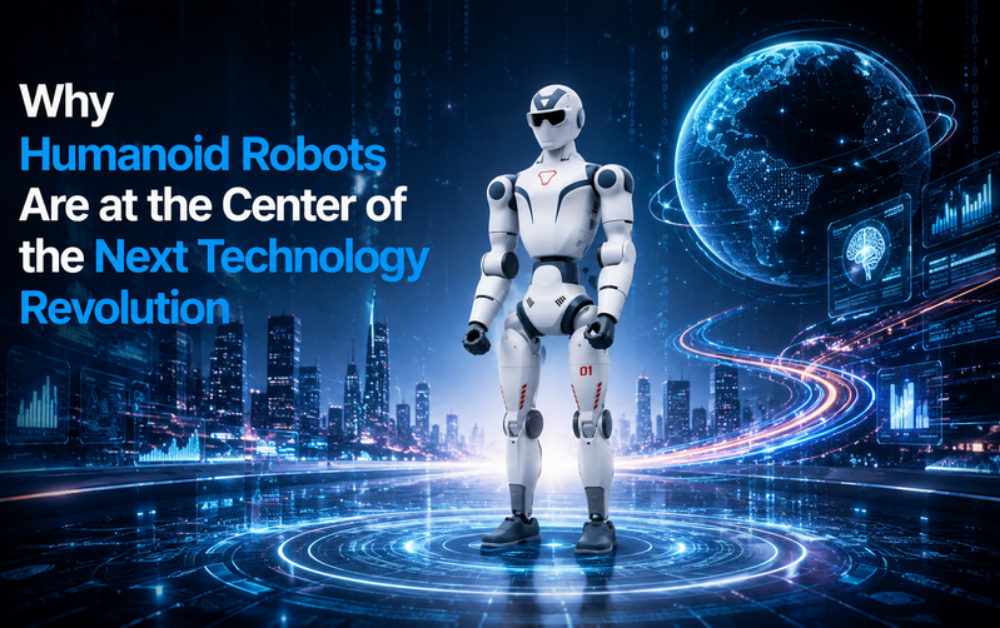
For decades, technology lived mostly behind glass — on a phone, a laptop, a tablet. That is changing. Humanoid robots, machines built to move, sense, and respond the way people do, are stepping out from research labs and into classrooms, warehouses, and homes.
That transition marks more than a new gadget category. It signals a fundamental change in how people and machines share physical space — and it is exactly why humanoid robots have become the center of the next technology revolution.
From Screens to Physical Intelligence
Seeing Concepts in Action
A line of code is abstract until it moves something real. When a humanoid robot follows a set of instructions and takes a step, reaches for an object, or corrects its own balance, the logic behind it becomes visible and understandable in a way a screen alone cannot offer.
Why Humanoid Design Matters
Shaped to Work Alongside People
Most robots are built to repeat a single task in a fixed spot. A humanoid robot instead has to move through spaces designed for people — which means balance, sensing, and decision-making all have to work together.
Balance and Mobility
Staying upright while walking, turning, or reaching requires constant, split-second adjustment — the same kind of balance a toddler spends years learning.
Sensors and Awareness
Cameras, depth sensors, and other inputs let a humanoid robot understand what is around it and react accordingly, rather than simply following a fixed path.
Why Kids in Gambrills, MD Are Getting a Head Start
Inside the Youth Innovation Program
Students at iCode Gambrills can get hands-on with this technology through the Youth Innovation Program, an eight-week cohort where a mentor guides small groups through programming a real humanoid robot to move, sense, and respond.
Skills That Carry Into Everything Else
What students gain from programming a humanoid robot rarely stops at robotics. Those same abilities carry directly into other subjects and, eventually, into almost any career.
- Breaking a large problem into small, testable steps
- Reading and correcting errors calmly instead of guessing
- Understanding how software and hardware communicate
- Collaborating with a team toward a shared goal
The Road Ahead
No one can say exactly how humanoid robots will be used a decade from now, but the direction is clear: machines that can move, sense, and adapt in human spaces will keep expanding into new roles. Students who understand the fundamentals today will be the ones equipped to shape how that unfolds.
Frequently Asked Questions
What is a humanoid robot?
A humanoid robot is a machine built with a human-like form — a head, torso, arms, and legs — designed to move, balance, and interact with its surroundings the way a person does.
Do students need coding experience to get started?
No prior experience is required. Mentors guide students through the fundamentals before building up to more advanced programming and robotics concepts.
How is this different from a typical robotics kit?
Rather than snapping together a simple kit, students work with a real humanoid robotics platform and learn to program actual movement, balance, and sensing.
Who leads the sessions?
A mentor leads every session, guiding students through the reasoning behind each concept rather than letting the robot do the teaching.
Families in Gambrills looking to give their kids a head start on this shift can learn more at iCode Gambrills.