
The Confidence and Problem-Solving Skills Glen Ellyn Kids Build in Class
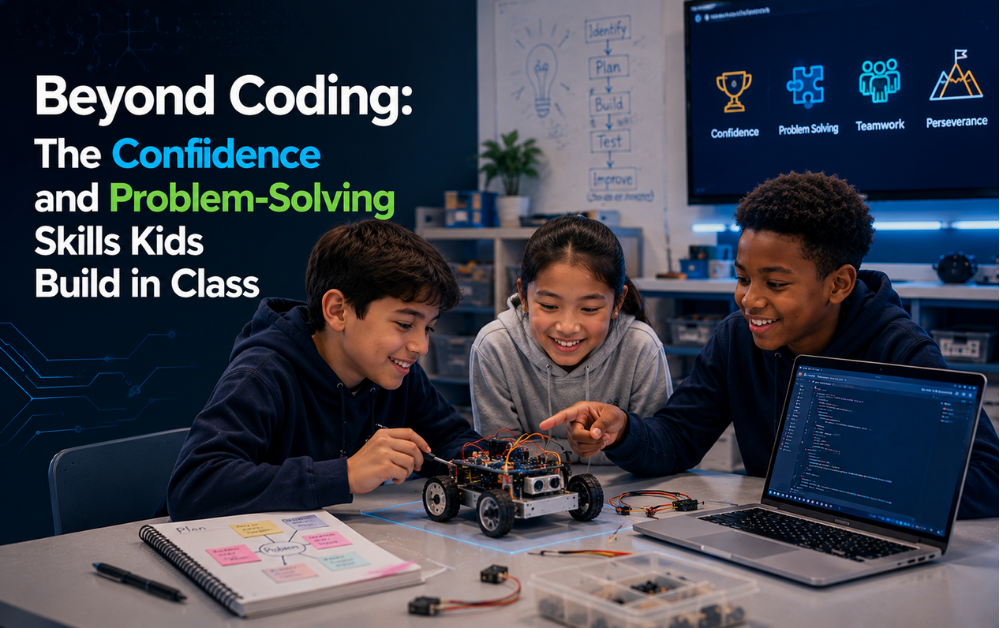
Glen Ellyn is a historic, tree-lined village with a strong tradition of education, anchored by the College of DuPage close by. At iCode Glen Ellyn, that same appreciation for learning shows up in class, but the biggest takeaway isn’t the code itself, it’s the confidence, problem-solving, teamwork, and perseverance kids build getting there.
Every Project Follows the Same Process
Instead of jumping straight into code, students work through the same five-step cycle real engineers use: Identify, Plan, Build, Test, Improve, a structure that fits a village that’s always valued careful, patient learning.
Identify — Naming the Real Problem
Before writing anything, a student defines exactly what the project needs to accomplish. That clarity up front, rather than guessing and hoping, is the first real problem-solving skill the class builds.
Plan — Mapping It Out First
With the goal set, students sketch the steps before touching a keyboard, breaking a big problem into small, testable steps. Glen Ellyn parents often notice their kids applying that same structured approach to schoolwork that has nothing to do with computers.
Build — Bringing the Plan to Life With a Partner
Many projects are built with a partner, and this is where teamwork becomes a real, practiced skill. Students divide tasks, merge two different approaches into one working result, and communicate clearly enough that both halves fit together.
Test — Why Every Bug Is Good News, Not Bad
When code doesn’t run, instructors don’t jump straight to the fix. They guide students to check their assumptions one at a time until they find the cause themselves. It’s slower than being told the answer, but it’s what actually builds independent problem-solvers.
Improve — Presenting and Owning the Fix
At the end of most projects, students explain what they built to the class, what it does, what broke, and how they fixed it. Over time, students stop dreading this part and start looking forward to it, their chance to show off something they built themselves.
From Frustrated to Curious
The shift is subtle but real: a student who used to get frustrated the moment something broke starts treating it as a puzzle instead. That change in attitude tends to outlast the specific class it started in.
A Gradual Build, Not a One-Time Lesson
These skills compound over a full semester rather than showing up in a single class, through the Belt Program, our structured curriculum. In a historic village that’s always valued education, that kind of structured progression fits right into the local culture.
Frequently Asked Questions
Is this only about coding, or does it cover broader skills?
Coding is the vehicle, not the destination. Every project is built to develop confidence, problem-solving, teamwork, and perseverance alongside the technical skill, and those are usually the parts that last the longest.
My child gets frustrated easily. Will this help or make it worse?
This is often exactly the kind of student who benefits most. The Test step is built specifically to guide a student through frustration in small, manageable pieces, with a mentor nearby instead of a student working it out completely alone.
Do students work alone or with others?
Both. Most projects have an individual planning phase, but the Build step is done with a partner or small team, which is where a lot of the teamwork and communication skills actually get built.
How long before I see a real change in my child’s confidence?
Most families notice a shift in how their child handles a setback within the first few weeks, often before any major project is even finished.
Visit iCode Glen Ellyn
The clearest sign this approach is working isn’t a finished project, it’s watching a student calmly debug their own mistake instead of giving up. Book a free trial class at iCode Glen Ellyn to see it for yourself.