
Technology Is Changing the Future. We’re Helping Leander Students Prepare for It
Ten years is a long time in technology. Nobody knows exactly which jobs will be growing, but the trend is easy to spot: more automation, smarter tools, and software in nearly every field. In Leander, many families already live and work close to the Austin-area technology scene. At iCode Leander, we respond by teaching skills that last, not by betting on one of the many STEM careers for teens in Leander.
The Problem With Predicting Specific Careers
Job titles change faster than schools can update their career guidance. Steering a student toward one specific future job is a risky bet. A more reliable approach is to build skills that stay useful no matter which job comes along.
Skills That Transfer Across Careers
Almost every technology-related career, from robotics to software to biomedical engineering, rewards the same few abilities: solving problems, working fluently with technology, and staying calm with unfamiliar tools. Developing them early keeps doors open. For students in Leander, that range of choices is a real advantage, given the Austin-area technology scene nearby.
Why ‘Open Options’ Beats ‘Early Specialization’
A student with strong technical fundamentals can move between fields far more easily than one who specialized narrowly and then watched the field change underneath them.
How We Prepare Students for What’s Ahead
Direct Experience With Real Technology
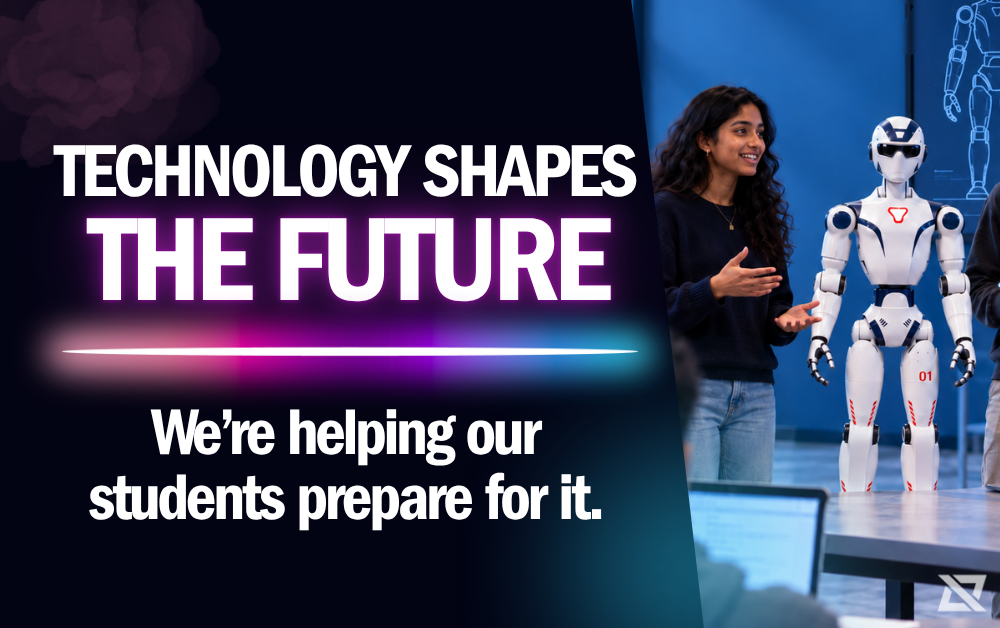
At iCode Leander, our Humanoid Robotics program skips the abstract lessons. Students work directly with real robotics hardware, writing the programs and fixing the problems themselves while an instructor guides them.
Building Confidence With the Unknown
Things go wrong in hands-on projects, and that is part of the point. Learning to respond with calm, a method, and curiosity may matter more than any single technical skill.
The Instructor’s Role in This Process
A good instructor does not prevent problems. Instead, the instructor helps students work through them by asking the right questions rather than giving the answer. The technology is the tool, and the teacher does the teaching.
Why This Builds Real Confidence
Students who have worked through a truly difficult technical problem, with support but without being rescued, tend to approach the next unfamiliar tool with far less hesitation.
A Progression, Not a One-Time Workshop
This is a progression, not a one-day workshop. Students start with basic commands and work toward complex, multi-step projects, the way real technical skill develops.
What This Means Looking Ahead
A Foundation, Not a Finish Line
We are not trying to turn out finished experts. We want students to leave with comfort using technical tools, a habit of persistence, and real experience to draw on when they begin exploring STEM careers for teens in Leander more seriously.
Ready for Whatever Comes Next
Some students will go into robotics or software. Others will choose biomedical engineering, or a field that has no name yet. In every case, the habits built now carry forward: curiosity, troubleshooting, and comfort with change. Leander students have the Austin-area technology scene close by as one example of where those habits can lead.
How Parents Can Support This Kind of Growth at Home
Normalize Not Knowing the Answer Right Away
Let your teen see you work something out without already knowing how. Teens watch closely to see whether curiosity and trial and error are normal or something to avoid.
Ask About the Problem, Not Just the Result
Instead of asking only whether a project worked, ask what got in the way and how it was solved. That shows the process matters as much as the result, which is exactly the mindset technology careers reward.
Small Conversations That Build Big Habits
Keep it simple. One short question after a session, like what was the hardest part today, can build the habit of reflecting on a problem rather than rushing past it.
Give Curiosity Room to Wander
Some of the best learning comes from tangents. When a teen wants to try another way to program the robot or test a feature they spotted, give them room, even if the payoff is not obvious yet.
Why We Keep Coming Back to Hands-On Learning
Lectures and worksheets would be the easier route for us. They would also serve students less well. Technology will keep changing, and the habits students build by doing the work are what help them keep pace.
Getting Started at iCode Leander
Students do not need a background in coding or engineering to begin. A willingness to try something, get it wrong, and try again matters more. The technical skill builds from there, one guided session at a time.
Over the next decade, teens will join a workforce with more technology in it, not less. Hands-on practice now, with instructors who turn mistakes into lessons, is one of the most direct ways to prepare.
Families in Leander can start on the iCode Leander campus homepage to learn about the Humanoid Robotics program. The College Accelerator Program page then shows how hands-on technology work supports long-term career readiness.
Frequently Asked Questions
Do students need to already know what STEM career they want to pursue?
No. The program is built around transferable skills, so students benefit even if they have not chosen a career path yet.
What kinds of careers might this kind of experience lead to?
Robotics and software engineering are natural fits. The same skills also help in many other STEM careers, including fields tied to the Austin-area technology scene.
How is this different from a general coding class?
Students work directly with genuine robotics hardware over multiple sessions, guided by an instructor, rather than doing isolated coding exercises alone.
Is this program only for students already strong in math and science?
No prior strength in those subjects is required. The program starts with fundamentals and builds up, with instructor support throughout.
How does hands-on robotics work help if the student’s career interests change later?
Those core skills carry over. Problem-solving, technical fluency, and comfort with new tools still apply if a student’s interests move to a different field.