
Inside the College Accelerator Experience at iCode Redmond
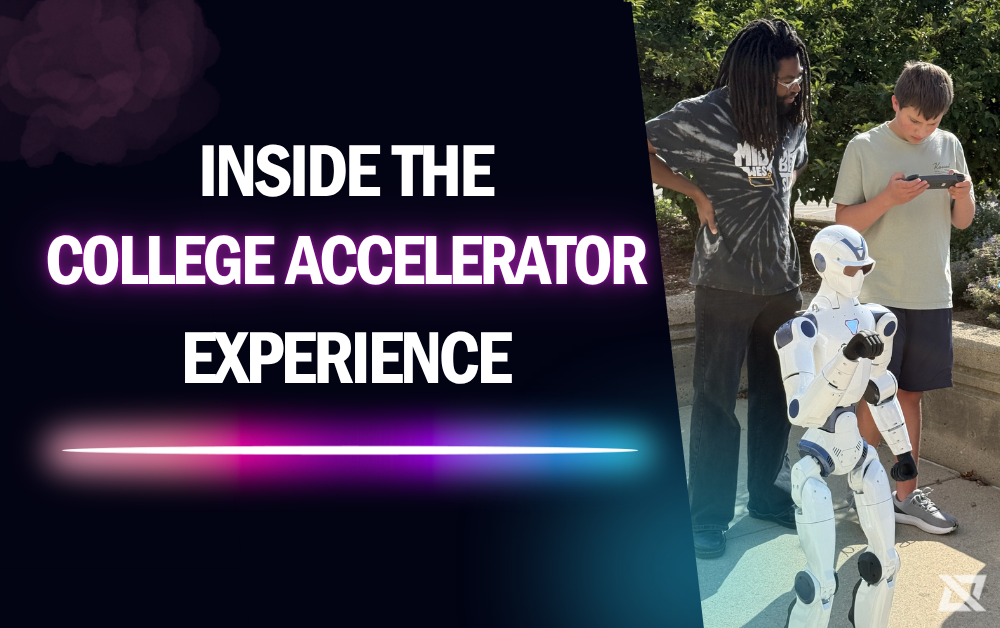
Ask ten families what a STEM program is, and you will hear ten different answers. The College Accelerator at iCode Redmond has a clear one. It is a STEM summer program for teens built around hands-on technical work with a working humanoid robot. Students program it, troubleshoot it, and build with it. Instructors lead each session, and the program is offered with Humanoid Robotics. Redmond is a community where technology careers are a familiar part of local life.
Why the College Accelerator Exists
The World Economic Forum’s Future of Jobs Report 2025 expects 39% of core skills to be disrupted by 2030. For teens in Redmond, that is a good reason to learn how to learn. The College Accelerator focuses on durable skills, built through real technical work instead of lectures.
A Program Built on Real Hardware, Not Simulations
Students in the Humanoid Robotics program at iCode Redmond work directly with the Unitree R1 EDU robot. It is real robotics hardware, not a toy or a simplified model. It weighs 25kg and moves with up to 40 degrees of freedom. It runs on an NVIDIA Jetson Orin processor with 100 TOPS of onboard compute. 3D LiDAR and depth cameras give it spatial awareness. Students program it in Python and C++ using ROS 2. Professionals and researchers use the same robotics framework.
Why Real Hardware Changes the Experience
Real hardware means real problems. A sensor needs calibrating. A movement command does not behave as expected. These moments build genuine troubleshooting skill, and a pre-scripted simulation cannot recreate them.
What a Typical Session Looks Like
Guided, Not Self-Taught
Students are never left to figure it out alone. Each session is taught by an instructor who introduces the concept, answers questions, and helps when something goes wrong. The robot is the tool. The instructor is the teacher.
From Concepts to Code
The rhythm of a session is simple. First comes a concept walkthrough. Then students write code, send it to the robot, and see the result immediately. If it does not work as planned, they adjust and test again.
Building Toward Bigger Projects
The first sessions cover the basics: moving the robot, reading sensors, and issuing simple commands. As the weeks go on, students combine those skills into larger, multi-step projects.
Why This Progression Matters
The goal is not to copy a ready-made project. The goal is to build the skills to create one, and the progression makes that possible step by step.
What Students Take Away
Technical Skills With a College-Ready Story
Students finish with real robotics programming experience. That gives them concrete things to discuss in college essays, interviews, and activity lists. A vague interest in STEM does not.
Confidence With New Tools
Perhaps more important, students leave more comfortable with unfamiliar technology in general. That adaptability is exactly what future classrooms and workplaces will keep asking for.
A Closer Look at the Skills Progression
Weeks One and Two: Getting Comfortable
Weeks one and two lay the groundwork. Students read sensor data and try basic movement commands. They learn how their Python and C++ code translates into physical action.
Middle Sessions: Solving Real Problems
Midway through, the work changes. Students get small problems with no single right answer. They choose their own approach, test it, and refine it.
Why Open-Ended Problems Matter So Much
A student weighing two approaches, trying one, and adjusting after seeing the result is doing real problem-solving. Colleges and employers both describe this as a valuable skill. Open-ended tasks give students that practice.
Later Sessions: Independent Projects
In the later sessions, students combine several skills into a more complete, independent project. They program a sequence of actions, add sensor input, and troubleshoot largely on their own. The instructor is available for support, not step-by-step direction.
Why Mentors Remain Central to the Experience
The robot does not replace the teacher. At iCode Redmond, an instructor leads every session. They introduce each concept, answer questions, and help students when things go wrong. The technology makes learning tangible, and the instructor is what makes it last.
Who the College Accelerator Is Built For
Students Curious About Robotics and Engineering
Teens with an existing interest in robotics, coding, or engineering tend to feel at home here. The program turns a casual interest into a structured, hands-on experience.
Students Still Figuring Out Their Interests
The program is equally useful for students who are not sure whether a technical field suits them. For teens in Redmond, hands-on work with real hardware is often the clearest way to find out. It beats reading or guessing.
Students Preparing College Applications
Core workplace skills are expected to shift quickly in the coming years. Students headed to college soon have good reason to build technical experience now. It is an advantage today and may become a requirement later.
Families in Redmond can check current availability on the iCode Redmond homepage. To see everything students build and learn, read the full College Accelerator Program page.
Frequently Asked Questions
Do students need coding experience before joining the College Accelerator?
No prior experience is required. Sessions start with the fundamentals and build up from there, and instructors guide students the whole way.
What robot do students actually work with?
Students use the Unitree R1 EDU. This humanoid robot weighs 25kg and moves with up to 40 degrees of freedom. It has an NVIDIA Jetson Orin processor (100 TOPS) and 3D LiDAR and depth cameras.
What programming languages are used in the program?
Students program the robot in Python and C++ through ROS 2. Professionals and researchers use the same robotics framework.
Is the instructor still involved, or do students mostly work with the robot alone?
Students are not on their own. An instructor leads each session, teaches the concepts, and helps students through the hands-on work. The robot is the tool, and the instructor is the teacher.
Is the College Accelerator available at iCode Redmond?
Yes, iCode Redmond offers the College Accelerator alongside the Humanoid Robotics program. Because it runs at select iCode campuses, check the campus homepage to confirm availability.