

Why Humanoid Robots Are at the Center of the Next Technology Revolution
Home to one of the world’s largest software companies, Redmond has a front-row seat to how quickly artificial intelligence is moving off the screen and into the physical world.
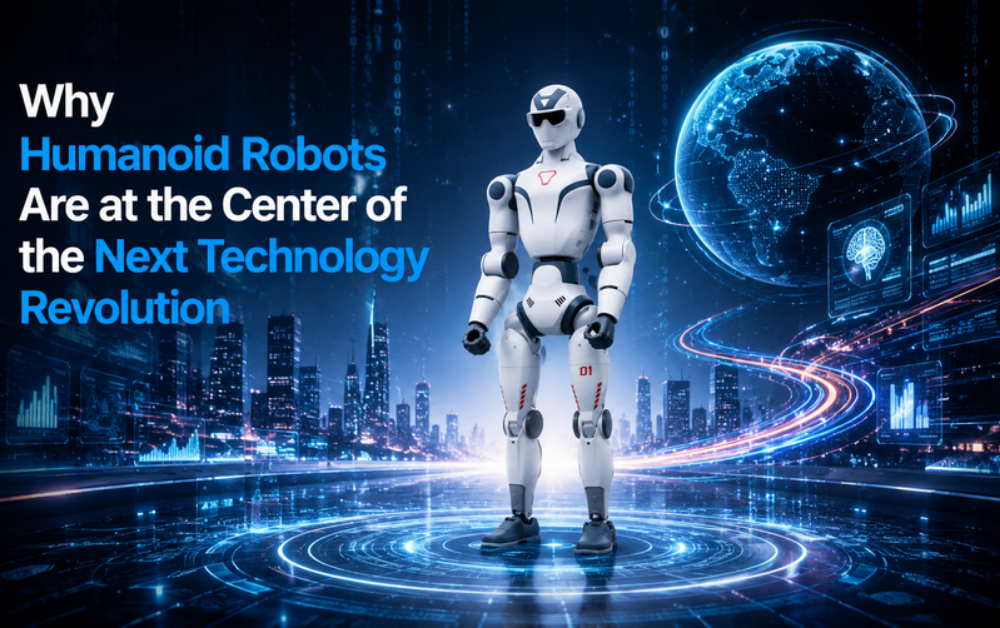
Every generation has a technology that redraws what seems possible. For today’s kids, that technology has a body. Humanoid robots — machines designed to walk, balance, grip, and react like a person — are moving out of research labs and into daily life.
This is a turning point, not a trend. Machines that can operate in the same physical world people do are reshaping industries, classrooms, and expectations — placing humanoid robots firmly at the center of the next technology revolution.
Built to Operate Like People Do
Built to Move, Sense, and Respond
Because a humanoid robot shares the same physical environment as the people around it, it needs more than a single repeated motion. It needs balance, awareness, and the ability to adjust — all at once.
Movement and Coordination
Every step involves dozens of small corrections happening at once, coordinating joints the way a person coordinates muscles without thinking about it.
Perception and Response
Depth cameras and other sensors give the robot a working picture of its surroundings, so it can respond to a moving object or an unexpected obstacle.
Moving Beyond the Screen
From Theory to Real Movement
There is a difference between writing a program and watching that program move through space. A humanoid robot turns abstract logic into a physical result kids can see, test, and adjust in real time — which builds a much deeper understanding of how software actually works.
Skills That Extend Beyond Robotics
Learning to program a humanoid robot builds more than a robotics skill set. The habits students develop transfer directly into schoolwork and, later, into a wide range of careers.
- Thinking through a problem logically, one step at a time
- Debugging with patience instead of frustration
- Seeing how code translates into physical action
- Working as part of a team with a shared objective
Getting a Head Start on This Shift in Redmond, WA
A Closer Look at the Program
At iCode Redmond, the Youth Innovation Program puts this technology directly in students’ hands. Over eight mentor-led weeks, students learn to program a humanoid robot’s movement and sensing, with a mentor guiding every step of the thinking process.
Looking Toward What’s Next
The exact roles humanoid robots will fill in the years ahead are still taking shape, but the trajectory is not in question — machines built to operate in human spaces are becoming more capable and more common. Students who build a foundation now will be positioned to help decide what comes next.
Frequently Asked Questions
What makes humanoid robots different from other robots?
Most robots are built for a single fixed task. A humanoid robot is designed to move through human spaces — walking, balancing, and adjusting to its surroundings much like a person would.
Is this program suitable for beginners?
Yes. The program is built for students new to robotics, with mentors introducing concepts step by step before moving into hands-on programming.
What will my child actually build or program?
Students learn to program real movement, balance, and sensing behaviors on a humanoid robotics platform, guided by a mentor throughout.
How long does the program run?
The program runs for eight weeks, with mentor-led sessions building steadily from foundational concepts to more advanced skills.
For families in Redmond who want their kids ahead of this curve, more details are available at iCode Redmond.