


What’s Happening
What’s Happening
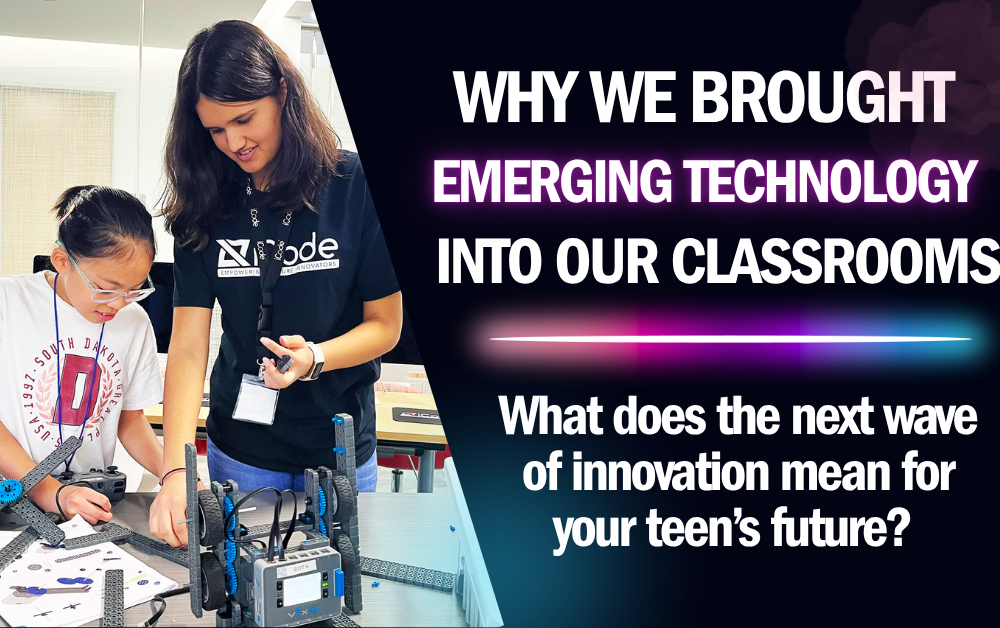
Why We Brought Emerging Technologies Into Our Classrooms at iCode Round Rock
One version of technology in education is a slideshow about how robots work or a video about artificial intelligence. It is easy to deliver and easy to forget. At iCode Round Rock, we built our classrooms around a different approach. Students use working tools directly, because that is where real learning happens. Teens in Round Rock and the Austin area can get hands-on with real robotics hardware. The Difference Between Learning About Technology and Learning With It Compare two experiences. In one, a student reads that a robot has sensors. In the other, the student moves a hand in front of a sensor and watches the reading change. The second one sticks. Why Passive Learning Falls Short Passive learning is not useless. It simply stops short. Comfort with a tool comes from using it, getting things wrong, and correcting them. What Changes When Students Get Hands-On Responsibility changes the questions. Instead of "What does this do?", students ask "Why is this not doing what I expected?" That question is more useful, and it leads to real problem-solving. What Parents May Notice Over Time More Willingness to Try, Even When It's Hard Some parents tell us their teen approaches new…
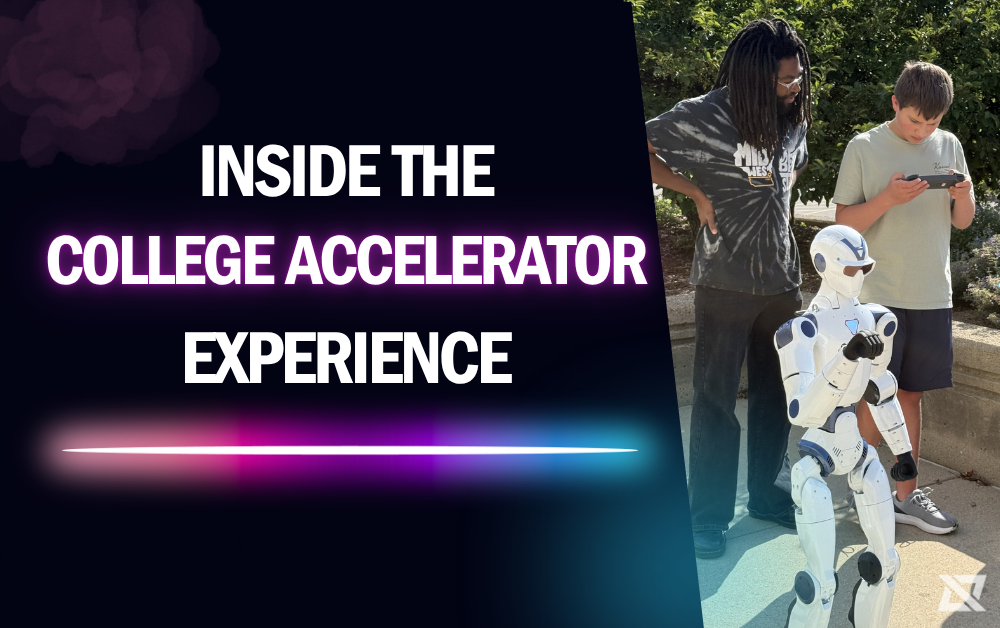
Inside the College Accelerator Experience at iCode Round Rock
"STEM program" can mean almost anything. It might be an afternoon workshop, a week of pre-built kits, or something closer to real technical work. The College Accelerator at iCode Round Rock is the third kind. It is a STEM summer program for teens. Students spend real time programming, troubleshooting, and building alongside a working humanoid robot. Instructors guide them the whole way. Teens in Round Rock and the Austin area can get hands-on with real robotics hardware. Why the College Accelerator Exists The World Economic Forum's Future of Jobs Report 2025 estimates 39% of core workplace skills will be disrupted by 2030. That makes technical fluency and adaptability more valuable than any single fact a student memorizes. The College Accelerator was designed with this in mind. It builds lasting skills through hands-on technical work, not passive instruction. A Program Built on Real Hardware, Not Simulations Here is what students actually work with. The Unitree R1 EDU is a real humanoid robot. It weighs 25kg and moves with up to 40 degrees of freedom. It carries an NVIDIA Jetson Orin processor with 100 TOPS of onboard compute, plus 3D LiDAR and depth cameras. Students program it in Python and C++…
Why Colleges Prefer Students Who Can Show Their Work Instead of Just Talking About It
Ask an admissions reader what makes an application stand out, and the answer is rarely a bigger claim. It is usually something specific and checkable. Families in Round Rock can use that. A working project says more than a line about passion, and that is where the hands-on learning benefits start to matter. Why Telling Falls Flat in Admissions Claims are cheap. Almost every applicant to a competitive program claims interest and dedication. Admissions readers have learned to discount those claims until they see something backing them up. The Credibility Gap Between Claims and Evidence A sentence like “I love building things” is forgettable. A sentence describing the third version of a robot a student built after the first two failed is not. The second is specific, verifiable, and memorable in a way the first can never be. Why Specificity Builds Trust Specific details are hard to fake convincingly. When a student can describe exactly what went wrong and how they fixed it, that detail signals real experience. A polished summary written for effect does not. The Real Hands-On Learning Benefits Colleges Notice Demonstrated Problem-Solving Hands-on projects almost always go wrong somewhere along the way. How a student responds,…
The Extracurricular Activities Colleges Actually Value
Students in Round Rock get plenty of advice about extracurriculars, but little of it is specific. Which activities does a college actually notice? Which ones fade into the background? Round Rock students live in the Greater Austin area, where technical interests are common. This guide covers the best extracurricular activities for college in Round Rock and shows how admissions readers judge them. Why Extracurriculars Matter to Admissions Officers Grades show what a student can learn in a structured setting. Extracurriculars show what a student chooses to do when nobody requires it. That makes them one of the few parts of an application that reveal real interest instead of academic duty. What Admissions Readers Look For Most readers look for three things: sustained commitment, real responsibility, and a sense of impact. A club membership with none of the three tends to fade into the background. Depth Beats Breadth A long list of loosely attended clubs rarely stands out. One or two activities where a student grew, took on responsibility, and made something happen almost always read stronger. Types of Extracurriculars That Stand Out STEM and Robotics Involvement Project-based STEM work, such as robotics teams, coding clubs, and science research, tends…
The Future Is Changing Faster Than Education: Is Today’s Learning Preparing Students for Tomorrow?
Parents in Round Rock often notice the same thing. The tools their kids use outside school change faster than anything taught inside it. Job categories are shifting just as quickly. So it is worth asking whether classrooms are really preparing students for future jobs, or whether they are still built for a world that has already moved on. The Widening Gap Between Classrooms and the Real World Traditional education was built around a stable idea. Learn a body of knowledge, pass a test, and move on. That model worked when skills stayed useful for decades. It fits less well when new tools can reshape an industry within a few years. Why Standard Curricula Struggle to Keep Pace Curriculum changes move slowly by design. Textbooks, standards, and teacher training all take time to update. That is a reasonable safeguard against chasing every trend. It also means the tools students learn on in class are often a step behind the tools they will use after graduation. The Skills That Don’t Go Out of Date Not everything needs to change, though. Problem-solving, adaptability, and the ability to learn a new tool quickly stay useful however the technology shifts. These are the skills…
What Colleges Actually Look For Beyond GPA & Test Scores
For most families, the college conversation starts and ends with numbers: GPA, SAT, ACT. It's an understandable place to start — those numbers are the first thing an application shows. But if you ask admissions officers what actually tips a decision, the answer rarely stops at the transcript. Understanding what do colleges look for in applicants beyond the numbers can change how a student spends the next two or three years of high school, and it often matters more than another point of GPA. Why GPA and Test Scores Are Only Part of the Picture GPA and test scores exist to answer one narrow question: can this student handle college-level coursework? That's an important question, but it's not the only one an admissions committee is trying to answer. They're also trying to picture how a student will show up on campus — in a lab, in a dorm, in a club meeting at 9pm. Numbers alone don't answer that. The Rise of Holistic Admissions Most selective schools now use what's called holistic review, meaning every part of the application is read together rather than scored in isolation. A strong essay can reframe an average test score. A pattern of…