


What’s Happening
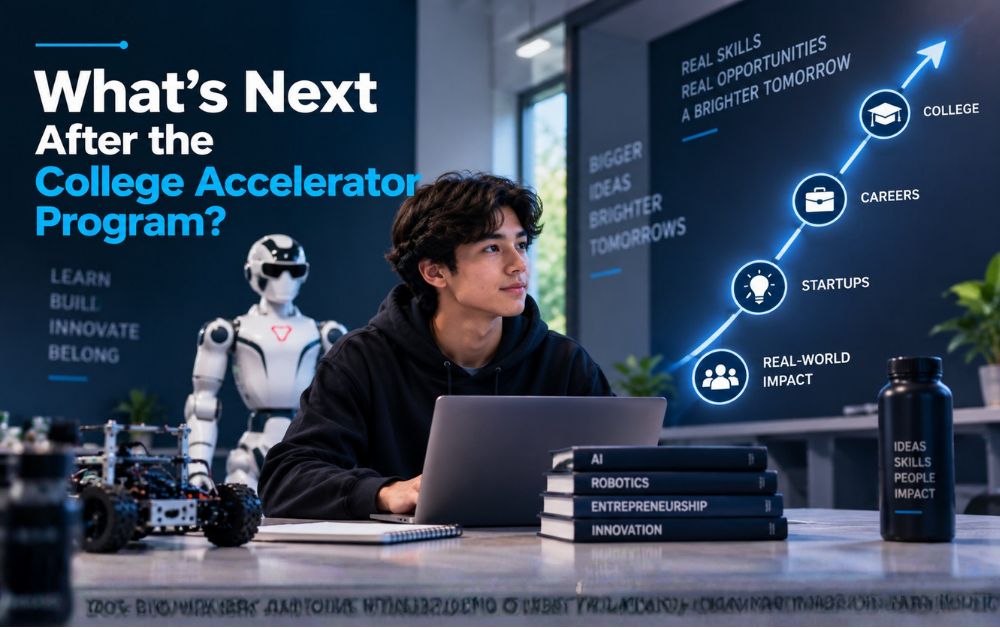
What’s Next After the College Accelerator Program?
Finishing the College Accelerator Program feels like a milestone — and it is one. But for most families, the real question shows up right after the last session ends: now what? At iCode West Frisco, TX, the program is built to be a launchpad, not a finish line. Here's what actually comes next for students who complete it. What "Finishing" the Program Actually Means Completing the College Accelerator Program means a student has worked through real, hands-on robotics and coding projects, built confidence presenting their own work, and picked up habits — planning, testing, problem-solving — that carry over well beyond any single project. It's worth being clear about what "finishing" doesn't mean. It isn't the end of learning robotics, and it isn't a certificate that just goes in a drawer. It's a marker that a student has the foundation to take on harder, more open-ended work — which is exactly why the question of what comes next matters so much. What a Student Walks Away With A working knowledge of programming a real humanoid robot platform, not just simulations A track record of finished projects they can explain and defend Practice handling setbacks, feedback, and presenting to an audience…
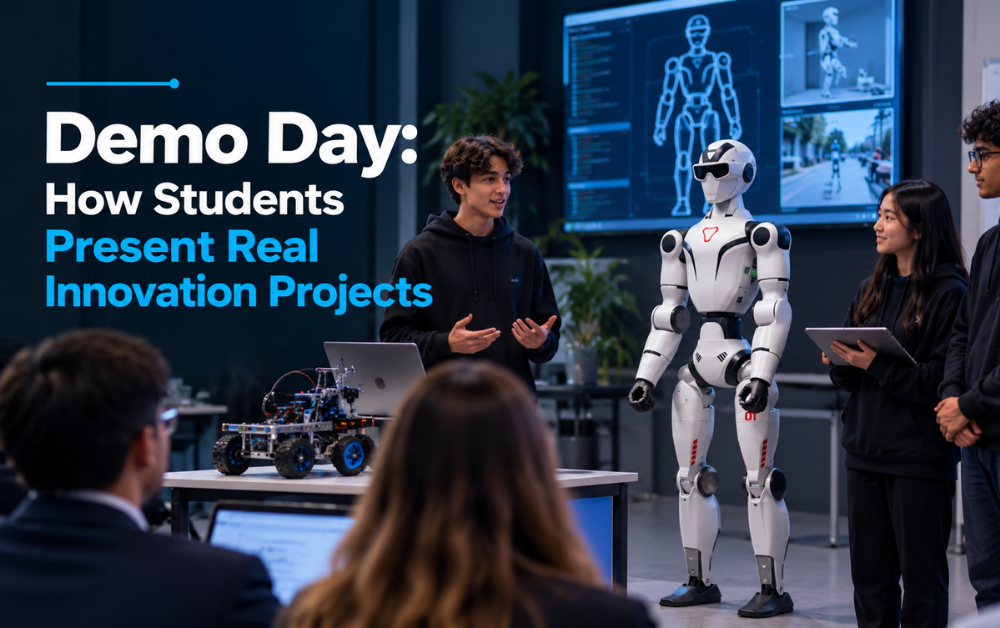
Demo Day: How Students Present Real Innovation Projects
Building the robot is only half the project. At some point, a student has to stand in front of a room, explain what they made, and answer questions about it on the spot — no script, no do-overs. At iCode West Frisco, TX, that moment is Demo Day. Here's what actually goes into getting a student ready to present real work to a real audience. What Actually Happens on Demo Day Demo Day isn't a single formal event with a stage and a podium — it's a working session where each student or team sets up their robot, walks through what it does, and takes real questions from the people watching. It's closer to a science fair than a graduation ceremony. Visitors move station to station, students repeat and adjust their explanation for each new audience, and by the third or fourth walkthrough most students have already found a clearer way to say something than they had the first time. A Typical Demo Day Setup Each student or team sets up their robot at their own station Parents, peers, and mentors circulate and watch short walkthroughs Every presentation ends with unscripted questions from the audience Preparing to Present: The Week…
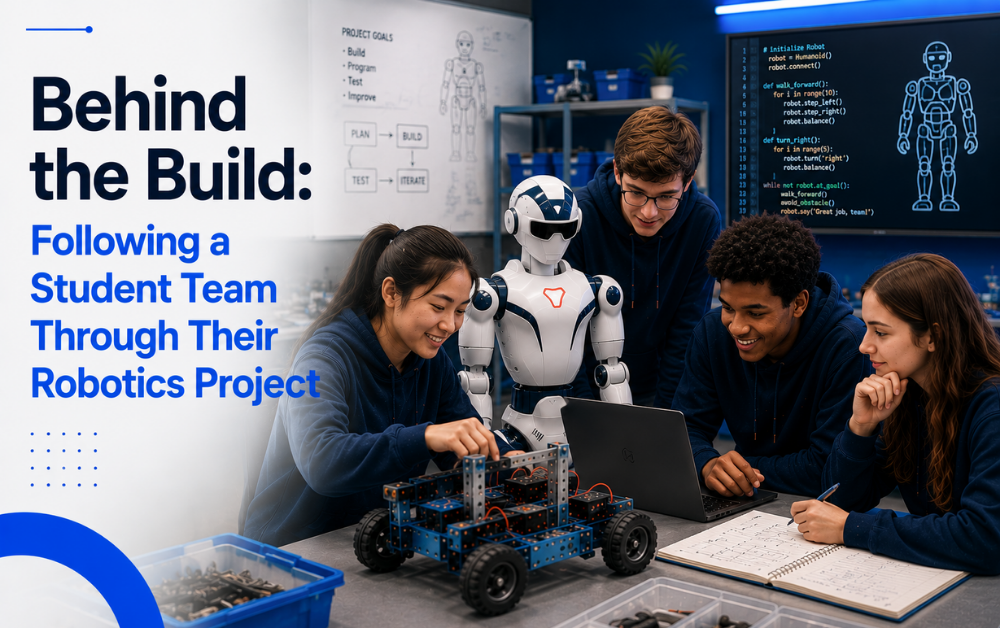
Behind the Build: Following a Student Team Through Their Robotics Project
Every finished robot demo looks clean — a smooth walk-through, a confident answer to "how does it work?", a team that seems like it knew what it was doing the whole time. What that demo doesn't show is everything that happened before it. At iCode West Frisco, TX, that "before" is where the real work happens. Here's what actually goes on behind a student team's humanoid robot build, from the first blank stare at an empty robot to the final test run. Day One: Staring at a Blank Robot and a Big Idea Every build starts the same way: a robot with no instructions loaded, a rough goal from a mentor, and a team of students who haven't yet decided who's doing what. It's a slower start than it sounds — most of day one is just figuring out what's actually possible. There's usually a moment early on where the goal sounds simpler than it turns out to be. A team might assume getting the robot to react to a sound is a quick task, only to realize there are several smaller problems hiding inside that one idea. Sorting that out before writing any code saves the team from redoing…
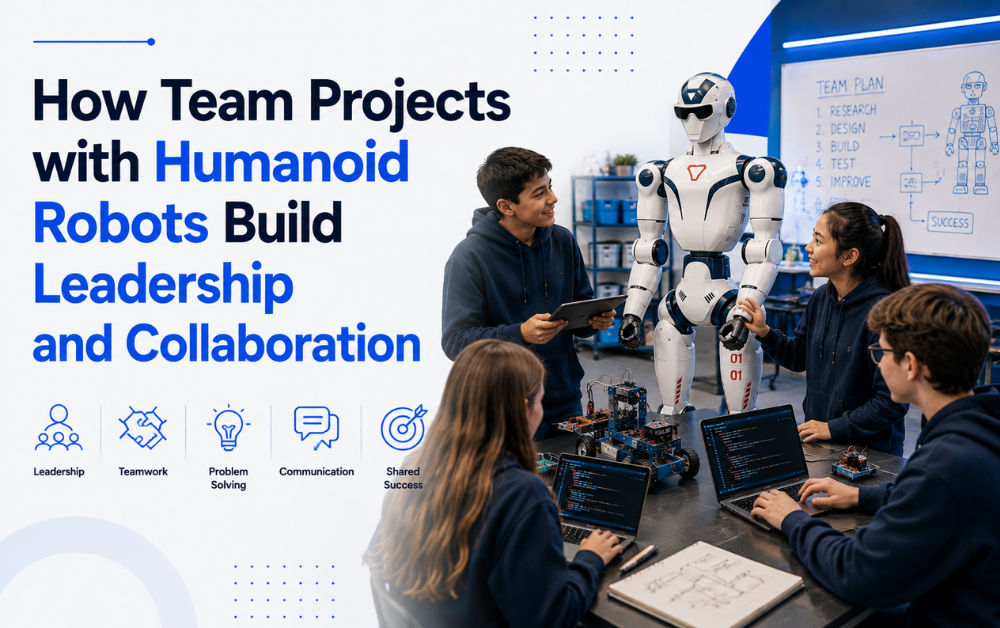
How Team Projects with Humanoid Robots Build Leadership and Collaboration
Hand a group of kids a single humanoid robot and one shared goal, and something shifts almost immediately. Someone starts asking questions. Someone else starts testing ideas out loud. Within a few minutes, a small team has formed — and nobody assigned the roles. At iCode West Frisco, TX, that shift is the whole point of a team robotics project. The robot is the hook. The leadership and collaboration skills students build while getting it to work are the outcome that lasts. What Team-Based Humanoid Robot Projects Look Like A team project usually starts with a goal the robot has to accomplish — walk to a marked point, respond to a spoken cue, react to an object in its path — and a group of students who have to figure out, together, how to make that happen. Real Project Examples Programming a coordinated routine where one student handles movement logic and another handles sensor response Building a simple task-completion challenge and dividing testing duties across the team Debugging a failed run together, with each student explaining their part of the code before the group changes it The Leadership Skills Kids Build Through Robot Team Projects When a humanoid robot project…
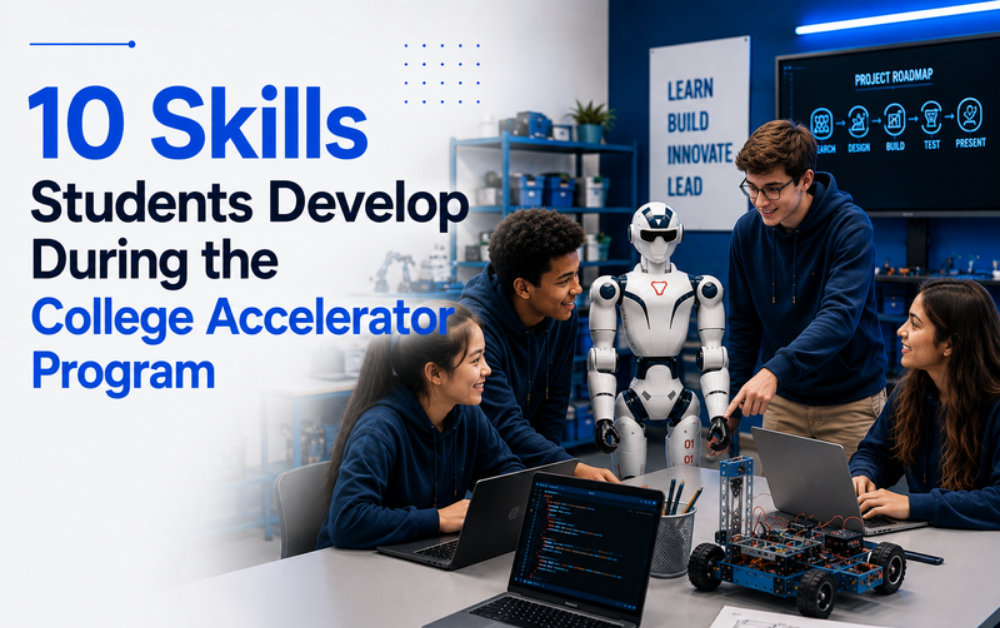
10 Skills Students Develop During the College Accelerator Program in West Frisco, TX
Robotics isn't just a buzzword at iCode West Frisco, TX — it's a hands-on curriculum built around a real humanoid robot. In the College Accelerator Program, students move past block-based coding and into the kind of applied engineering work that colleges and employers actually look for. According to the World Economic Forum's Future of Jobs Report, employers expect roughly 39% of core workplace skills to shift by 2030, with analytical thinking, technological literacy, and AI fluency leading the list. The College Accelerator Program is built to get students working on exactly those skills years ahead of schedule. What Is the College Accelerator Program? The College Accelerator Program is iCode's advanced track for students ready to move beyond the Belt Program into college-level robotics and software engineering work. At its center is the Unitree R1 EDU humanoid robot — a 25kg platform with up to 40 degrees of freedom, an NVIDIA Jetson Orin processor delivering 100 TOPS, and 3D LiDAR paired with depth cameras for real-time perception. Students program it in Python and C++ through ROS 2, giving them direct experience with the same tools used in professional robotics development. 10 Skills Students Build Along the Way 1. Computational…
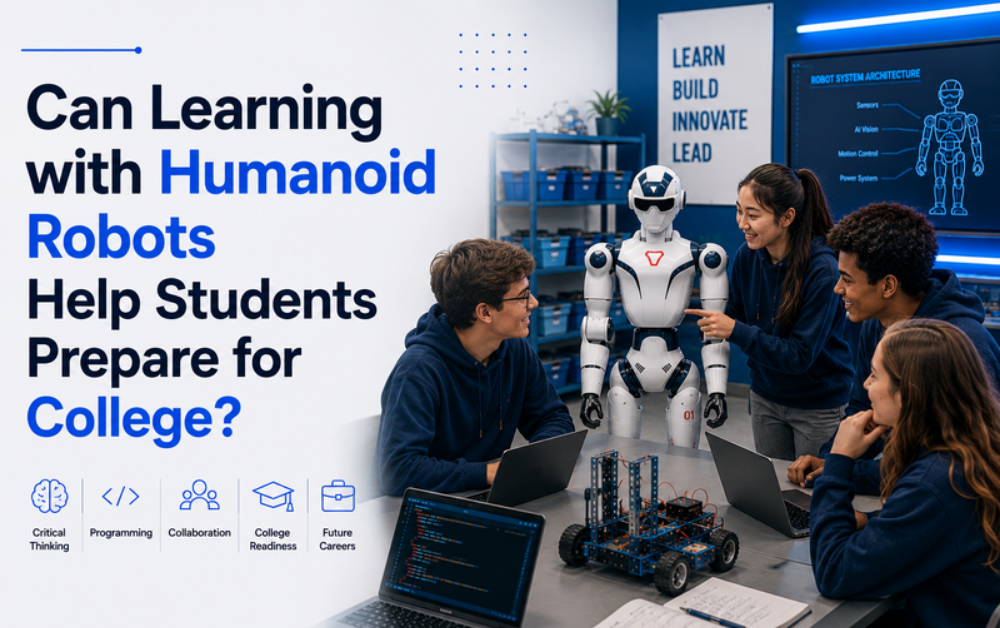
Can Learning with Humanoid Robots Help Students in West Frisco, TX Prepare for College?
Ask a college admissions officer what stands out, and "sustained, hands-on engagement with a real technical project" comes up more often than a long list of activities. That's the model behind iCode West Frisco's College Accelerator Program, which gives students across the West Frisco and Little Elm area, part of one of the fastest-growing parts of the Dallas-Fort Worth Metroplex an extended, mentor-led project working with an actual humanoid robot. What "Ready for College" Actually Means in a STEM Context Being ready for a college engineering or computer science program isn't just about knowing facts, it's about being comfortable with ambiguity: a program that doesn't run, a robot that doesn't move the way it should, a result that doesn't match the plan. College courses assume students have already had some practice sitting with that discomfort and working through it methodically. That's a habit, not a fact you memorize, and it's exactly what the College Accelerator Program is built to develop. Why West Frisco Students Are Getting This Head Start Early Families across the West Frisco and Little Elm area, part of one of the fastest-growing parts of the Dallas-Fort Worth Metroplex are increasingly looking past one-off camps toward experiences that…
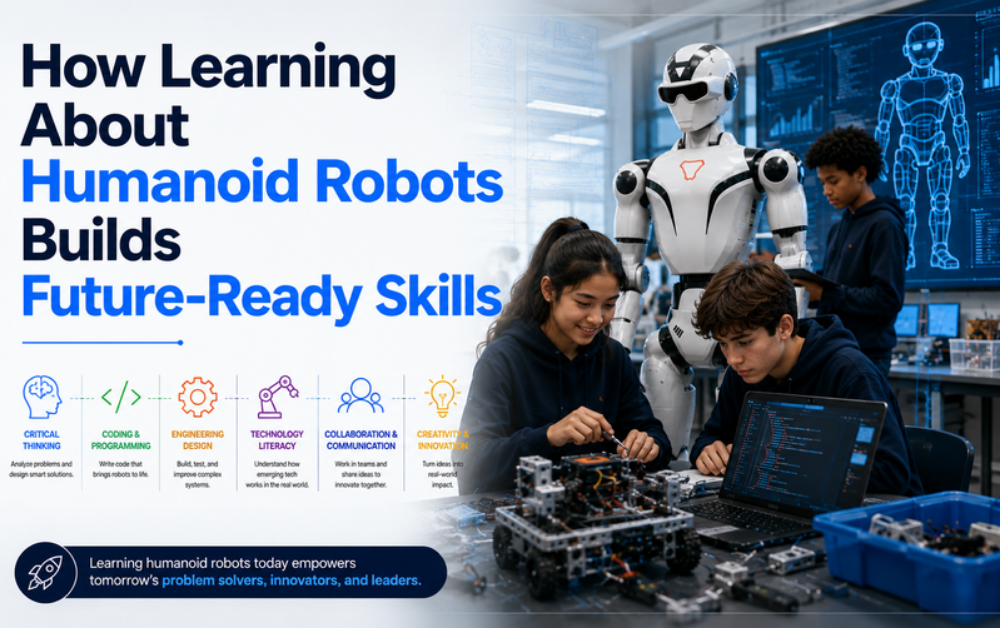
How Learning About Humanoid Robots Builds Future-Ready Skills in West Frisco, TX
More and more of the jobs today's students will grow into involve some mix of code, sensors, and machines that move on their own. iCode West Frisco's College Accelerator Program puts that reality directly in front of students, using a real humanoid robot to teach the kind of engineering thinking that families across the West Frisco and Little Elm area, part of one of the fastest-growing parts of the Dallas-Fort Worth Metroplex are increasingly looking for. What Makes Humanoid Robotics Different From Other STEM Programs A lot of robotics programs stop at snapping pieces together and running a pre-built app. The College Accelerator Program goes further than that. Students aren't just assembling a robot, they're writing the code that tells an existing, fully built humanoid robot what to do, then watching it respond in real time. That single shift, from assembling to programming, is what separates this program from a typical beginner robotics camp. It's built for students who are ready to move past block-based coding and start working with the same kind of tools and language used in professional robotics. Meet the Robot Students Learn On Built for Real Engineering, Not Just Play The robot at the center of…
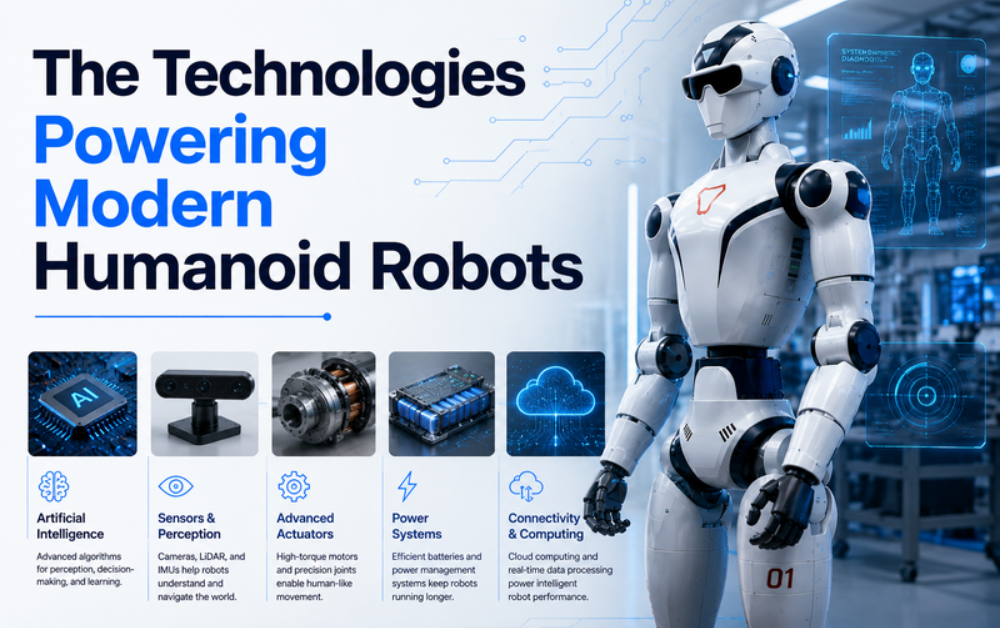
The Technologies Powering Modern Humanoid Robots
A robot that walks, balances, and reacts to its surroundings can look almost magical from the outside. In West Frisco, TX, iCode students are learning that it isn't magic at all — it's a set of well-defined technologies that anyone with the right guidance can start to understand. What's Really Going On Inside a Humanoid Robot? A humanoid robot may look like one seamless machine, but it's really several distinct technologies operating as a team. Beneath the outer shell are sensors, motors, processors, and software constantly exchanging information, each one responsible for a specific piece of the job so the robot as a whole can sense, decide, and move. The Core Technologies at Work Software and Programming Frameworks — Where the Logic Lives None of the hardware in a humanoid robot does anything useful without software to direct it. Frameworks like ROS 2 (Robot Operating System) give developers a standardized way to connect sensors, actuators, and computing hardware into a single coordinated system. Students generally write this logic in Python or C++, two languages used well beyond robotics, so the programming skills learned here transfer directly into other technical work. One thing students notice quickly is how immediate the feedback…
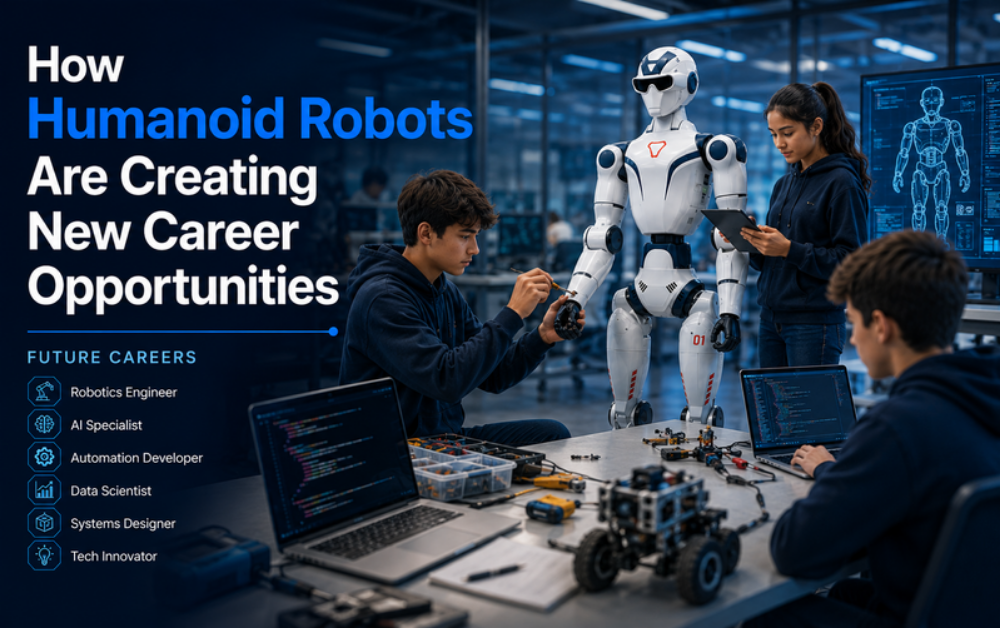
How Humanoid Robots Are Creating New Career Opportunities for the Next Generation in West Frisco, TX
Walk through a modern warehouse or hospital today and there's a decent chance a humanoid robot is somewhere nearby, lifting, sorting, or assisting. Behind every one of those machines sits a small team of people who built, trained, and maintain it. For families in West Frisco, TX, that's not a distant trend. It's a preview of the career paths their kids could be walking into in the next ten to fifteen years. New Career Paths Emerging Around Humanoid Robots The global humanoid robot market is projected to grow from under $11 billion in 2026 to more than $54 billion by 2031, according to Global Market Insights. That kind of growth doesn't happen without a matching surge in the people needed to build, run, and manage the machines. Four career paths in particular are opening up fast. Robotics Technicians and Field Engineers Every deployed robot needs someone who can install it, calibrate it, and fix it when a sensor drifts or a joint sticks. This is hands-on, practical work, closer to a skilled trade than a desk job, and demand for people who can do it is climbing alongside every new robot rollout. AI Trainers and Robotics Programmers A robot doesn't…
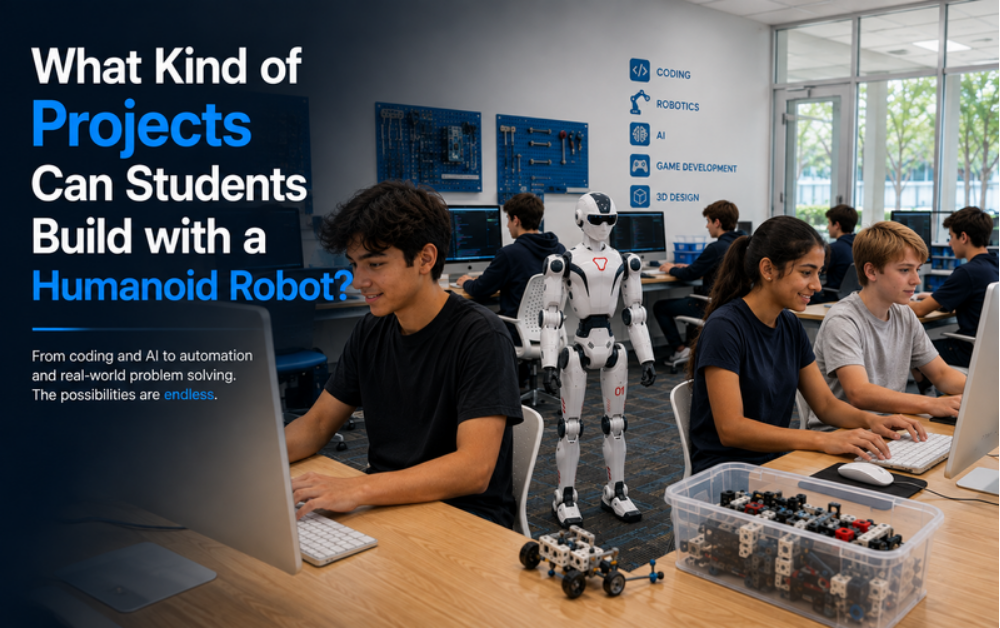
What Kind of Projects Can Students Build with a Humanoid Robot?
West Frisco has grown fast alongside one of the busiest tech corridors in North Texas, and its students now get to build projects on the same kind of technology driving that growth. The real value of a humanoid robot in a classroom isn't watching it perform — it's what students build using it. Here's a look at the kinds of projects that progression actually includes. Programming Perception, Not Just Motion Teaching a Robot to Recognize and Sort Objects After movement, students build projects around perception — using the robot's cameras to identify a specific object and decide what to do with it, instead of simply repeating a memorized motion. Breaking the Project Into Stages It typically comes down to defining the object, coding the detection logic, running tests to catch false matches, and finally programming what the robot physically does once it identifies the right target. Where Every Student Project Begins Coding a Path From Point A to Point B Before students tackle anything advanced, they usually start by getting the robot to walk a short path and stop exactly where intended. It looks simple from the outside, but it teaches students how many small corrections go into a single…

Why Humanoid Robots Are at the Center of the Next Technology Revolution
As one of the fastest-changing suburbs in North Texas, West Frisco has watched its skyline and its industries transform in a single generation — robotics is the next shift underway. Every generation has a technology that redraws what seems possible. For today's kids, that technology has a body. Humanoid robots — machines designed to walk, balance, grip, and react like a person — are moving out of research labs and into daily life. This is a turning point, not a trend. Machines that can operate in the same physical world people do are reshaping industries, classrooms, and expectations — placing humanoid robots firmly at the center of the next technology revolution. Built to Operate Like People Do Built to Move, Sense, and Respond Because a humanoid robot shares the same physical environment as the people around it, it needs more than a single repeated motion. It needs balance, awareness, and the ability to adjust — all at once. Movement and Coordination Every step involves dozens of small corrections happening at once, coordinating joints the way a person coordinates muscles without thinking about it. Perception and Response Depth cameras and other sensors give the robot a working picture of its surroundings,…
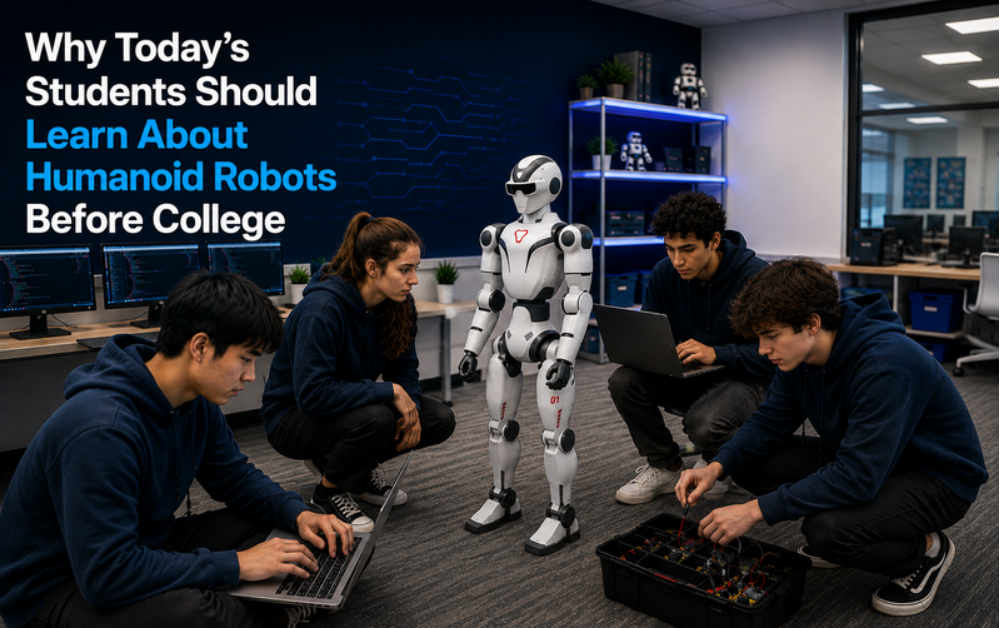
Why Today’s Students in West Frisco, TX Should Learn About Humanoid Robots Before College
Ten years ago, a walking, talking humanoid robot was something you saw in a movie, not something a middle schooler could program. That's no longer true. In West Frisco, TX — a community in one of the country's busiest corporate relocation zones, where global companies are setting up shop — students now have a chance to work directly with humanoid robotics before they ever fill out a college application. How iCode's West Frisco Campus Builds This Skill Set The program behind all of this is iCode's Youth Innovation Program, sometimes called the College Accelerator Program — an 8-week cohort where a mentor guides three student teams of four through hands-on work with the Unitree R1 EDU. It closes with a live pitch to iCode's corporate team, giving students a real audience and a real deadline, not just a grade. Why This Skill Set Matters Before College Applications College engineering and computer science programs increasingly expect applicants to show, not just claim, an interest in the field. The missing piece for most students isn't exposure to the idea of robotics — it's actual hands-on practice with it. A robotics project a student can actually explain — what broke, how they fixed…