

How To Improve the Use of AI in Education
Artificial intelligence is already in your child’s classroom, whether you realize it or not. Adaptive math apps, grammar-checking tools, automated grading systems, and AI-powered tutoring bots have quietly become fixtures of the modern educational landscape. But here’s something most parents don’t hear: schools are barely scratching the surface of what AI can actually do for learning.
The gap between how AI is being used and how it could be used is where the real opportunity lies for your child.
How AI Is Being Used in Education
Right now, most schools use AI in fairly basic ways. The most common applications include:
- Adaptive learning platforms like Khan Academy and DreamBox adjust difficulty based on student performance.
- Automated grading for multiple-choice tests and some written assignments.
- Plagiarism detection tools like Turnitin.
- AI tutoring chatbots that answer student questions on demand.
These are helpful tools and represent genuine progress, but most of these applications treat AI as a faster version of what already existed. Adaptive software is a smarter worksheet. Automated grading is a faster teacher’s aide. Chatbot tutors are searchable textbooks with better conversation skills.
The way most schools deploy AI is reactive. It responds to what a student does, but it doesn’t fundamentally change or improve how a student learns. Used properly, however, it could.
How AI Could Be Used in Education
Now imagine something different.
Imagine an AI system that doesn’t just track whether a child got an answer right or wrong, but analyzes how they approach problems: their thinking patterns, their creative instincts, where they get stuck, and why. Imagine personalized learning paths that adapt not just to difficulty level, but to a student’s interests, learning style, and long-term goals.
Imagine AI serving as a collaborative partner in a project: not giving answers, but asking the right questions:
- “What if you tried a different data structure here?”
- “Have you considered how this design would work for a left-handed user?”
- “What happens to your robot’s path if you change this variable?”
This is AI as a learning partner, not just a grading machine. And this is where the future of education is headed.
What iCode Is Doing Differently
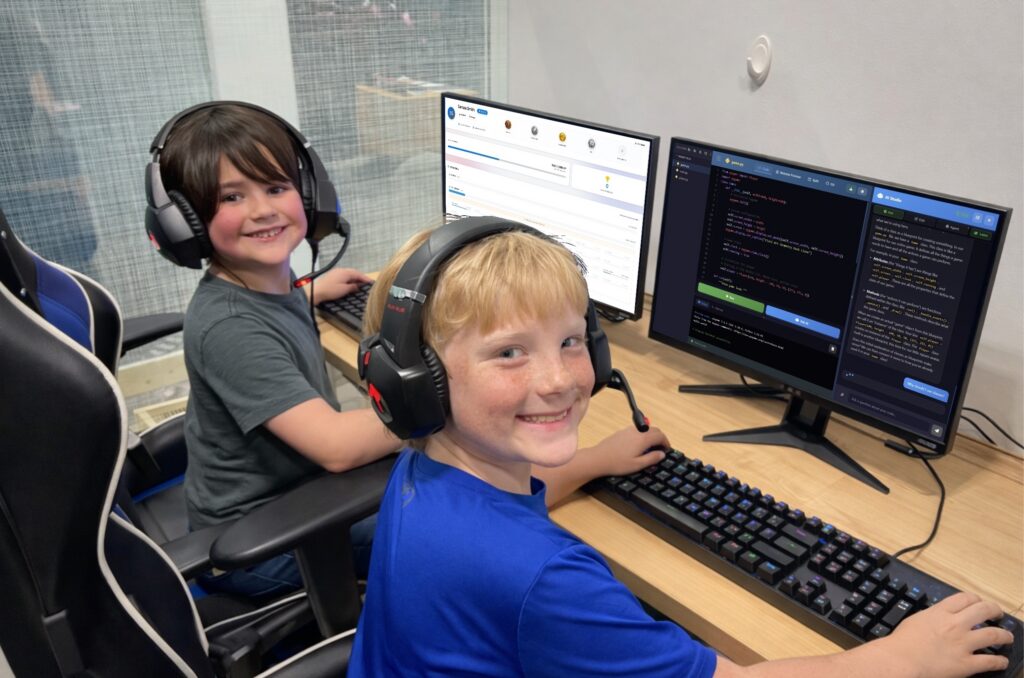
At iCode, we don’t use AI as a shortcut. We use it as a catalyst through our coding classes for kids designed to build real-world technology skills.
Our curriculum integrates AI tools to enhance the learning experience while reinforcing the skills we’re building. Here’s what that looks like in practice:
AI-assisted project feedback. When a student builds an app or writes a program, AI tools can help them identify bugs, suggest optimizations, and explore alternative approaches. However, the student still has to understand why a solution works. The AI prompts critical thinking; it doesn’t replace it.
Personalized learning acceleration. Every student learns differently. AI helps our instructors identify where individual students are excelling and where they need more support, allowing for more targeted, effective instruction without losing the human element that makes great teaching great.
Real–world AI literacy. Our students don’t just use AI, they learn how it works. Understanding the basics of machine learning, data training, and algorithmic decision-making gives students a critical lens for evaluating AI outputs. They learn to ask “Is this AI-generated answer actually correct?” instead of accepting everything at face value.
Creative amplification. In our game design and digital arts programs, AI tools help students prototype ideas faster, generate assets, and iterate on designs. But the creative vision, the story, the gameplay, and the user experience come from the student. AI handles the tedious parts so students can focus on the innovative parts.
Why This Matters for Your Child
The students who will lead in the coming decades won’t be the ones who can use AI as a fancy search engine. They’ll be the ones who can evaluate, direct, and build with AI, who understand its capabilities and its limits, and who have the foundational skills to do meaningful work that AI can’t do alone.
Most schools are still figuring out how to handle AI in the classroom. Many have outright banned tools like ChatGPT. Others allow it without much guidance. Neither approach prepares students for a world where AI is an everyday professional tool.
iCode takes a different path. We teach students to work with AI intentionally and critically, much like a skilled carpenter uses a power tool. The tool is powerful, but it’s the carpenter’s knowledge, judgment, and vision that produce something worth building.
The Gap Is the Opportunity
The distance between how AI is being used in most classrooms and how it could be used is enormous. That gap represents a generational opportunity for students who get the right preparation now.
Your child doesn’t need to wait for schools to catch up. They can start building these skills today, with real projects, real tools, real mentorship, and hands-on learning experiences like our STEM Summer Camps.
Recommended Blogs
Why Minecraft Is More Than Just a Game for Kids
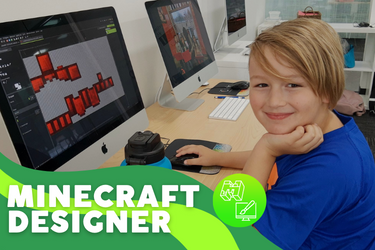
Minecraft is often seen as just another video game, but for many children, it’s much more than that. Beneath its blocky graphics lies a powerful platform that encourages creativity, problem-solving, and even early coding skills. For parents trying to balance screen time with meaningful learning, Minecraft offers a unique opportunity to turn play into productivity. A Digital Sandbox for Creativity Unlike traditional games with fixed goals, Minecraft gives children complete freedom to build and explore. Whether it's constructing cities, designing machines, or recreating real-world landmarks, kids are constantly using their imagination. This type of open-ended play helps develop: Creative thinking Spatial awareness Planning and design skills Problem-Solving in Action Minecraft challenges kids to think critically. From gathering resources to surviving in different environments, players must make decisions, test ideas, and adapt quickly. These experiences help children develop: Logical reasoning Decision-making skills Persistence through trial and error Collaboration and Teamwork In multiplayer mode, kids can work together on projects, solve challenges, and build shared worlds. This encourages: Communication skills Teamwork Leadership Introduction to Coding Concepts Minecraft also introduces basic coding logic through features like Redstone (in-game circuits) and modding. Kids begin to understand: Cause and effect Sequences and logic Basic automation…

Kids and Technology: Why Monitoring Matters More Than Ever
Helping parents guide screen time with safety, boundaries, and balance Technology isn’t “coming.It’s already here - in your living room, in your child’s backpack, and sometimes even under their pillow at night. Kids use tablets for homework, watch YouTube for entertainment, and play games that let them build, explore, and connect with others. When used intentionally, technology can build creativity, confidence, and real-world skills, especially in structured programs like our coding classes for kids — technology can build creativity and confidence. But here’s the reality: Children are stepping into digital spaces that were not designed with childhood in mind. As Spider-Man wisely said, “With great power comes great responsibility.” That applies to superpowers — and it absolutely applies to devices, apps, and online platforms. Monitoring isn’t about fear.It’s about guidance. Monitoring Isn’t Spying, It’s Parenting in a Digital World When parents hear the word monitoring, it can sound extreme.Reading every message. Hovering constantly. Controlling every click. That’s not what healthy digital parenting looks like. Monitoring simply means staying involved. It looks like: Knowing what games and apps your child uses Understanding what features are turned on (especially chat and friend requests) Checking in consistently, not just once every few months…

iCode Loyalty Points: How to Redeem, Shop, and Connect Your Child’s Social Media (Step-by-Step for Parents!)
Hi Parents, Your child is earning loyalty points at iCode—and now, you can easily use those points to save on class enrollments or shop for fun items in our store! Plus, connecting your child’s social media accounts helps them earn even more rewards. Here’s a detailed, easy-to-follow guide (with pictures and videos!) on how to do it all. ✅ Part 1: Redeem Loyalty Points When You Enroll in Classes You can use loyalty points while enrolling in classes—whether through our website or the Parent Portal. Option 1: From the Website Pick a Class: Go to the iCode website and pick the class your child wants to join. Log In: After clicking Continue, select "Already a customer" and log in with your Parent Portal username and password. Apply Loyalty Points: On the payment page, you’ll see the option to Redeem your points. You will see how many points are available for each student, along with the dollar value. Select & Redeem: Choose the number of points you'd like to use and click Redeem. The total will automatically reduce by the amount covered by points. 💡 Look for the small eye icon—hovering over it will show how much was paid using points.…