


Kids Computer Programming – Why Kids Should Learn Computer Programming
When everyone’s talking about minimizing kids’ screen time, why is kids’ computer programming in demand? Let’s explore why kids should learn computer programming.
Why Should Kids Learn Computer Programming?
Parents know the future of jobs is in tech, and they want their children to be future-ready. But that’s not the only reason. Some of the most compelling reasons for youngsters to pursue computer programming are based on the soft skills students learn through programming.
Kids’ Computer Programming Increases Curiosity
Kids get excited seeing and learning new things, especially when it comes to technology. Learning to code is a great way to harness that curiosity.
Understanding programming means understanding the world around us. Knowing how things work allows you to think of new things that can be done. There are endless possibilities to what can be achieved through programming.
Parents can’t create this curiosity or enthusiasm on their own. But they can guide their kids toward kids’ computer programming options to start the process and ignite the spark in their child.
Kids’ Computer Programming Helps Develop Resilience
Children who learn to code also learn to bounce back after a failure. They understand that failure is only a bad thing if you do not learn from it.
Even with the most experienced coders, sometimes a program might not run as intended because the coder missed something as small as a semi-colon. The programmer must then review the code and figure out where they went wrong, and determine the best way to resolve the issue.
This process of constantly facing failure, and bouncing back, helps them build resilience.
Kids’ Computer Programming Teaches Them How To Think
Learning to code is a highly sought-after skill. But it’s not just about learning how to type lines of code; it’s also about learning new ways to think. To code effectively, a programmer must think rationally and logically.
Decomposition, or the capacity to break an issue down into smaller components, is a problem-solving approach employed by many computational thinkers. These and other methods are used to improve problem-solving and critical thinking skills.
Kids’ Computer Programming Enhances Creativity
Coding allows children to be creative and experiment with ideas while also teaching them how to construct something completely autonomously.
Coding makes it possible for kids to express themselves in code. They can turn their ideas into real applications. This causes them to constantly think of solutions to every problem they encounter in their daily life.
This constant desire and ability to problem-solve pushes them to think creatively, and come up with innovative ideas.
Kids’ Computer Programming Builds Problem-Solving Skills
Because children confront a variety of issues on a daily basis, including those faced at school or playing any sport, it is critical that they learn to persevere and try again. These mental talents can be developed via the tough yet rewarding process of programming. As students master more difficult coding projects, they become more capable of dealing with problems on their own and devising new solutions.
5 Quick Tips to Help Your Kids Get Started
If you want your kids to take an interest in programming, then it’s important to guide them in that direction from an early age.
Here are five strategies to get your kids started with coding:
- Set The Right Environment: Kids learn from what they see, so introduce them to shows about tech which may pique their curiosity.
- Play The Right Games: You can encourage puzzles, mathematical kits, and other STEM games at an early age. This will enhance their thinking skills and help them when they start their programming journey.
- Make a Friends Group With Common Interest: If child’s friends are also taking an interest in tech or programming, form a small group and let them build things together.
- Praise Them: When your kid excitedly shows you what they have built, praise and encourage them so they’re motivated to build more!
- Join a Coding School: A coding school is a great option for kids that learn best through instructor-led classes. Instructors can help guide them if they’re struggling or challenge them if they’re picking things up quickly.
Excite Your Kids About Programming with iCode
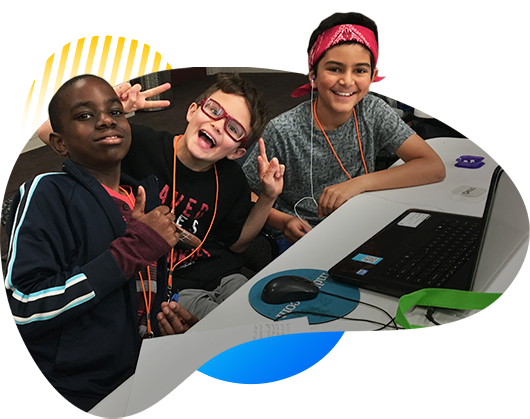
iCode Schools are among the top kids’ coding school options. Their trained instructors and high-tech labs keep kids engaged and excited about programming. Whether they’re into video game development, robotics, or even programming drones, iCode is sure to have a class that they’ll love.
So what are you waiting for? Get your kids excited about computer programming. Enroll at an iCode School today!
Recommended Blogs
Why Minecraft Is More Than Just a Game for Kids
Minecraft is often seen as just another video game, but for many children, it’s much more than that. Beneath its blocky graphics lies a powerful platform that encourages creativity, problem-solving, and even early coding skills. For parents trying to balance screen time with meaningful learning, Minecraft offers a unique opportunity to turn play into productivity. A Digital Sandbox for Creativity Unlike traditional games with fixed goals, Minecraft gives children complete freedom to build and explore. Whether it's constructing cities, designing machines, or recreating real-world landmarks, kids are constantly using their imagination. This type of open-ended play helps develop: Creative thinking Spatial awareness Planning and design skills Problem-Solving in Action Minecraft challenges kids to think critically. From gathering resources to surviving in different environments, players must make decisions, test ideas, and adapt quickly. These experiences help children develop: Logical reasoning Decision-making skills Persistence through trial and error Collaboration and Teamwork In multiplayer mode, kids can work together on projects, solve challenges, and build shared worlds. This encourages: Communication skills Teamwork Leadership Introduction to Coding Concepts Minecraft also introduces basic coding logic through features like Redstone (in-game circuits) and modding. Kids begin to understand: Cause and effect Sequences and logic Basic automation…
How To Improve the Use of AI in Education
Artificial intelligence is already in your child's classroom, whether you realize it or not. Adaptive math apps, grammar-checking tools, automated grading systems, and AI-powered tutoring bots have quietly become fixtures of the modern educational landscape. But here's something most parents don't hear: schools are barely scratching the surface of what AI can actually do for learning. The gap between how AI is being used and how it could be used is where the real opportunity lies for your child. How AI Is Being Used in Education Right now, most schools use AI in fairly basic ways. The most common applications include: Adaptive learning platforms like Khan Academy and DreamBox adjust difficulty based on student performance. Automated grading for multiple-choice tests and some written assignments. Plagiarism detection tools like Turnitin. AI tutoring chatbots that answer student questions on demand. These are helpful tools and represent genuine progress, but most of these applications treat AI as a faster version of what already existed. Adaptive software is a smarter worksheet. Automated grading is a faster teacher's aide. Chatbot tutors are searchable textbooks with better conversation skills. The way most schools deploy AI is reactive. It responds to what a student does, but it…

Kids and Technology: Why Monitoring Matters More Than Ever
Helping parents guide screen time with safety, boundaries, and balance Technology isn’t “coming.It’s already here - in your living room, in your child’s backpack, and sometimes even under their pillow at night. Kids use tablets for homework, watch YouTube for entertainment, and play games that let them build, explore, and connect with others. When used intentionally, technology can build creativity, confidence, and real-world skills, especially in structured programs like our coding classes for kids — technology can build creativity and confidence. But here’s the reality: Children are stepping into digital spaces that were not designed with childhood in mind. As Spider-Man wisely said, “With great power comes great responsibility.” That applies to superpowers — and it absolutely applies to devices, apps, and online platforms. Monitoring isn’t about fear.It’s about guidance. Monitoring Isn’t Spying, It’s Parenting in a Digital World When parents hear the word monitoring, it can sound extreme.Reading every message. Hovering constantly. Controlling every click. That’s not what healthy digital parenting looks like. Monitoring simply means staying involved. It looks like: Knowing what games and apps your child uses Understanding what features are turned on (especially chat and friend requests) Checking in consistently, not just once every few months…