

From Screen Time to Skill Time: Turning Murphy Kids’ Gaming Interest Into a Coding Passion
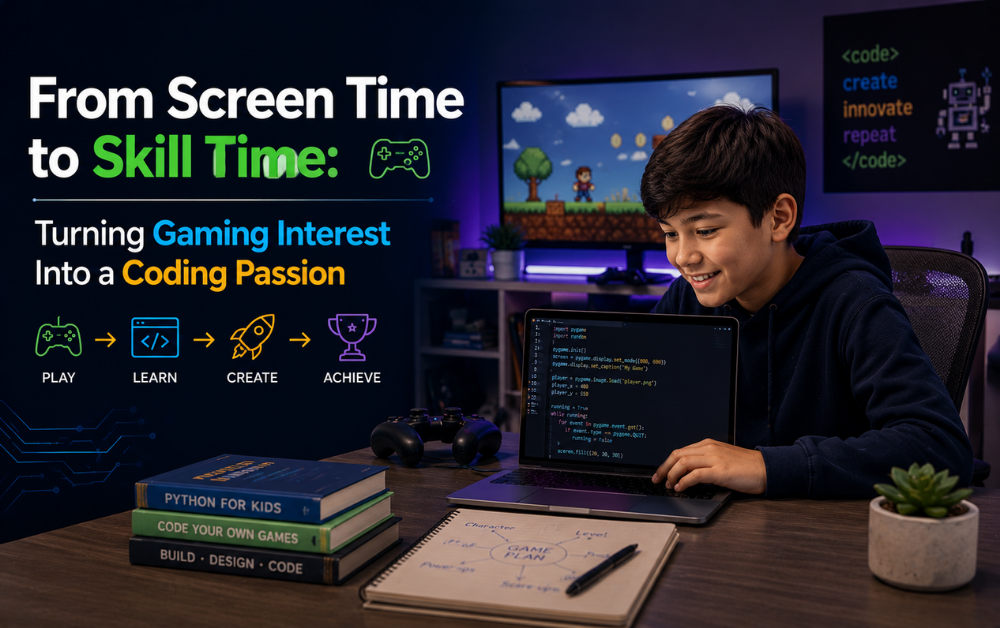
Murphy sits close to the Dallas-area tech corridor, and plenty of local families already work in fields that reward logical, systematic thinking. At iCode Murphy, kids who love gaming get an early, hands-on introduction to that same kind of thinking, built around something they’re already genuinely excited about.
For parents who’ve watched a child disappear into a game for hours, this class offers a way to redirect that same energy toward building instead of just playing.
From Player to Creator: The Mindset Shift
Parents often struggle to find a genuinely productive alternative to screen time — this class offers exactly that. Kids stay just as engaged, but now they’re building instead of consuming, and the underlying skills carry over directly into schoolwork and other problem-solving.
It’s a shift in relationship to the screen, not just a reduction in time spent — and that distinction tends to matter more to Murphy families than raw hours.
Why Kids Who Love Gaming Make Natural Coders
Every game is built on code — physics, character behavior, level design, scoring. Kids who already spend hours in a game world have an intuitive feel for how systems fit together. Instructors build directly on that instinct, showing students the logic behind the games they already love.
Building Their Own Game Is a Different Kind of Fun
There’s a real difference between finishing someone else’s level and building your own from scratch. Students start small — basic movement, simple scoring — and add complexity as their skills grow. Watching their own character move correctly on screen for the first time is usually a genuine, memorable moment.
From Consumer to Creator
That shift changes how kids engage with games generally. A student who’s built even a simple game starts noticing design choices in every game they play afterward — why a level is laid out a certain way, why a character controls the way it does.
How This Builds Over a Full Semester
Projects grow more complex as the semester progresses — from a simple maze to a multi-level game with real design decisions behind them. That gradual complexity teaches patience and iteration in a way that mirrors the methodical thinking valued in the tech-heavy careers so common around the greater Dallas area.
Most instructors can point to a specific moment where a student’s focus shifted from wanting to finish fast to wanting to get it right — and that shift tends to be the outcome families remember most.
Most families in Murphy say the real proof isn’t the finished game — it’s watching a student debug their own mistake calmly instead of getting frustrated and walking away. That shift in temperament tends to be the outcome that sticks longest, well after the specific project is forgotten.
Because the projects build on each other, a student who struggled with an early concept usually gets a second and third chance to apply it later on, in a new context. That repetition, spaced out naturally across the semester, is part of why the skill actually sticks.
Frequently Asked Questions
My child spends a lot of time gaming already — will this help or add to it?
It redirects the same interest toward building instead of just playing, which most families find to be a meaningful shift.
Does my child need prior coding experience?
No — a genuine interest in gaming is a better starting point than any prior coding background.
What age range is this class designed for?
Classes are grouped by age and skill level, so every student works with peers at a similar stage.
How is this different from just letting my child play more games?
Playing is passive; building requires understanding how a game actually works, which is a fundamentally more active process.
Will my child still want to play games the same way after this class?
Most students do, but they tend to watch and think about games differently — noticing design choices they never paid attention to before.
Visit iCode Murphy
Curious what this looks like in person? Check schedules at iCode Murphy and book a trial class for your child.