
Beyond Coding: The Confidence and Problem-Solving Skills Kids Build in Class
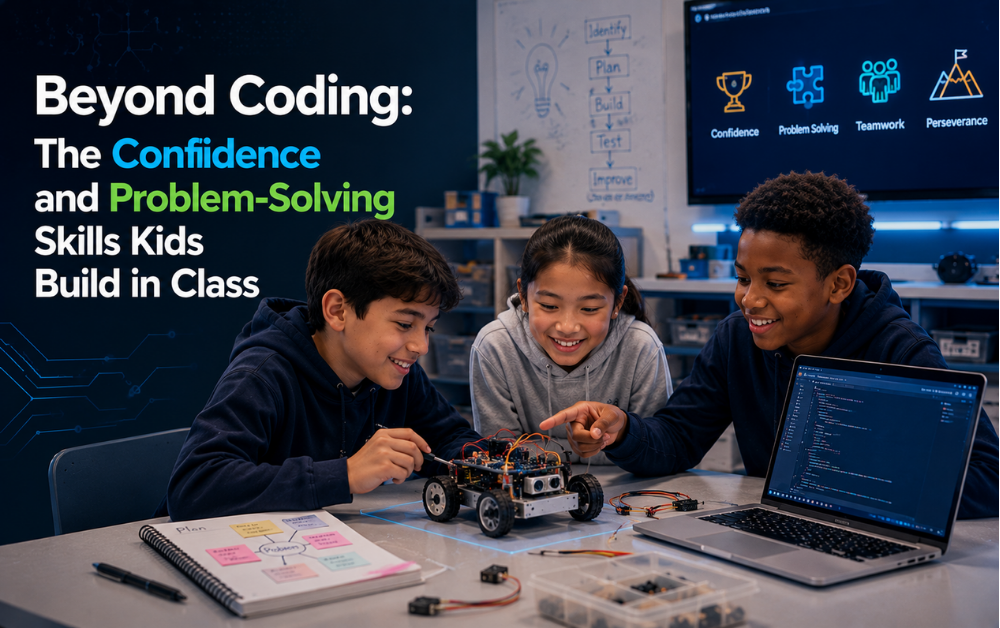
Princeton is a town where intellectual rigor is simply part of daily life. At iCode Princeton, that same seriousness shows up in the classroom, but the goal isn’t just technical skill. It’s building four things at once: confidence, problem-solving, teamwork, and perseverance, all through the process of actually building something real.
Every Project Follows the Same Process
Instead of jumping straight into code, students work through the same five-step cycle real engineers use: Identify, Plan, Build, Test, Improve. That structure is what separates this from a typical activity, and each step is where a specific skill actually gets practiced.
Identify — Naming the Real Problem
Before any code gets written, a student has to define exactly what the project is supposed to accomplish. Naming the actual goal, rather than guessing and hoping, is the first concrete problem-solving skill the class builds.
Plan — Mapping It Out First
Once the goal is clear, students sketch the steps before touching a keyboard. This is where a big, intimidating challenge gets broken into smaller, testable pieces, the exact habit Princeton families often notice showing up in math and science homework too.
Build — Bringing the Plan to Life With a Partner
Many projects are built with a partner, and this is where teamwork stops being abstract and becomes a real, practiced skill. Students split tasks, merge two different approaches into a single working result, and have to communicate clearly enough that both halves actually connect.
Test — Why Getting Stuck Is Actually the Point
When a program doesn’t run, instructors don’t hand over the fix. They walk students through narrowing down the cause, one possibility at a time. It’s slower than simply being told the answer, but it’s the process that builds independent problem-solvers instead of kids who wait to be rescued.
Improve — Presenting and Owning the Fix
Most units close with a short presentation: what the student built, what went wrong, and how they solved it. For many kids, that’s the first time they’ve had to explain their own reasoning out loud in front of others, and getting comfortable with that carries far beyond a coding classroom.
Persistence, Practiced on Purpose
A student who sticks with a stubborn bug for fifteen minutes and finally fixes it learns something no worksheet can teach: that persistence usually pays off. In a town this academically demanding, that lesson tends to outlast the specific coding skill that prompted it.
How the Skills Compound Over a Semester
Projects get more demanding as the semester goes on, so early debugging practice and a first shaky presentation become the foundation for more sophisticated work later. This progression runs through the Belt Program, our structured curriculum built around exactly this kind of gradual, visible growth.
Frequently Asked Questions
Does this class only teach coding, or is there more to it?
Coding is really just the vehicle. The class is deliberately structured around the Identify, Plan, Build, Test, and Improve cycle to build confidence, problem-solving, teamwork, and perseverance right alongside it.
My child shuts down when frustrated. Is this a good fit?
It can be one of the better environments for a child like that. The Test step is built to guide a student through frustration step by step, with a mentor there to help instead of leaving a student stuck alone.
Is this a solo activity, or do kids work together?
Both happen. Planning tends to start individually, but the Build step is done with a partner or small team, and that’s where most of the teamwork and communication practice comes from.
How soon does a parent typically notice a difference?
Usually within the first few weeks, often in how a child reacts to a hard problem at home, well before a project is fully finished.
See the Program in Person
Reading about confidence-building is one thing, watching a student calmly debug their own project is another. Book a free trial class at iCode Princeton to see it firsthand.