
What Actually Happens During a 2-Hour iCode Class?
What Actually Happens During a 2-Hour iCode Class?
A Behind-the-Scenes Look at Coding, Robotics, and STEM Classes for Kids in Chicago
Two hours. One class. A whole lot of possibilities.
“What will my child actually do for two hours?”
It’s one of the most common questions parents ask us at iCode Ravenswood. And it’s a good question.
After all, two hours is a significant part of a child’s afternoon or weekend. Parents want to know their children will be engaged, learning, and enjoying themselves.
Will they sit in front of a computer the whole time? Will they understand what they’re doing? What happens if they get stuck?
Let’s take you inside a typical iCode Belt class so you can see what those two hours look like.
What Happens During a Typical iCode Coding or Robotics Class?
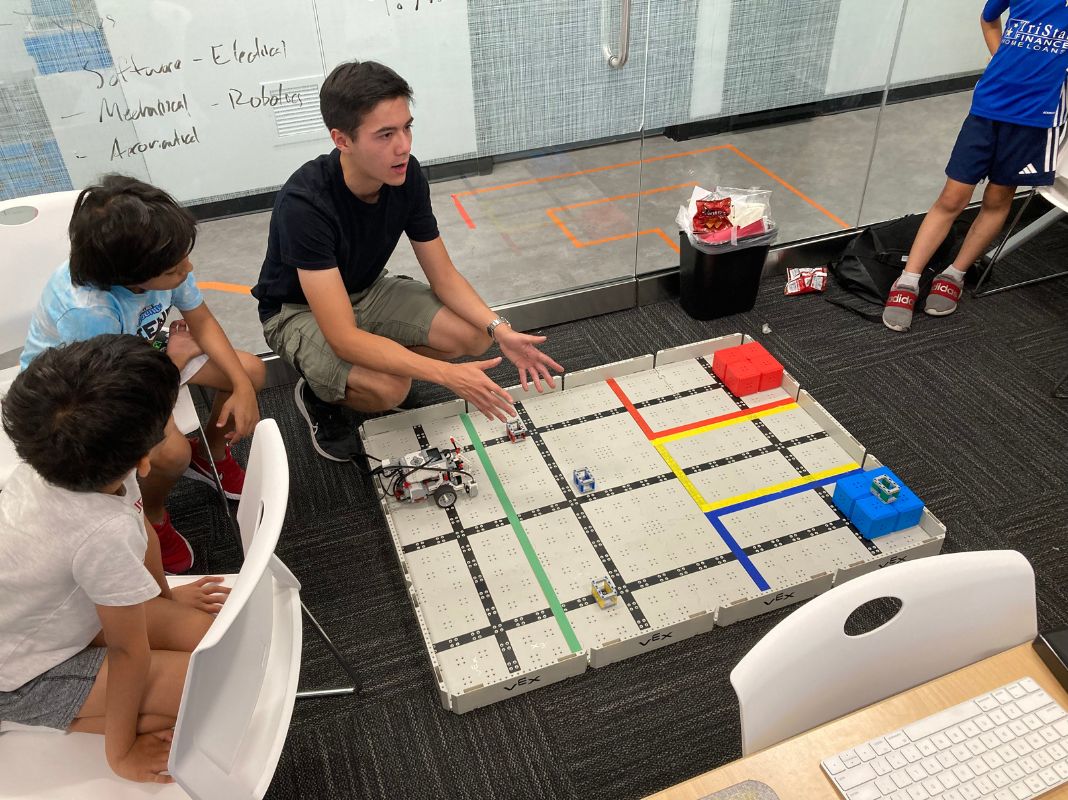
At iCode Ravenswood in Chicago, our Belt Program classes meet for two hours each week. Students learn through a combination of short lessons, hands-on projects, experimentation, and collaboration.
While activities vary by age and program, a typical class follows six stages:
- Arrive, connect, and get ready to learn.
- Explore a new coding, robotics, or engineering concept.
- Build, code, and apply what they’ve learned.
- Troubleshoot problems and test solutions.
- Experiment and add their own creative ideas.
- Share accomplishments and reflect on their progress.
Here’s what happens at each stage.
1. Arrival and Getting Comfortable

Learning begins with feeling welcome.
When students arrive, they reconnect with their instructor and classmates, settle into the classroom, and find out what they’ll be working on.
Maybe they’re continuing a robot they started building last week. Perhaps they’re creating a new obstacle course in Roblox Studio or exploring a fresh engineering challenge.
This time helps children transition from the school day into a different kind of learning environment.
And there’s a social benefit, too.
Over time, students build friendships with children who share their interests. The class becomes a place where they can exchange ideas, ask questions, and feel comfortable being curious.
2. A Short Lesson That Gets Kids Thinking
Next comes the day’s lesson.
Rather than spending most of class listening to an instructor talk, students receive a focused introduction to a new skill or concept.
Depending on their Belt, that might mean:
- Learning how sensors help robots respond to their surroundings.
- Exploring how code controls movement in a video game.
- Understanding loops, sequences, or programming logic.
- Discovering how engineers design and improve their creations.
- Using Minecraft Education or Roblox Studio to explore game development.
The goal is to give students enough information to begin experimenting.
Because the next step is where things get interesting.
3. Time to Build, Code, and Create
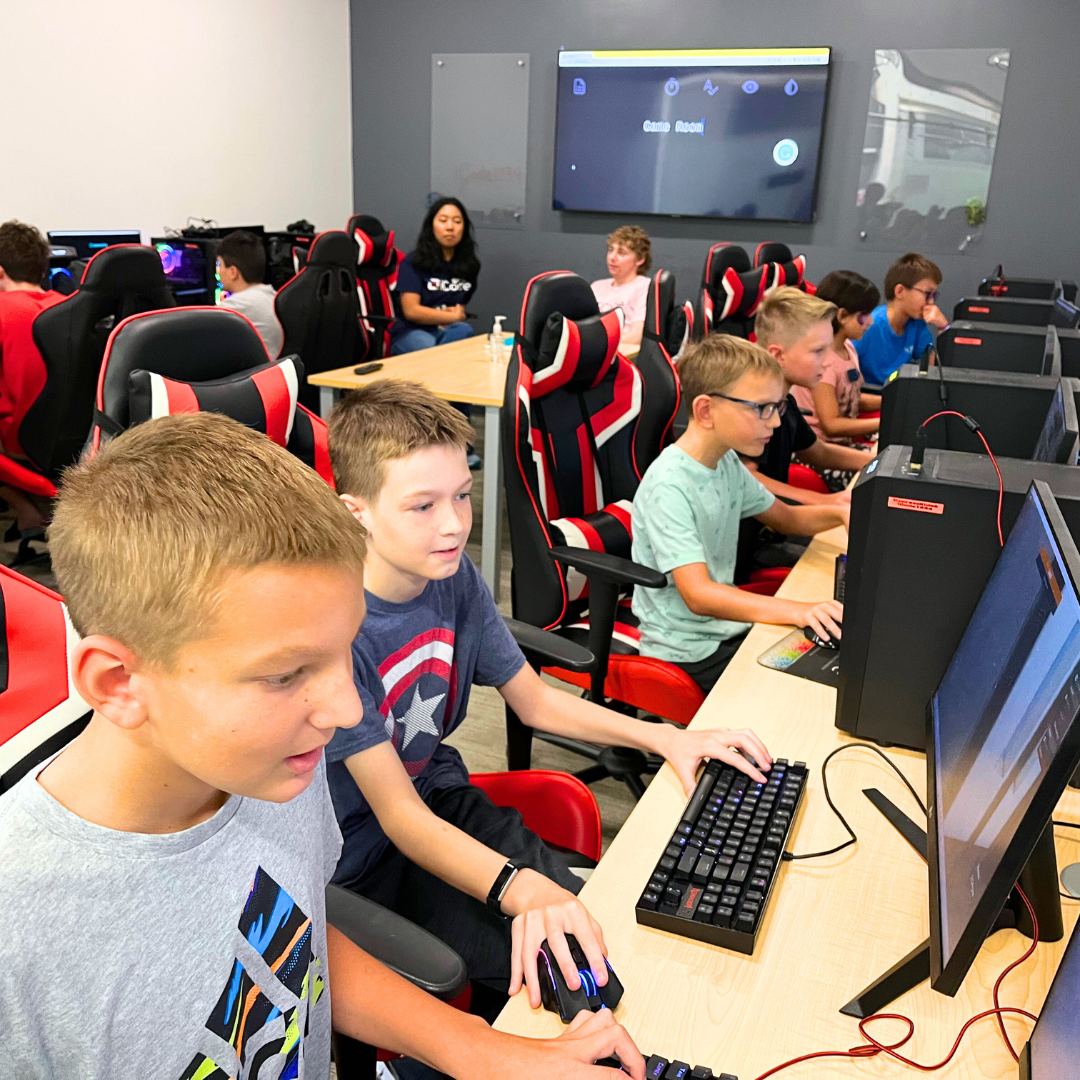
This is where much of the two-hour class takes place.
Students put what they’ve learned into practice through hands-on projects.
In our White Belt robotics program, students might build and program VEX robots to navigate a challenge.
In Gray Belt, students may use Minecraft Education or Roblox Studio to design games, create interactive environments, or write code that controls what happens on screen.
Younger students in STEM Jr. explore early engineering, robotics, and scientific concepts through age-appropriate activities.
Whatever the project, the goal is similar: children learn by doing.
Instead of watching someone else solve a problem, they get to work through it themselves.
And that’s when something important happens.
They start discovering what they’re capable of.
4. What Happens When Something Doesn’t Work?
Let’s say your child has spent fifteen minutes programming a robot to move through an obstacle course.
They press start.
The robot turns left instead of right.
Now what?
This is one of our favorite teaching moments.
Rather than immediately correcting every mistake, instructors can guide students through questions:
“Why do you think that happened?”
“What could we change?”
“What should we test first?”
Students learn to examine their work, identify problems, and experiment with possible solutions.
In coding, this process is called debugging. In engineering, it’s part of testing and improving a design.
For children, it’s an opportunity to practice patience, persistence, and flexible thinking.
And when their solution finally works?
That moment of pride can be worth every failed attempt that came before it.
5. Making the Project Their Own
Once students understand the fundamentals, they can begin exploring their own ideas.
Maybe they want their robot to complete the challenge faster.
Maybe their Roblox game needs another level.
Maybe their Minecraft world could use a secret passageway, a new character, or an entirely different design.
This is where technical skills meet imagination.
Students begin asking questions such as:
“What if I tried this?”
“Could I make it do something different?”
“How could I make this better?”
These questions help children move from following instructions toward making decisions of their own.
Creativity matters in STEM because there is often more than one way to solve a problem.
6. Sharing, Celebrating, and Wrapping Up
As class comes to an end, students have opportunities to review their progress, share ideas, and see what their classmates have created.
Some projects take one class. Others develop over several weeks as students build on previously learned skills.
What matters is that children begin recognizing their own progress.
Maybe they learned to program their first robot movement.
Maybe they solved a coding problem that frustrated them earlier.
Maybe they discovered an entirely new way to approach a challenge.
Those small accomplishments build confidence over time.
And next week, they’ll have another opportunity to put their skills to work.
Why Are iCode Belt Classes Two Hours Long?
Two hours gives children time to move beyond a quick demonstration and experience the full process of creating something.
Think about learning to ride a bicycle.
Someone can explain how the pedals, brakes, and handlebars work in five minutes.
But understanding the bicycle isn’t the same as learning to ride it.
You need time to practice, make adjustments, and try again.
Learning coding and robotics works in much the same way.
During a two-hour iCode class, students have time to explore a concept, apply it, encounter challenges, test solutions, and improve their work.
A shorter class can introduce a skill. A longer session creates room to practice it.
And because iCode’s Belt curriculum builds from one lesson to the next, students can return each week ready for a new challenge.
Will My Child Spend Two Hours Looking at a Screen?
Not necessarily. The balance of screen-based and hands-on activities depends on the Belt Program.
Robotics students spend time physically building, testing, and programming robots.
Younger STEM students participate in hands-on engineering projects, experiments, and introductory robotics activities.
Game development students use computers more extensively because they’re learning to create digital experiences using tools such as Minecraft Education and Roblox Studio.
Even in computer-based classes, students are actively designing, coding, troubleshooting, and collaborating rather than simply watching videos or playing games.
The distinction is how technology is being used.
At iCode, we want children to understand how technology works and develop the confidence to create with it.
What Skills Do Children Learn Beyond Coding?
Coding and robotics are the tools we use, but children also have opportunities to develop skills that extend well beyond the classroom.
Problem-solving: When a project doesn’t work, students learn to investigate and try a different approach.
Critical thinking: They learn to break complex challenges into smaller steps.
Creativity: Students explore their own ideas and experiment with different solutions.
Collaboration: Working alongside classmates helps children practice communication and teamwork.
Persistence: They discover that making mistakes is often part of learning something new.
Confidence: Completing a challenging project helps children recognize what they can accomplish.
These are skills that can benefit children in school, relationships, and future learning experiences.
What Coding and Robotics Classes Does iCode Ravenswood Offer?
At iCode Ravenswood, our Belt Programs introduce children to STEM through age-appropriate, project-based learning.
Our programs include:
- STEM Jr. (Ages 5–7): Early robotics, science, engineering, and creative STEM exploration.
- Foundation Belt (Ages 6–8): Introductory coding, computational thinking, and Scratch programming.
- White Belt: Hands-on VEX robotics, engineering, sensors, and programming.
- Gray Belt: Game development, Minecraft Education, Roblox Studio, and coding.
- Orange Belt: More advanced robotics, programming, and technical problem-solving.
Each Belt builds skills through guided projects and opportunities for hands-on learning.
Our team can help families choose the right starting point based on their child’s age, interests, and experience.
Frequently Asked Questions About iCode Classes
How long is an iCode Belt class?
Belt classes at iCode Ravenswood are two hours long and meet once per week. Students participate in hands-on projects, instructor-led learning, coding or robotics activities, and problem-solving challenges.
Are iCode classes suitable for beginners?
Yes. iCode offers programs for different ages and experience levels, including introductory STEM and coding classes. Our team can help determine which Belt is the best fit for your child.
Do children need to bring a laptop?
iCode provides the technology and instructional equipment required for its regular on-site Belt classes.
Are iCode classes mostly lectures?
No. Belt classes emphasize hands-on, project-based learning. Instructors introduce concepts and guide students as they build, code, experiment, and solve problems.
What if my child struggles with coding?
Learning to troubleshoot is part of the experience. Instructors help children break problems into manageable steps and explore possible solutions. Students are encouraged to learn from mistakes and continue developing their skills.
Where can I find coding and robotics classes for kids in Chicago?
iCode Ravenswood offers weekly STEM, coding, game development, and robotics classes at 2010 W. Montrose Avenue in Chicago. Families can contact the campus to learn about upcoming Belt sessions and trial class opportunities.
Two Hours Can Change How a Child Sees What They’re Capable Of
A child walks into class with an idea.
They learn something new. They try it. Something goes wrong. They figure it out, make a change, and try again.
And somewhere along the way, they realize something wonderful:
“I made that.”
That’s what we want children to experience at iCode Ravenswood.
The confidence that comes from creating something, solving a difficult problem, and discovering that they’re capable of more than they imagined.
Curious what your child could create in two hours?
Come see for yourself.
Our next Belt Program session begins January 8, 2027. Contact iCode Ravenswood to learn more about our programs and schedule a trial class.
iCode Ravenswood
2010 W. Montrose Avenue, Chicago, IL
312-620-8088