
White Belt: VEX Robotics & 3D
Robotics, VEX & 3D Printing in Wellesley
Build the robot, code the robot, then print the part it was missing.
- Boston Parents Family Favorite seven years running
- Macaroni Kids Favorite 2025
- FIRST LEGO League & VEX Judges Award
- State finalists, FLL & VEX
- STEM.org accredited
- CSTA & NGSS aligned
Not a one-off coding club. A ten-month program with a cohort, a competition team, and a monthly report that shows you exactly what your child built and why it mattered.
What your child leaves with
A portfolio
Working apps, games, robots and websites they built themselves — not a certificate of attendance. Everything is saved to their own profile.
A team
The route into our VEX and FIRST LEGO League competition teams, with a real season, a capped roster and tournament results.
A transcript
A written report every month explaining what they covered, the concept behind it, and what comes next. A fuller one at the end of each belt.
White Belt · iCode of Wellesley2026/27 year
Robotics, VEX & 3D Printing — the White Belt
- Time
- Two hours a week, same day and time, across the ten-month program
- Group size
- Around six students to one instructor
- Length
- Ten months to complete a belt. Most students go on to the next one. 80 hours of instruction across the year.
- Start dates
- New cohorts in September, November, January and April. Seats are capped.
- Stage
- Ages 7+
- Entry
- After a first coding belt, or by evaluation.
- Reports
- A written report every month, and a fuller one at the end of each belt — see a real one
- Location
- 73 Central Street, Wellesley
See White Belt class times
Book a free evaluation
Not sure this is the right belt? The free evaluation exists to answer exactly that — we place by what a student can do, never by age alone.
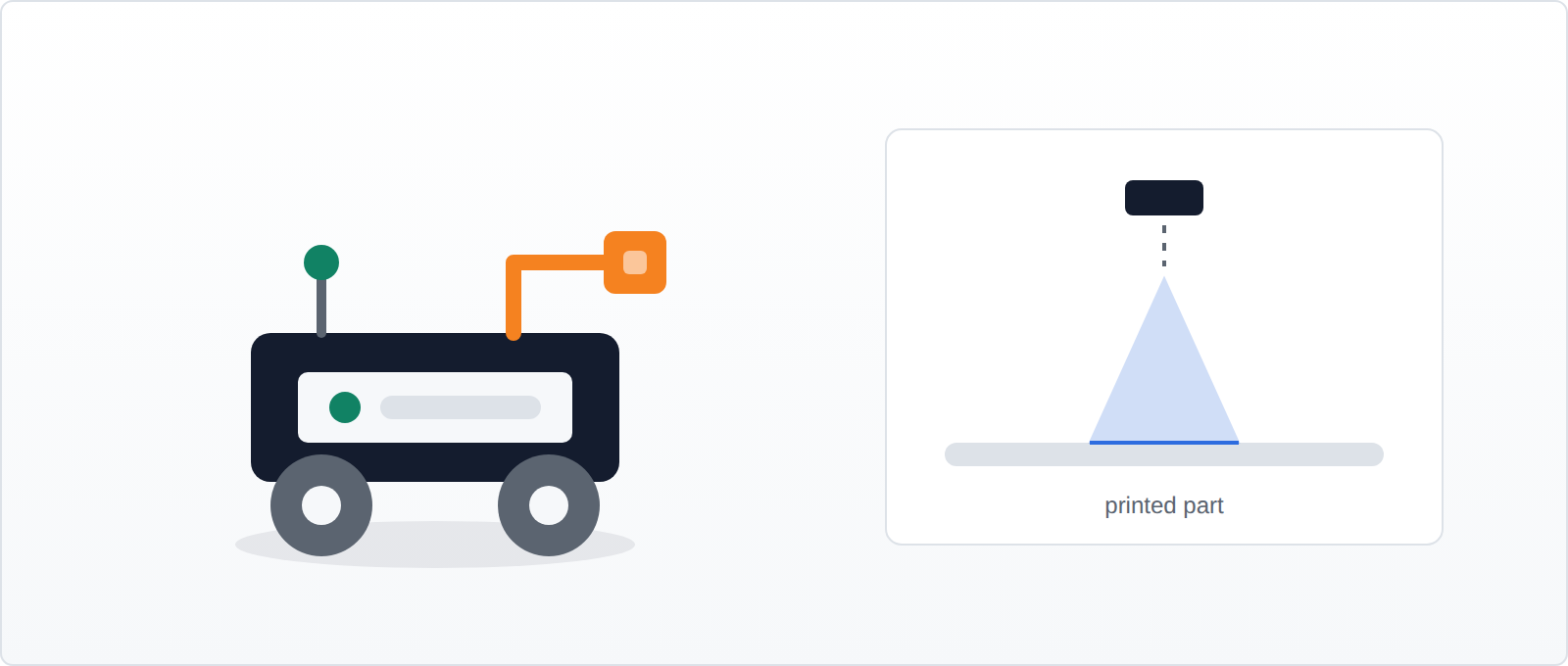
This is the belt where students become young engineers rather than young programmers. VEX IQ robots get built, coded in VEX Code, and made to run autonomously — which is the moment most students discover that a robot does exactly what you said rather than what you meant.
Then it widens: 3D modeling and printing, so they can make the part that does not exist; electricity and circuits, so they know what is happening inside; and the engineering design process, so the work has a method rather than a mood. AI sits alongside as a design and debugging partner.
What students actually learn
- VEX Code and VEX IQ robotics — build, program, run autonomously
- The engineering design process, applied to a real build
- 3D modeling and 3D printing their own components
- Electricity, circuits and electrical engineering
- AI-assisted design and troubleshooting
The year, sprint by sprint
The White Belt runs in sprints across the school year, each one building on the last and ending in a final project.
- Robotics Fundamentals
- Robotics with VEX IQ
- Advanced Robotics with AI Integration
- 3D Modeling
- Midterm Robotics Project
- Electrical Engineering with AI Insights
- Electricity II
- Engineering Design
- Final Project
What they finish with
- A 3D printed innovation of their own
- A robot design solution they built and programmed
You will know exactly what your child learned
Most parents six weeks into a coding class cannot say what their child has actually learned. A written report arrives every month: the topics covered, the concept behind each one in plain language, what your child actually built, where they found it easy and where they had to push, an instructor’s specific observation, and what is coming next. At the end of the belt there is a longer completion report — the whole ten months as a narrative, the skills portfolio, the capstone, and the natural next step.
The competition team runs alongside it
Our VEX and FIRST LEGO League teams are not a separate Saturday activity. A team place runs parallel to the belt, so the season feeds the same progress record — the robot goes in the portfolio and the season goes on the transcript. Rosters are capped and we hold the cap.
- Entry — FIRST LEGO League Explore · VEX IQ intro. Grades 2–4, About 16 weeks, 1.5 hours a week.
- Core — FIRST LEGO League Challenge · VEX IQ competitive. Grades 4–8, About 20 weeks, two hours a week.
- Advanced — VEX V5. Grades 8–12, About 20 weeks, two hours a week, eight students to one coach.
A place is conditional on being an enrolled student, and tryouts run in September. See the teams, rosters and season dates.
The question parents actually ask
“We already do a robotics club. Why this as well?”
A robotics Path is one hour a week on one platform, and it is genuinely good for finding out whether the interest is real. The White Belt is a ten-month engineering year: VEX IQ and autonomous programming, then 3D modeling and printing, then electricity, then a design-process project that pulls all three together. Paths prove the interest. This is what you do with it.
If it is not working
You are not locked into ten months.
You can cancel at any point with 30 days’ notice — there is no deadline to hit and no window to miss. And you will not be guessing: a written report every month sets out what your child covered and what comes next, so if this is not working you will see it in writing long before you have to ask.
How this differs from a Path
A Path is one hour a week, in a larger group, on a single topic — a good way to start and a good second activity. The Belt Program is two hours a week across a ten-month year, in a group of about six, with a written progress report every month and a capstone project. It is the deeper commitment and the one most families end up in. We teach this subject both ways: the Robotics Path is the one-hour-a-week version, and is a sensible place to start. The White Belt is the year-long one.
If two hours a week is too much right now
Studio — One hour a week, ongoing. A flexible, AI-driven path with its own milestones, with an instructor alongside. The on-ramp for families who cannot give us two hours a week yet. Students move across to a belt when they are ready. It is a different product rather than a shorter belt, which is what keeps the belt itself meaning the same thing for every student who finishes one.
Questions
Is this the same as FIRST LEGO League?
No, and it is not a competition team. It is a taught engineering curriculum on VEX IQ, with a design process and monthly written progress reports. Students who go on to compete tend to arrive on those teams noticeably better prepared.
Do they get to keep what they print?
Yes. The 3D printed innovation is theirs, and it is usually the thing that ends up on a shelf at home.
Do we need a robot or a printer at home?
No. Everything is on our equipment in the center.
What happens if we cancel partway through?
Tell us by phone or email and the enrollment ends 30 days later. The annual $125 lab fee is not refunded — materials and licences for the year are bought up front.
Where you’ll be
iCode of Wellesley · 73 Central Street, Wellesley, MA 02482
781-291-3131
Five minutes from Wellesley Middle School and a short drive from Schofield, Bates, Hardy, Hunnewell and Upham. Street parking on Central Street, plus the Municipal Way lot behind the building for pickup.
Three times the hours. Less per hour. Twelve hours a month and a written report every month. See why families choose iCode →
Ready to start?
Book a free evaluation and we will tell you honestly which belt your child belongs in — or go straight to the White Belt class times.
Book a free evaluation
See White Belt class times
The ten belts, in order
Students move up the ladder as they are ready, not on a timetable. Most join partway up — the free evaluation is how we work out where.
- Junior Belt — Junior STEAM
- Foundation Belt — Scratch Coding & AI Foundations
- White Belt — Robotics, VEX & 3D Printing — you are here
- Gray Belt — Minecraft & Roblox Coding
- Orange Belt — Web Development & Design
- Yellow Belt — Mobile App Development
- Green Belt — Python, Drones & AI
- Red Belt — Game Development
- Blue Belt — Networking & Cybersecurity
- Black Belt — Java & AP Computer Science
What your child does, beyond the code
Your child will not just build it. They will stand up and explain it. A 60-second demo to their own table of six, every sprint. This is not a public speaking class — no speeches, no memorising, no podium. They talk about their own thing, to people who actually want to see it. Any child can opt out of any demo, no questions asked.
One thinking habit runs through every session: check the machine. We hand them AI output with a mistake hidden in it, and they have to find it. AI can write the code. It cannot decide what to build, or tell you when the answer is wrong. That is the part we teach.
What it costs
$425 a month. Ten payments, September to June. A $125 annual lab fee is charged with the first payment of the year, so the September charge is $550, not $425. Materials and licences for the year are bought up front, so the lab fee is not refunded.
Stop any time with 30 days’ notice. Email wellesley107@icodeschool.com, or the Managing Director, Soundarya Ganesh, at soundarya.ganesh@icodeschool.com. Nothing renews on its own in September.
Included with every Belt, at no extra charge
10:00–12:00, one Saturday a month. Your child brings a maths, science or tech problem they are stuck on. We do not give them the answer — we show them how to break it down and write the steps, the same thinking habits they use in class on a Tuesday. Bring maths, science, coding, robotics or tech. Sign up for a place; every session has a register. Paused 24 December to 1 January.
One evening a month. An evening build session with an instructor: a themed challenge, a game jam, or a robot problem the class has not met before. Your child works on something they choose, alongside the rest of their cohort, and shows it at the end.