


Club, Belt or Competition Team?
One ladder, three rungs
Here is how to tell which rung your child is standing on, and what each one actually asks of your family.
- Boston Parents Family Favorite seven years running
- Macaroni Kids Family Favorite 2025
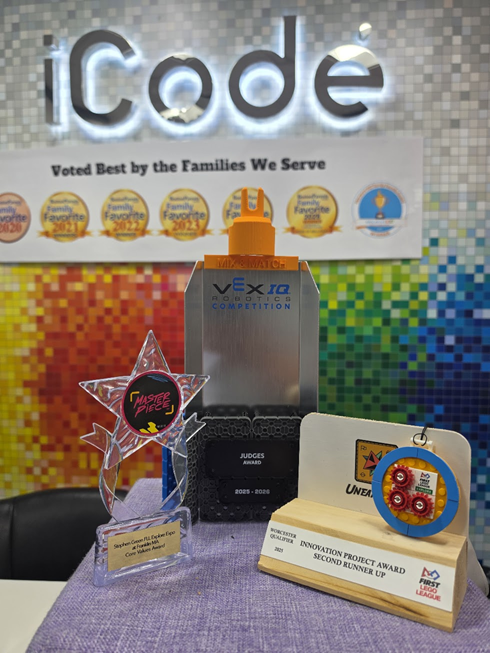
- FIRST LEGO League & VEX Judges Award
- State finalists, FLL & VEX
- STEM.org accredited
- CSTA & NGSS aligned
The common mistake is reading these as three products competing for the same cheque. They are not. A club is one hour a week on one subject. The Belt Program is the ten month path. A competition team is an add on for students already on that path, which is why a roster place requires belt or Studio enrolment. Almost every team member started in a club.
The three, side by side
If you read nothing else on this page, read this table.
| Club | Belt Program | Competition Team | |
|---|---|---|---|
| Each week | 1 hour | 2 hours | Season hours, on top of the belt |
| How long | 10 weeks | 10 months | A full competition season |
| Group | Larger group, one topic | About six students | Capped roster, held |
| Ages | 6 to 17, by club | 5 to 18, ten belts | Grades 2 to 12, three tiers |
| Who can join | Anyone | Anyone, after a free evaluation | Enrolled belt or Studio students, after tryouts |
| Written monthly report | Not included | Every month, plus end of belt | Yes, the season goes on the same record |
| Ends with | A finished project | A portfolio and a transcript | Tournament results on the record |
| Cost | $199 a month | $425 a month | Add $180 to $275 a month |
1. The club — one hour a week, one topic
Start here
Robotics Club, and eight othersFall starts 21 September
- Shape
- One hour a week, ten sessions
- Ages
- 6 to 17, depending on the club
- Entry
- Open. No experience needed
- Kit
- Provided. Nothing to buy
- Dates
- September 2026 to June 2027
$199 a month
Taking a second club at the same time? $180 a month for each extra one. Brothers and sisters get 5% off.
Choose this if your child is curious about robotics and you want to find out whether it holds before committing a year to it.
2. The Belt Program — ten months, two hours a week
The path
Ten belts, Foundation through BlackPlacement by evaluation
- Shape
- Two hours a week, ten months
- Ages
- 5 to 18, across ten belts
- Group
- About six students
- Entry
- A free evaluation, then placement
- You receive
- A written report every month
$425 a month
Ten monthly payments, the only plan. Siblings receive 5% off.
Choose this if it already holds, and what you want now is progress you can see written down rather than guessed at.
3. The competition team — a season, on top of the belt
Add on
FIRST LEGO League, VEX IQ, VEX V5Tryouts in September
- Shape
- A season, alongside belt hours
- Tiers
- Entry grades 2 to 4, core 4 to 8, VEX V5 8 to 12
- Roster
- Capped, published, and held
- Entry
- Belt or Studio enrolment, then tryouts
- Ends with
- Tournament results on the record
Add $180 to $275 a month
On top of belt tuition. Registration, tournament entry and travel beyond a set radius are itemised and passed through at cost.
Choose this if your child is already on the path and wants a deadline, a team and a result at the end of it.
Which one, for which child
Four sentences that between them cover almost every family who asks us this.
Your child has never built a robot
Start with a club. One hour a week, kit provided, and you can stop any time with 30 days’ notice. You will know by week four whether this is a passing interest or the thing they talk about at dinner.
Your child finished a club and asked when the next one starts
That is the signal for the Belt Program. A club samples one subject; the belt builds a body of work across ten months, in a group of about six, with a written report every month so you are not guessing.
Your child wants tournaments, a team and a trophy
Belt Program first, then tryouts in September. A roster place is for enrolled belt or Studio students, so the path is the entry route rather than an obstacle in front of it.
Your child likes the coding but not the robot
Same ladder, no robot. The Python, Web Design and Shark Tank clubs sample it, the belts build it, and ACSL, and later USACO, are the contest route. Placement is by a short diagnostic.
The rule that surprises parents
You cannot buy a place on a competition team. A roster place is for enrolled belt or Studio students, and tryouts are in September. That is deliberate. The team is a reason to stay on the path rather than a way around it, and it is how a season ends up on the same progress record as the rest of the year.
Questions
Does my child have to do a club before the Belt Program?
No. The two are separate doors into the same building. Plenty of students go straight into a belt after an evaluation, and plenty do a club first. The evaluation tells you which is realistic.
Can they do a club and a belt at the same time?
Yes, and a good number do. The belt is the ten month spine; a club is one hour a week on something the belt does not cover that year.
Is the competition team included in belt tuition?
No. It is an add on of $180 to $275 a month on top of belt tuition, and registration, tournament entry and travel beyond a set radius are itemised and passed through at cost. A team that costs nothing reads as a team that means nothing.
Which club leads to the teams?
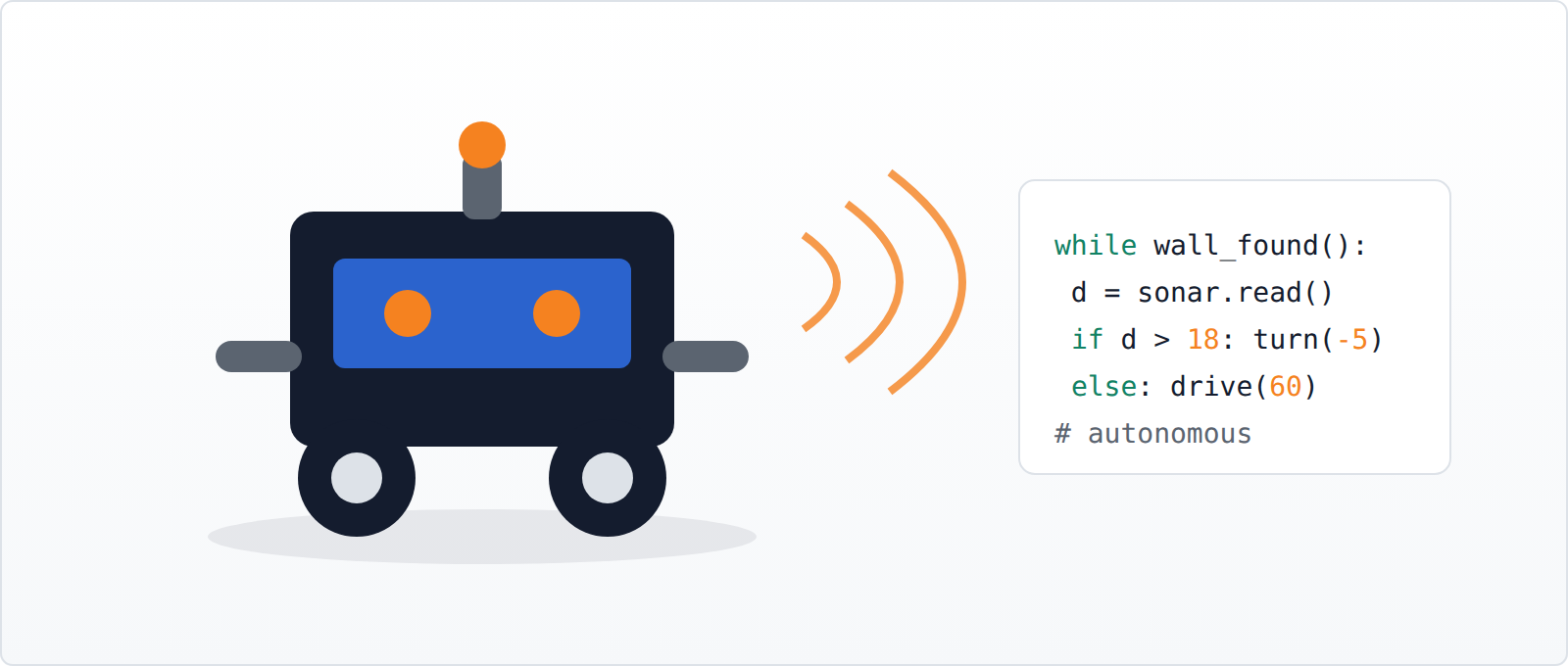
Robotics, most directly. It runs from six year olds snapping LEGO mechanisms together to teenagers writing autonomous routines for VEX V5, and it is where most team members start.
How big is a team?
Small, and we publish the cap and hold it. FIRST LEGO League caps team size by rule and VEX teams are small by design. We will not add a seat to take another fee.
What if the tryout does not go their way?
They stay on the belt, and they try again next September with a year more work behind them. Tryouts are not there to exclude anyone. They are there so the place is worth having and so every student has something real to prepare for.
How do we decide without guessing?
Book a free evaluation. We will tell you which belt your child belongs in, whether a club is the better first step, and whether a roster place is realistic this season.
Where you will be
iCode of Wellesley · 73 Central Street, Wellesley, MA 02482
781-291-3131
Five minutes from Wellesley Middle School and a short drive from Schofield, Bates, Hardy, Hunnewell and Upham. Street parking on Central Street, plus the Municipal Way lot behind the building for pickup.
Families travel to us from Wellesley, Needham, Natick, Weston, Dover and Newton Lower Falls.
Still not sure? That is what the evaluation is for
Forty minutes, free, and no obligation. Your child works on something real while we watch how they approach it, and you leave knowing which of the three this page describes is the right one to start with.
Book a free evaluation
Browse the clubs
Or call us on 781-291-3131 and ask. It is a two minute conversation.
All clubs · Robotics Club · How the clubs fit together · The Belt Program · Competition teams · What arrives every month